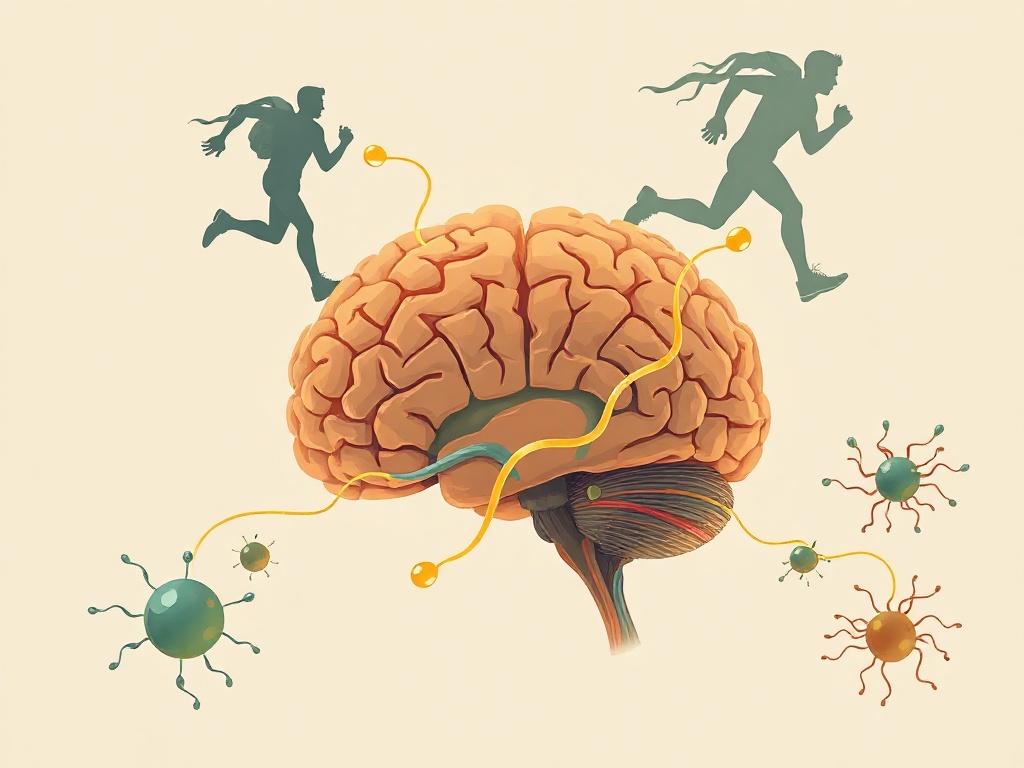
BDNF, IGF-1, and Cerebral Flow: How Exercise Reshapes the Aging Brain
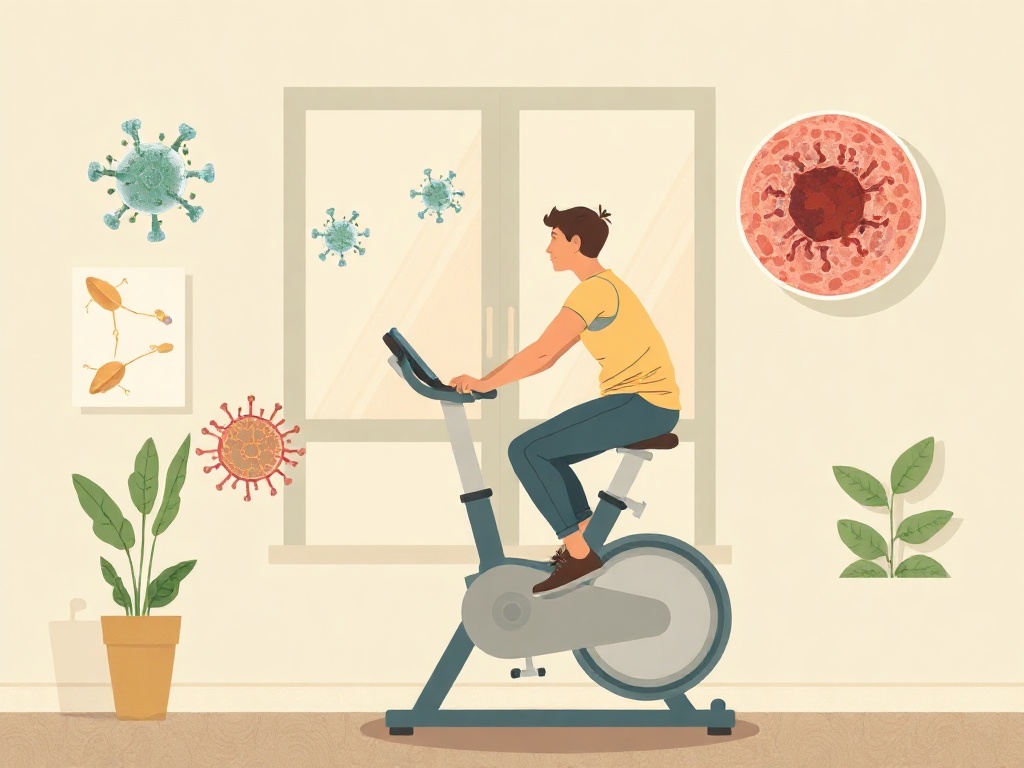
Among community-dwelling adults over 60 — a population facing a 4.5% annual cumulative incidence of depression — physical activity (PA) engages at least three…
Found 402 results for "exercise"
Among community-dwelling adults over 60 — a population facing a 4.5% annual cumulative incidence of depression — physical activity (PA) engages at least three…
Sarcopenia management is converging on a multi-modal clinical framework, with protein thresholds of 1.2–1.5 g/kg/day, β-hydroxy-β-methylbutyrate (HMB), and leu…
Most brain imaging research treats all neural connections as roughly equal — but a neuron firing in your memory center consumes dramatically more energy than o…
As AI-generated fitness and rehabilitation guidance becomes embedded in everyday health apps and telehealth platforms, the question of who is responsible when…
For the hundreds of millions living with psychosis worldwide, the gap between international human rights standards and daily reality remains vast — and measura…
Ginsenoside Rg1, the steroidal saponin constituent of Panax ginseng, stands alone among ginsenosides as the only compound supported by human muscle biopsy evid…
For clinicians and patients navigating anorexia nervosa recovery, the invisible battle may matter as much as the visible one. A compulsive internal drive to mo…
Resveratrol dose-dependently upregulates GDF15 mRNA, protein expression, and secretion in both murine embryonic fibroblasts and human HepG2 liver cells. Transc…
Screening 991 blood metabolites against cognitive performance and brain MRI markers in 1,082 dementia-free middle-aged participants (Rotterdam Study), this ana…
Epigenetics rarely generates headlines outside specialist circles, yet this particular discovery touches something with direct health relevance: the molecular…
For the roughly 18 million cancer survivors in the United States alone, crossing the finish line of active treatment is not the end of the health story — it is…
A bibliometric analysis of 858 telomere-exercise publications from 2000–2025 documents a field-wide mechanistic pivot: the research landscape shifted from desc…
For the roughly one billion adults worldwide living with some form of cardiovascular or vascular disease, the therapeutic toolbox has long relied on the same h…
For adults who exercise regularly or have a family history of cardiac events, understanding the spectrum of fainting causes is not merely academic — it can be…
For decades, beta-blockers after a heart attack were considered non-negotiable standard care — yet the rationale was built largely on pre-thrombolysis era data…
For clinicians and aging adults alike, identifying who will lose functional independence — and how early that trajectory can be detected — is one of the most c…
For adults hoping to protect cognitive function decades before dementia symptoms emerge, the window for intervention may open far earlier than previously assum…
For anyone tracking the frontier of longevity medicine, the central bottleneck has never been the list of aging hallmarks — it has been translating that list i…
For anyone seeking a non-drug strategy to protect cognitive function with age, understanding exactly how physical activity works at the cellular level transfor…
For adults tracking their biological age, the quality of their nightly sleep may matter as much as diet or exercise — and now there is a molecular explanation…