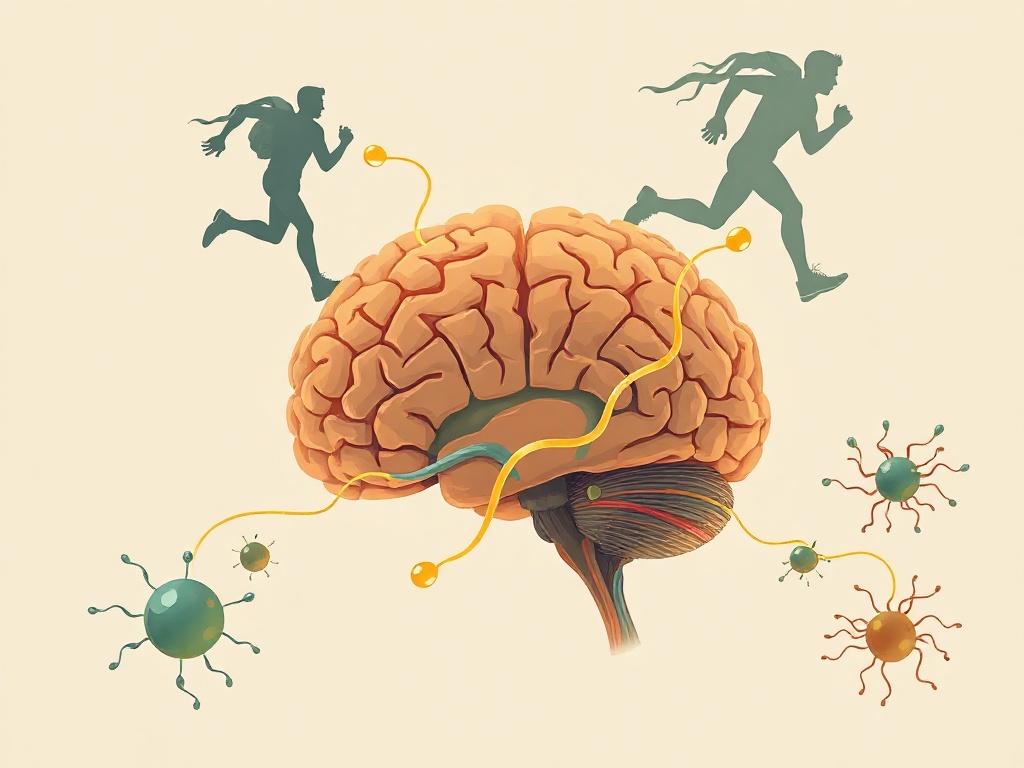
For decades, the search for Alzheimer's disease prevention has centered on drugs targeting amyloid-beta plaques — yet the brain has its own built-in waste-disposal network. Understanding how lifestyle factors modulate this system may reframe how we think about neurodegeneration risk, placing exercise squarely at the center of brain-health strategy rather than on its periphery.
A review published in IBRO Neuroscience Reports synthesizes preclinical and translational evidence showing that physical exercise enhances the glymphatic system — the brain's cerebrospinal fluid (CSF)-driven waste-clearance pathway — through at least four distinct mechanisms: increased CSF influx, improved perivascular solute transport, upregulation and polarization of aquaporin-4 (AQP4) water channels on astrocytic endfeet, and optimization of sleep architecture and vascular dynamics. In animal models, voluntary wheel running and structured aerobic protocols reduced amyloid-beta accumulation and neuroinflammation while improving cognitive performance, with efficacy tightly linked to AQP4 expression levels and the timing of exercise initiation relative to disease progression. Human studies corroborate these findings: structured aerobic and multicomponent training regimens measurably increased glymphatic and meningeal lymphatic activity, improved cerebrovascular reactivity, reduced systemic inflammatory markers, and enhanced sleep quality — all converging on cognitive gains.
What distinguishes this review from earlier exercise-and-brain literature is its mechanistic specificity around the glymphatic pathway, which only gained scientific recognition around 2012. The AQP4 polarization finding is particularly noteworthy — it suggests that exercise doesn't merely increase cerebral blood flow in a general sense, but may structurally optimize the molecular architecture of the glymphatic conveyance system. However, critical limitations temper enthusiasm: most mechanistic data derive from rodent models, human neuroimaging of glymphatic flow remains methodologically immature, and no long-term randomized trials have yet established causality in aging humans. The review is best interpreted as a compelling mechanistic framework demanding longitudinal, multimodal trials rather than definitive proof. For health-conscious adults, the convergence of vascular, sleep, and glymphatic benefits from aerobic exercise represents one of the stronger biological rationales yet assembled for sustained physical activity as a neuroprotective priority.