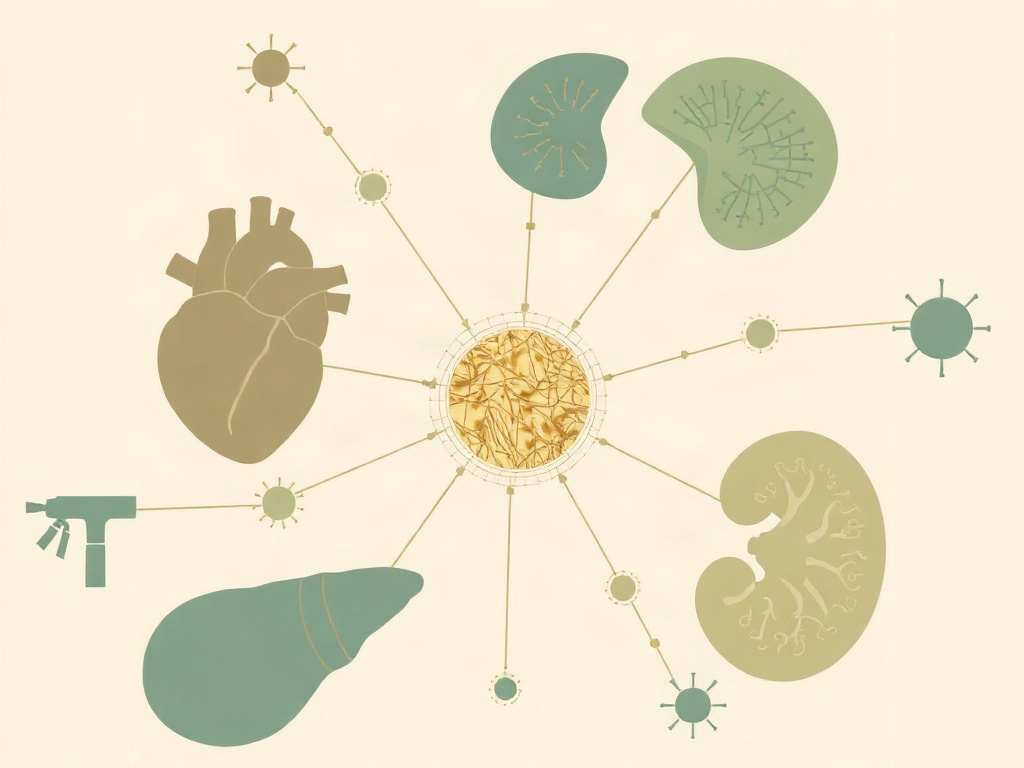
Non-human primate studies reveal that declining FOXO1 transcription factor activity drives male reproductive aging through a previously unknown mechanism. In epididymal tissue, FOXO1 normally activates LHX1 to prevent cellular senescence, but this protective axis degrades with age, leading to chronic inflammation, fibrosis, and fertility decline. Remarkably, treatment with senescence-resistant mesenchymal progenitor cells restored FOXO1 expression and reversed aging phenotypes. This discovery illuminates why male fertility declines progressively with age, even when testosterone levels remain adequate. The FOXO1-LHX1 pathway represents a fundamental longevity mechanism that extends beyond reproduction—FOXO1 is a master regulator of cellular stress resistance and lifespan across species. The therapeutic potential is significant: rather than hormone replacement, targeting this pathway could preserve reproductive function at the cellular level. However, translating primate findings to humans requires validation, and the long-term safety of stem cell interventions needs assessment. This work shifts focus from hormonal to cellular mechanisms of reproductive aging, potentially opening new avenues for maintaining fertility and broader healthspan in aging men.
FOXO1-LHX1 Pathway Controls Male Reproductive Aging in Primates
Primary reference: Protein & cell · View source ↗
Informational, non-clinical synthesis informed by published research. Not a clinical guideline or medical advice. May contain errors or editorial interpretation. Consult the original source and your physician.