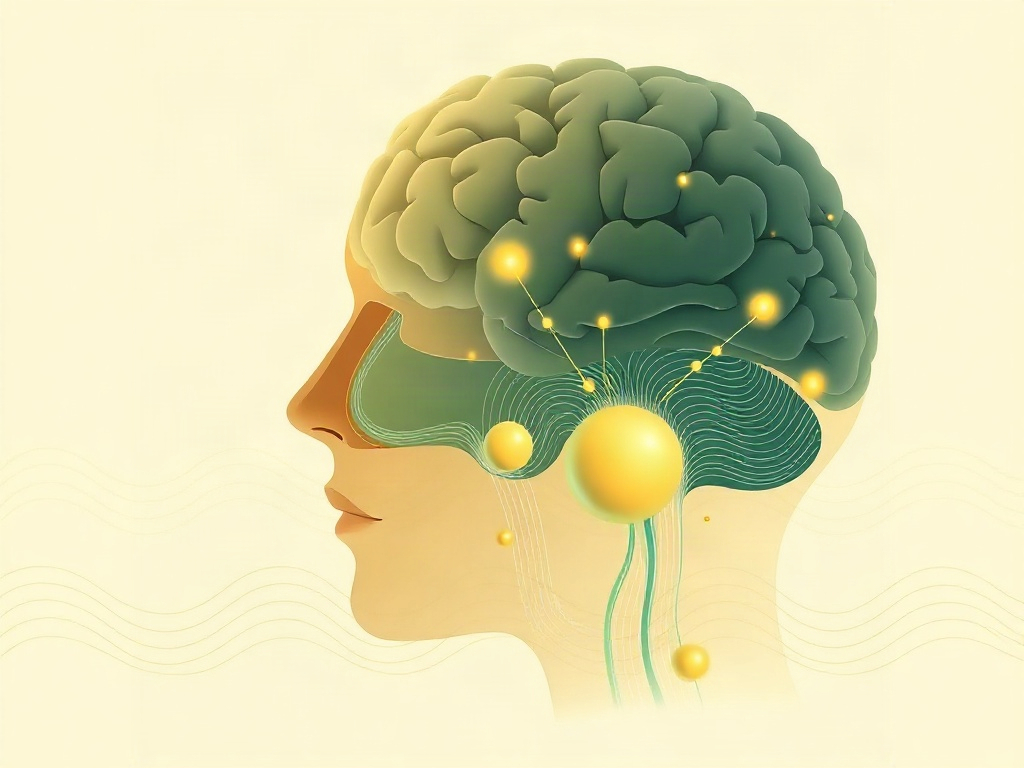
Breathwork and mindfulness practitioners have long advocated slow nasal breathing for calming the nervous system, but the claim has lacked precise mechanistic grounding. New circuit-level evidence now maps the exact neural architecture through which breathing rate translates into emotional tone — a finding that could reframe how anxiety interventions are designed and targeted.
Working in mice, researchers traced a four-node pathway running from olfactory sensory neurons in the nasal cavity through mitral cells in the olfactory bulb, then into parvalbumin-positive long-projecting interneurons in the perirhinal cortex, and finally terminating on glutamatergic neurons in the posterior basolateral amygdala. The critical variable was signal frequency: low-frequency nasal airflow — or optogenetic stimulation mimicking it — activated this pathway, boosted high-gamma oscillatory power in the perirhinal cortex, and produced measurable anxiolysis. High-frequency input drove the opposite: anxiogenic states. Chemogenetic silencing of the olfactory bulb–to–perirhinal cortex segment erased these frequency-dependent behavioral effects entirely. Notably, a two-week low-frequency stimulation regimen in an anxiety-model cohort restored cortical gamma activity and reduced anxiety-like behavior, suggesting therapeutic durability.
The elegant bidirectionality of this circuit — where the same anatomical path can soothe or agitate depending on input frequency — offers a compelling mechanistic explanation for why rapid, shallow breathing correlates with panic states while slow nasal breathing is calming. The perirhinal cortex, often overshadowed by the amygdala in fear research, emerges here as a key regulatory hub, with parvalbumin interneurons acting as frequency-sensitive gatekeepers. The central limitation is phylogenetic: mouse olfactory circuitry is considerably denser than in humans, and translating frequency thresholds or precise pathway homologs will require non-human primate or human imaging studies. Nonetheless, this research is more than incremental — it elevates breathwork from empirical folklore to targetable neuroscience, and identifies the OB–PRC parvalbumin node as a potential site for non-invasive neuromodulation in anxiety disorders.