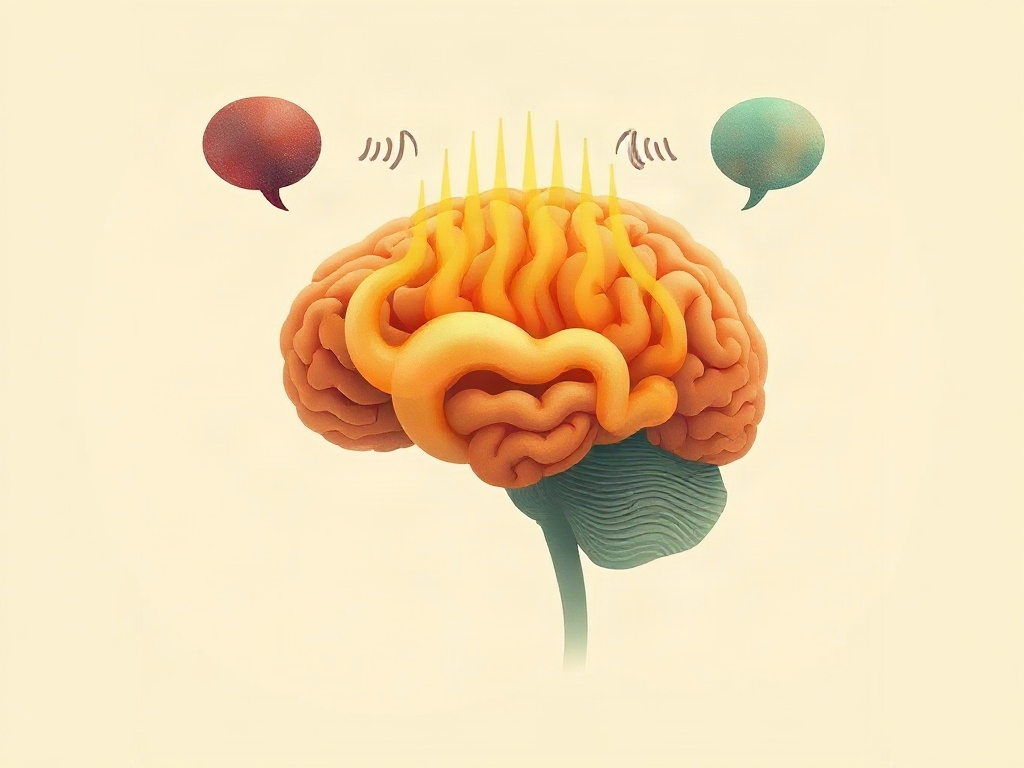
The simple act of naming an emotion — a cornerstone of cognitive behavioral therapy, mindfulness practice, and everyday emotional regulation — may only work its neurological magic in the language a person grew up speaking. This finding carries real consequences for the millions of people who receive mental health care in a second language, and for understanding why emotional processing can feel fundamentally different across linguistic contexts.
Published in PNAS, the study examined the neural effects of affect labeling — the practice of verbally identifying an emotional state — across participants' native and non-native languages. Using neuroimaging, researchers found that the well-documented amygdala down-regulation associated with affect labeling occurred reliably only when participants used their dominant native language. When the same emotional labeling task was performed in a second language, the characteristic dampening of amygdala reactivity was significantly attenuated or absent, suggesting the regulatory circuit depends on deeply ingrained linguistic encoding rather than semantic meaning alone.
This result sits at an important intersection of affective neuroscience and bilingualism research. Prior work has established that bilinguals show reduced autonomic and emotional reactivity when processing emotionally charged content in a second language — sometimes called the "foreign language effect" — but those studies largely focused on moral decision-making or arousal responses rather than active emotion regulation strategies. What this study adds is a mechanistic neural explanation: the prefrontal-amygdala regulatory pathway invoked by naming emotions appears to be language-specific, not language-general. This is an incremental but meaningful advance with real-world implications. Psychotherapy conducted in a patient's second language may be functionally less effective at producing neurobiological emotional regulation, even when comprehension is fluent. The finding is limited by the neuroimaging sample size typical of such studies and warrants replication across diverse language pairs and cultural contexts before clinical guidelines should shift.