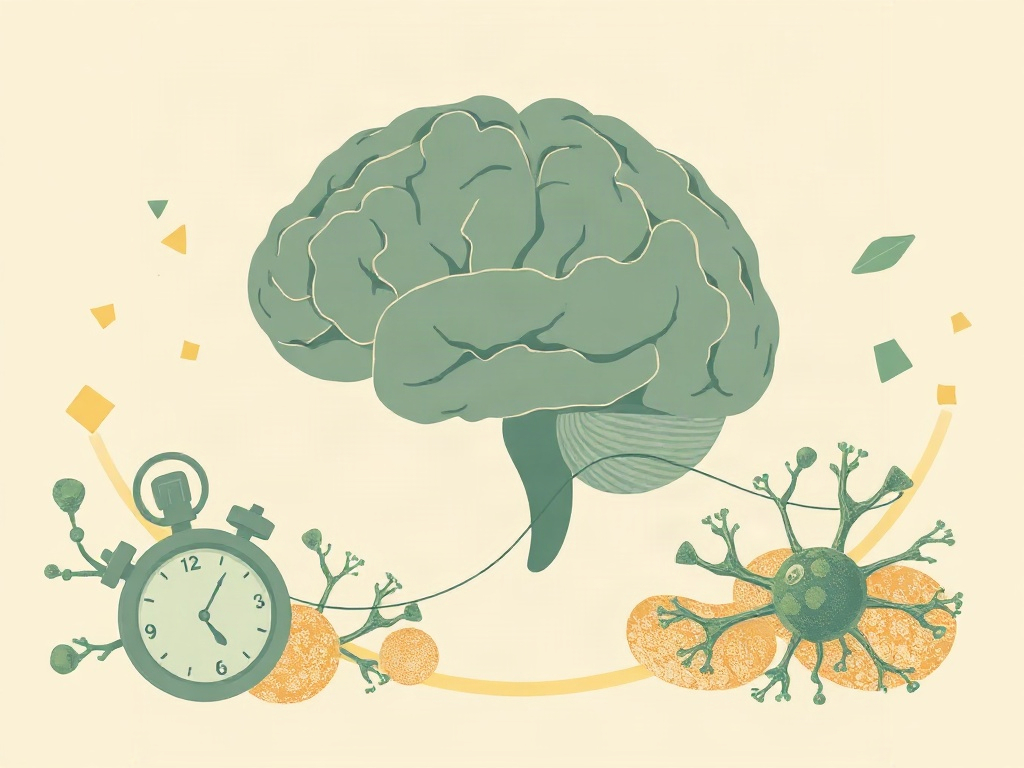
Scientists developed an optical biopsy system that measures aging in retinal cells—specifically ganglion, bipolar, and photoreceptor populations—to predict health outcomes and longevity. Testing across 66,602 human adults and rhesus macaques, this neuroectodermal aging clock demonstrated evolutionary conservation and captured preclinical aging signals before disease onset. The system showed particular strength in diabetic populations, maintaining prognostic accuracy across both healthy and diseased states. This breakthrough addresses a critical gap in aging research by providing real-time assessment of tissues that rarely regenerate, making them ideal repositories of accumulated damage. Unlike traditional biomarkers that reflect systemic inflammation or metabolic dysfunction, this retinal approach directly visualizes cellular aging in neural tissue through non-invasive imaging. The technology's ability to detect aging signals beyond the eye itself suggests these neuroectodermal changes mirror broader physiological decline. However, as a preprint awaiting peer review, these findings require validation through independent replication and longer-term follow-up studies. The practical implications are substantial—routine eye exams could potentially forecast health trajectories decades before symptoms appear, revolutionizing preventive medicine and personalized aging interventions.
PREPRINT — Not yet peer-reviewed
Retinal Aging Clock Predicts Longevity Across 66,602 Adults Using AI
Primary reference: medRxiv preprint · View source ↗
⚠️ This is a preprint — it has not yet been peer-reviewed. Results should be interpreted with caution and may change following peer review.
Informational, non-clinical synthesis informed by published research. Not a clinical guideline or medical advice. May contain errors or editorial interpretation. Consult the original source and your physician.