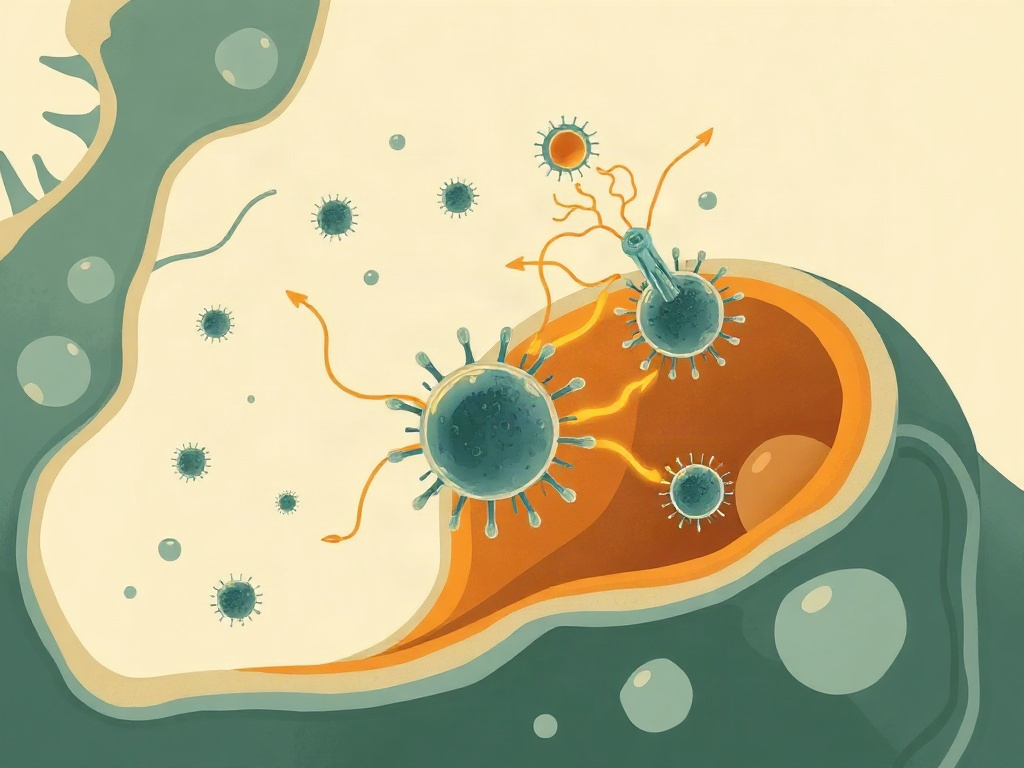
Depleting Integrator complex subunits in adult C. elegans extends both lifespan and healthspan by disrupting RNA 3' end processing. Loss of the catalytic subunit INTS-11 impairs trans-splicing and promotes outron retention in transcripts involved in spliceosomal and nucleocytoplasmic transport functions, while altering endogenous siRNA levels that mediate the longevity benefits. This counterintuitive finding challenges conventional assumptions about cellular maintenance and aging. Normally, defective RNA processing would be considered detrimental, yet here it triggers beneficial cascades including mitochondrial dysfunction that paradoxically extends lifespan. The mechanism suggests a hormetic response where mild molecular stress activates protective pathways. This builds on emerging evidence that controlled cellular perturbations can promote longevity, similar to how caloric restriction or intermittent fasting work. The reliance on endogenous siRNAs indicates sophisticated regulatory networks coordinate the response. While promising, these C. elegans findings require validation in mammals, where RNA processing complexity differs substantially. The research reveals how fundamental cellular machinery like Integrator can be therapeutically targeted, though translating controlled RNA processing disruption to human interventions presents significant challenges.
Integrator Complex Depletion Extends C. elegans Lifespan via RNA Processing Defects
Primary reference: bioRxiv : the preprint server for biology · View source ↗
Informational, non-clinical synthesis informed by published research. Not a clinical guideline or medical advice. May contain errors or editorial interpretation. Consult the original source and your physician.