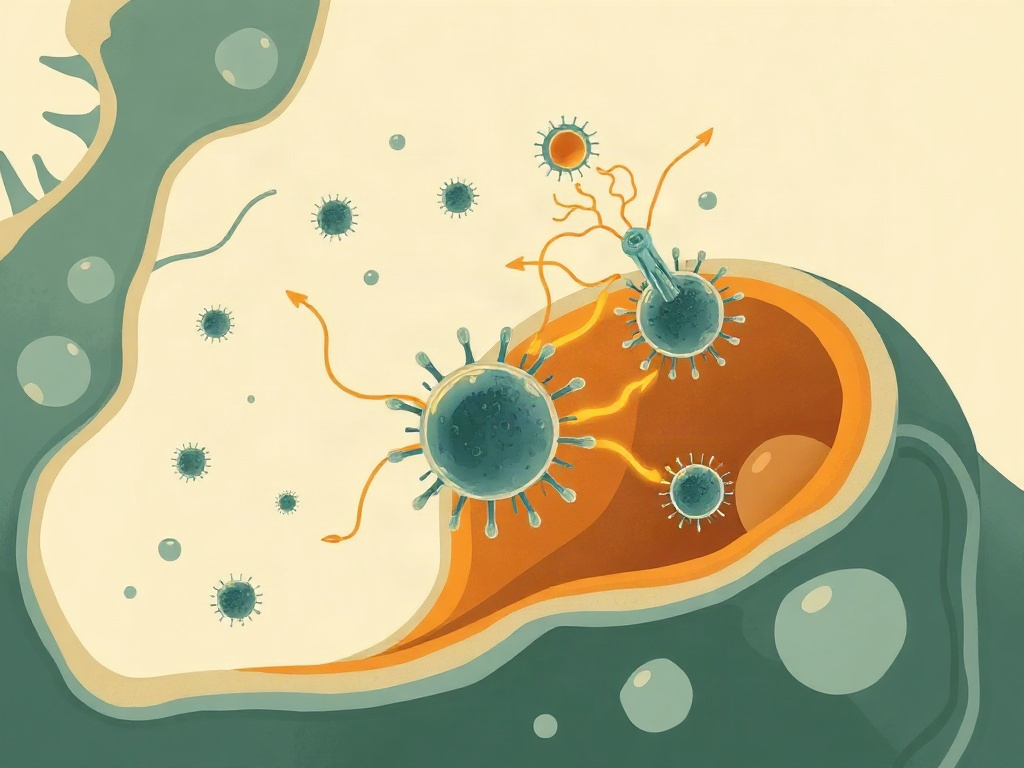
The "Viral Mimicry" hypothesis reveals that Alzheimer's disease arises when the brain's immune system attacks its own cellular components. Mitochondrial DNA leaking into cell cytoplasm, combined with activated ancient retrotransposons (LINE-1, HERVs), triggers the cGAS-STING cytosolic sensing pathway. This pathway normally detects viral DNA but mistakenly identifies self-nucleic acids as threats, launching chronic interferon responses that transform microglia and astrocytes into senescent, inflammatory cells releasing toxic SASP compounds that destroy synapses. This mechanistic insight represents a paradigm shift from decades of failed amyloid-beta targeting. The framework connects major genetic risk factors like APOE4 and TREM2 variants to mitochondrial dysfunction, creating vulnerability to this autoimmune cascade. Therapeutically, this opens entirely new avenues: repurposing HIV drugs (NRTIs) to block retrotransposition and deploying senolytics to eliminate dysfunctional brain cells. While compelling, this remains largely theoretical—the challenge lies in proving causation versus correlation and developing targeted interventions that modulate innate immunity without compromising legitimate viral defense. If validated, this could revolutionize Alzheimer's treatment by addressing root immunometabolic causes rather than downstream protein aggregation.
Review Proposes 'Viral Mimicry' Hypothesis: Alzheimer's Brains May Mistake Self-DNA for Viral Invasion via cGAS-STING
Primary reference: Journal of molecular neuroscience : MN · View source ↗
Informational, non-clinical synthesis informed by published research. Not a clinical guideline or medical advice. May contain errors or editorial interpretation. Consult the original source and your physician.