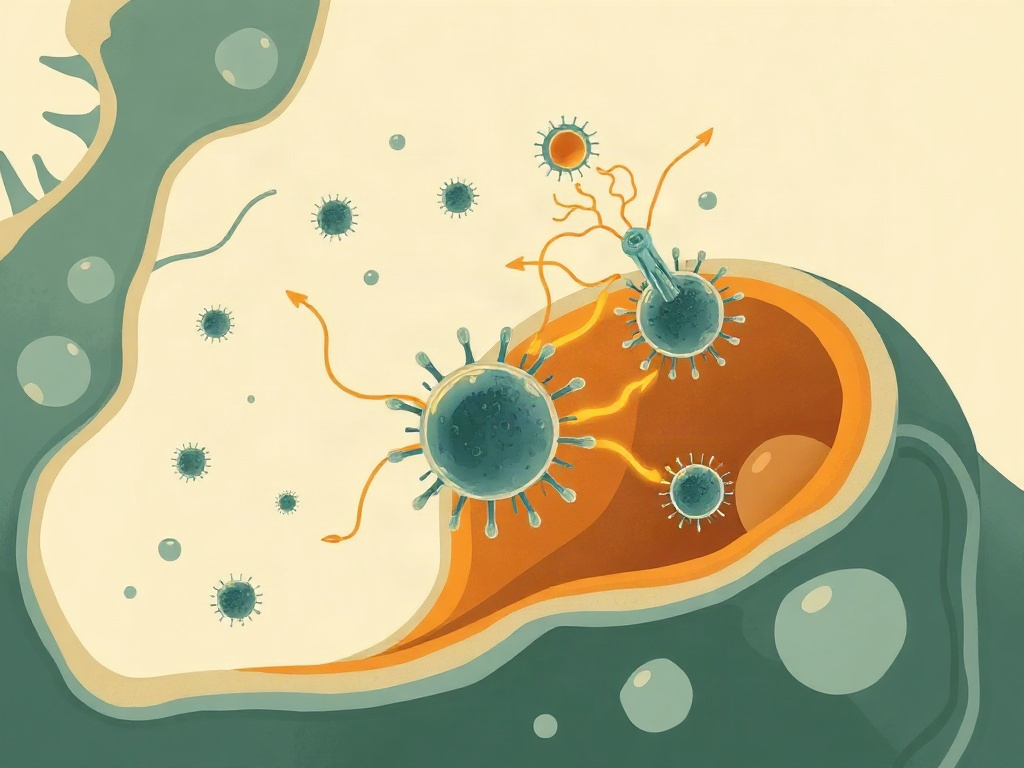
T cell senescence emerges as a central driver of organismal aging through dual mechanisms: failing to clear senescent cells while simultaneously producing inflammatory cytokines that fuel chronic low-grade inflammation. The research identifies specific vulnerabilities including thymic involution, hematopoietic stem cell dysfunction, and mitochondrial impairment that render T cells particularly susceptible to age-related decline. Therapeutic interventions show promise across multiple approaches. PD-1/PD-L1 checkpoint inhibitors, senolytic CAR-T cells targeting senescent cells, and CXCL4/platelet factor 4 modulation demonstrate efficacy in preclinical models. Human trials exploring caloric restriction, low-dose mTOR inhibition, thymic regeneration, and mesenchymal stem cell therapy suggest translatable benefits. The brain connection proves particularly intriguing—T cells infiltrating neural tissue can either accelerate or protect against Alzheimer's progression depending on disease stage. This represents a paradigm shift in aging research, positioning immune system decline not merely as a consequence of aging but as an active driver. The convergence of multiple therapeutic pathways targeting T cell function suggests immunosenescence interventions could become foundational anti-aging strategies, though human validation remains preliminary.
T Cell Senescence Drives Organ Aging Through Inflammaging Pathways
Primary reference: Inflammation and regeneration · View source ↗
Informational, non-clinical synthesis informed by published research. Not a clinical guideline or medical advice. May contain errors or editorial interpretation. Consult the original source and your physician.