Protein quality control is one of biology's most elegant unsolved problems: how does a cell simultaneously permit wide variation in protein synthesis speeds while also identifying and eliminating synthesis events that have gone catastrophically wrong? New molecular findings offer a mechanistic window into this cellular triage system — one with potential implications for aging, cancer, and neurodegeneration, all of which involve defective protein homeostasis.
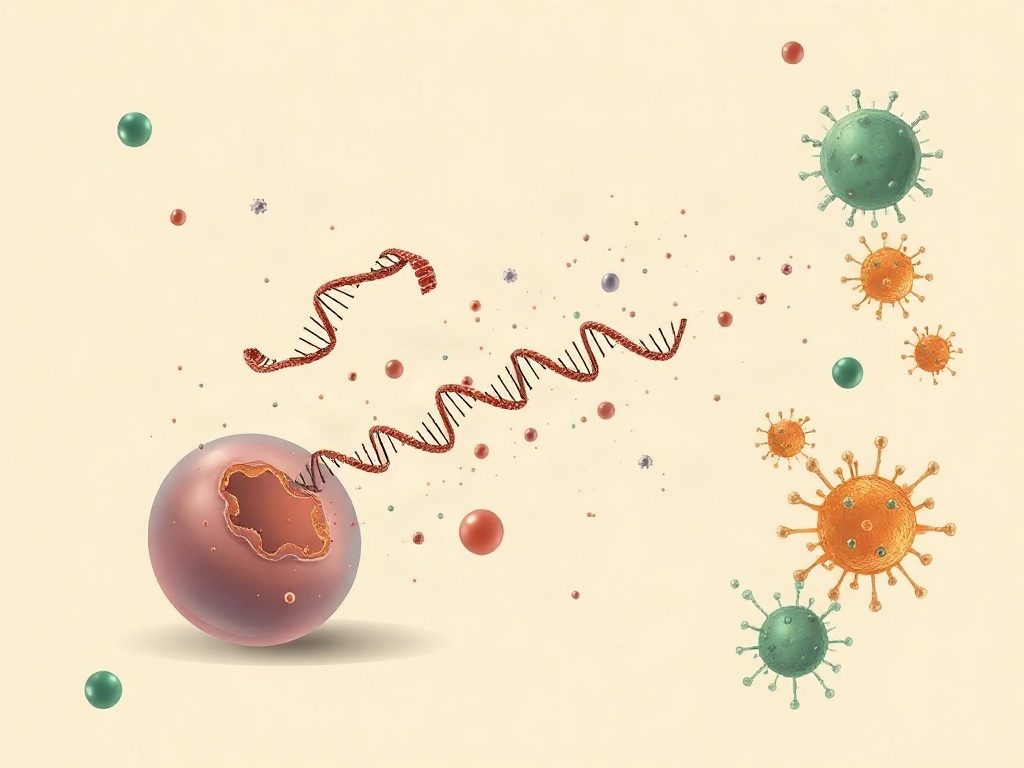
Published in PNAS, the research centers on eIF5A, a translation elongation factor uniquely modified by the polyamine spermidine through a process called hypusination. The study finds that eIF5A and polyamines cooperate to suppress mRNA levels specifically when ribosomes stall — a state in which the protein-synthesis machinery becomes stuck mid-translation on a transcript. Rather than simply halting production, the cell appears to deploy this eIF5A-polyamine axis to actively reduce the offending mRNA, curtailing further potentially toxic protein output. The mechanistic connection between ribosome stalling, mRNA surveillance, and polyamine metabolism is a previously undercharacterized link in the quality control chain.
This finding sits at an intersection of several active research domains. Ribosome-associated quality control (RQC) has been intensively studied over the past decade, but most prior work focused on protein-level responses — tagging aberrant nascent peptides for degradation. The contribution of mRNA-level regulation in response to ribosome stalls has been comparatively less defined. eIF5A itself is a molecule of considerable longevity interest: spermidine, the polyamine required for its hypusination, has independently attracted attention as a potential autophagy-inducing, pro-longevity compound in multiple model organisms. Connecting spermidine's cellular role to mRNA surveillance adds meaningful mechanistic depth to those observations. Limitations worth noting include the study's apparent reliance on cell-based or yeast models rather than human clinical data, making translational extrapolation premature. This is best characterized as an important mechanistic advance — confirmatory for some RQC hypotheses, but genuinely novel in specifying the eIF5A-polyamine-mRNA degradation connection.