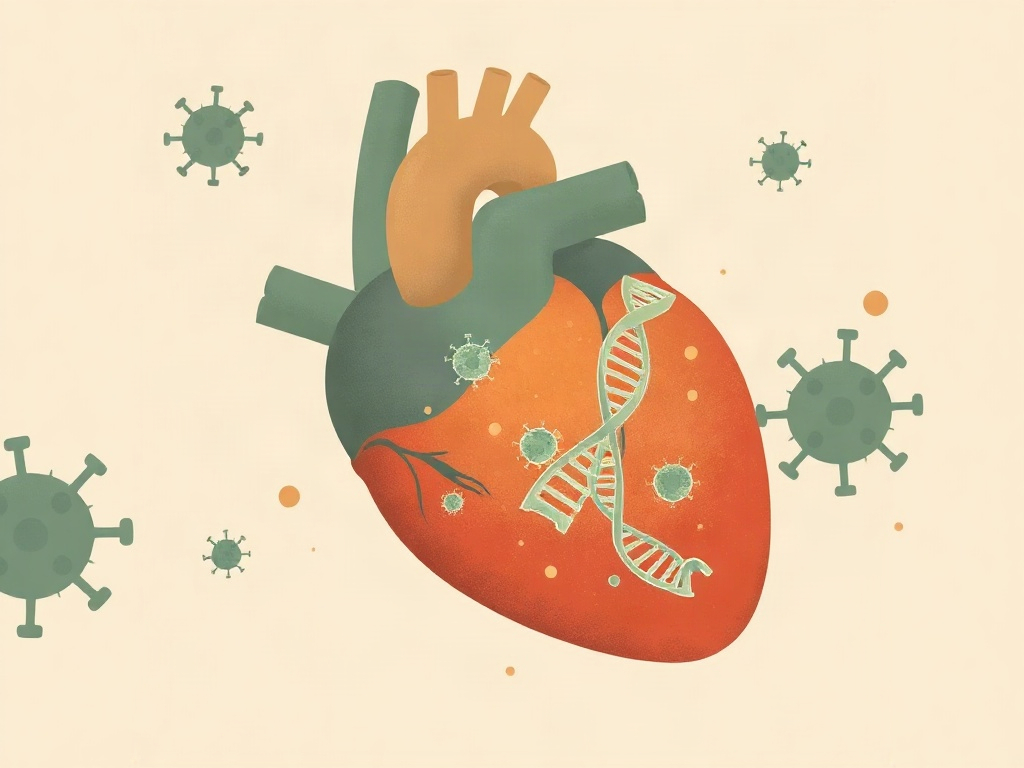
Heart failure and cardiac aging have long been linked to declining mitochondrial function, but the precise causal chain — from DNA-level mutations inside heart muscle cells to organ-wide dysfunction — has remained frustratingly opaque. New mechanistic evidence now closes a critical gap, isolating cell-intrinsic mitochondrial deterioration as a sufficient driver of cardiac decline, independent of systemic aging signals.
Using a genetically engineered mouse model with spatially and temporally controlled expression of a proofreading-deficient mitochondrial DNA polymerase (POLGD257A) restricted to cardiomyocytes, researchers demonstrated that somatic mtDNA mutations alone are sufficient to produce progressive contractile dysfunction and respiratory chain deficiency confined to the heart. Crucially, systemic pathology was absent, ruling out confounding whole-body effects that plagued earlier mtDNA mutator models. Proteomic profiling revealed that mosaic respiratory chain dysfunction within the cardiac tissue activated a coordinated immune response — specifically, upregulation of antigen-processing machinery and immune cell infiltration — establishing a molecular bridge between mitochondrial oxidative phosphorylation (OXPHOS) failure and cardiac inflammation. Notably, longevity-associated signaling pathways were suppressed and appeared decoupled from both mitochondrial and immune alterations, suggesting these regulatory axes operate through distinct mechanisms.
This work is potentially paradigm-shifting for cardiac aging research. The central insight — that somatic mtDNA mutations within a single cell type can independently ignite an immune-mediated deterioration cascade — repositions mitochondrial mutagenesis as an upstream initiator of inflammaging in heart tissue, not merely a correlate. The OXPHOS-immune axis identified here aligns with emerging data on mitochondrial stress signaling (including cGAS-STING pathway activation by cytosolic mtDNA), though this study's proteomic approach does not yet fully resolve the molecular sensor. Limitations include the use of an artificial mutagenesis model rather than naturally occurring age-related mtDNA heteroplasmy, and mouse-to-human translation remains uncertain. Still, the clean cell-type-specific design represents a methodological advance over prior whole-organism models, making these mechanistic conclusions substantially more credible.