Male reproductive aging has long been attributed primarily to testicular decline, but a growing body of evidence suggests the epididymis — the tubular structure where sperm mature and acquire motility — may be an equally critical, and far less studied, weak link. New mechanistic data from non-human primates now offer a molecular roadmap for why epididymal function degrades with age, and a potential cellular strategy to reverse it.
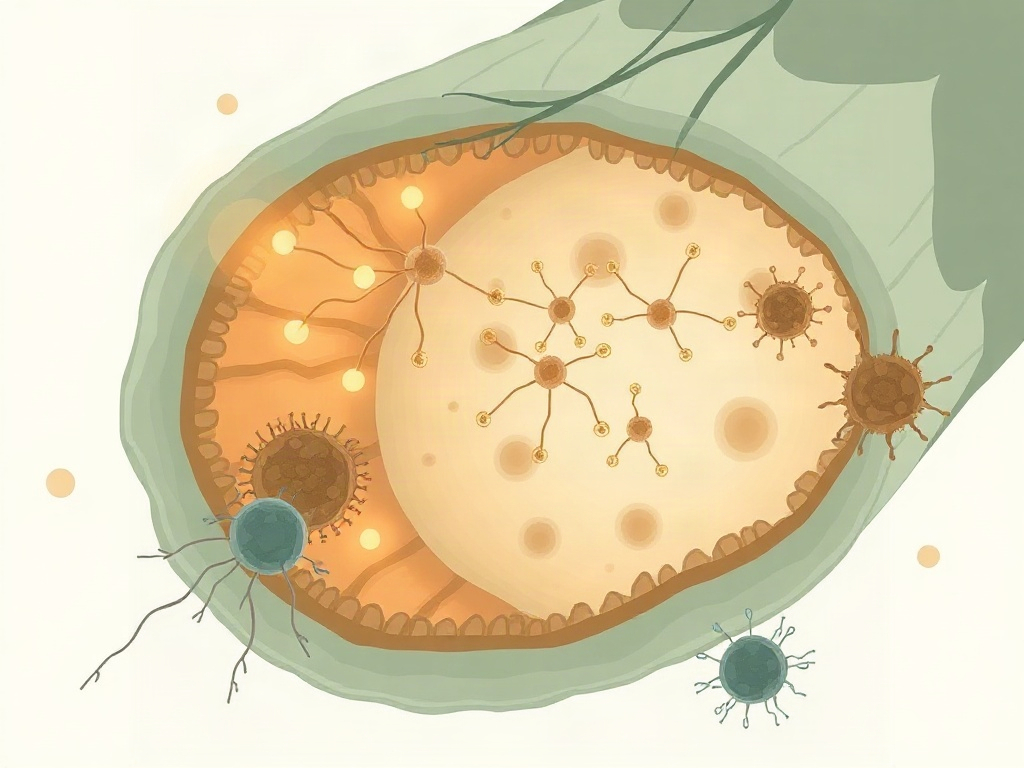
Using an unusually rigorous multimodal approach combining histology, bulk transcriptomics, and single-nucleus RNA sequencing in aging primates, investigators identified a coherent aging signature in the epididymis: epithelial senescence, chronic low-grade inflammation, fibrosis, and measurable functional decline. Within the epithelium, principal cells — the dominant cell type responsible for secreting proteins that support sperm maturation — emerged as the most transcriptionally disrupted population. The longevity-associated transcription factor FOXO1 was markedly suppressed in these cells with advancing age. Follow-up functional work in human epididymal epithelial cells confirmed that FOXO1 loss is sufficient to trigger cellular senescence, and that its protective effect operates through transcriptional activation of LHX1, a homeodomain factor not previously linked to reproductive aging. Critically, treatment with senescence-resistant mesenchymal progenitor cells or their exosomes restored FOXO1 expression and reversed multiple aging hallmarks both in vivo and in vitro.
FOXO1 is well-established as a master regulator of longevity and stress resistance across tissues, but its tissue-specific role in male reproductive aging had not been mechanistically dissected at this resolution. The identification of LHX1 as a downstream effector is genuinely novel. That exosomes from engineered progenitor cells can recapitulate the rescue effect is particularly notable, pointing toward cell-free therapeutic strategies. Limitations are real: this is primate and in-vitro data, not a human clinical intervention, and it remains unknown whether FOXO1 restoration would translate to improved fertility outcomes in aging men. Still, for a field that has lacked precise molecular targets, this represents a meaningful mechanistic advance rather than incremental progress.