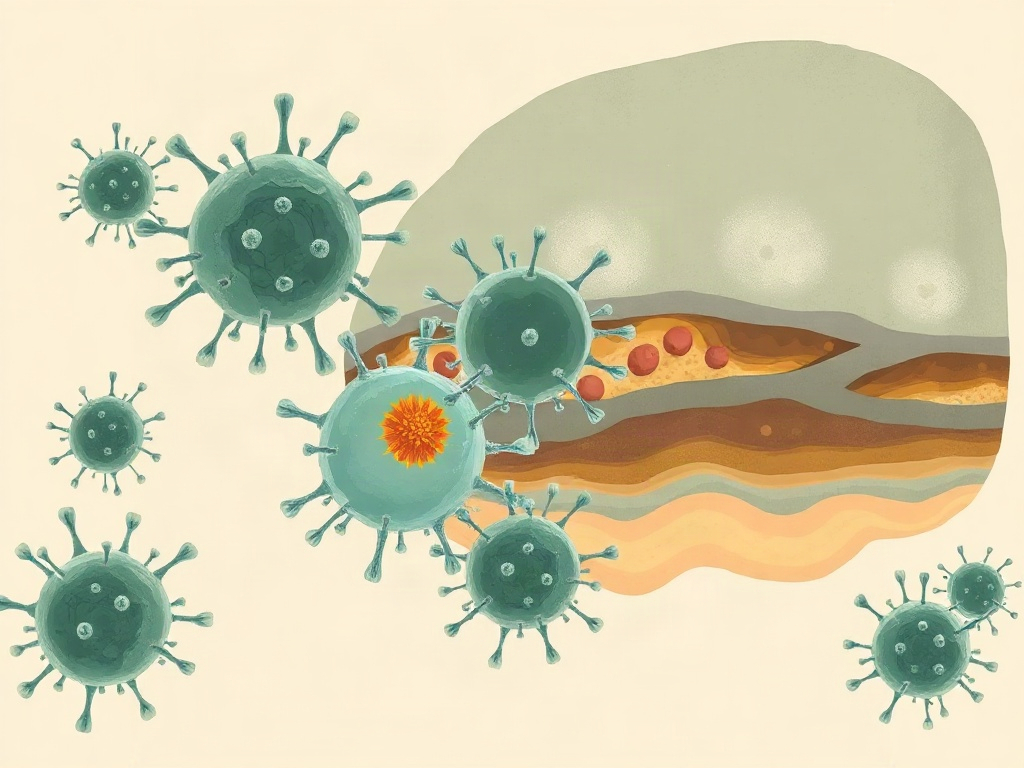
A single molecular target governing the pace of multi-organ aging would be transformative for longevity medicine. New findings published in Science suggest that impaired removal of senescent neutrophils by tissue-resident macrophages — regulated through a prostaglandin receptor — may be precisely such a lever, with pharmacologic intervention demonstrating broad reversal of age-related organ decline in preclinical models.
The research centers on EP2, a prostaglandin E2 receptor expressed on tissue-resident macrophages (TRMs). In aged mice, elevated TRM EP2 signaling blunts efferocytosis — the cellular housekeeping process by which macrophages clear senescent and dying neutrophils. The resulting accumulation of senescent neutrophils triggers paracrine inflammatory stress in neighboring cells, propagating systemic inflammation and tissue dysfunction. When EP2 signaling was genetically or pharmacologically reduced, aged mice retained mitochondrial fitness comparable to younger animals and were protected from cognitive decline, frailty, sarcopenia, excess adiposity, and cardiac impairment. Plasma proteomics identified the liver as a primary amplifier of this immune dysregulation. Critically, elevated EP2 expression and senescent neutrophil accumulation were confirmed in aged and diseased human tissues — a translational signal that strengthens the clinical relevance beyond mouse data.
This work sits at the intersection of immunosenescence and organ aging, two fields that have long been studied in parallel but rarely unified mechanistically. The EP2-efferocytosis axis offers a concrete, drug-accessible pathway rather than the broader, harder-to-target processes like telomere attrition or global senolysis. The finding is potentially paradigm-shifting because it positions neutrophil clearance — not just senescent cell accumulation per se — as a rate-limiting step in multi-organ aging. Key limitations remain: mouse-to-human translation of efferocytosis biology is imperfect, EP2 antagonists carry cardiovascular and inflammatory considerations given prostaglandin biology's systemic roles, and no human intervention data yet exist. Still, as a mechanistic demonstration linking a reversible immune process to broad healthspan outcomes, this ranks among the more compelling aging findings in recent years.