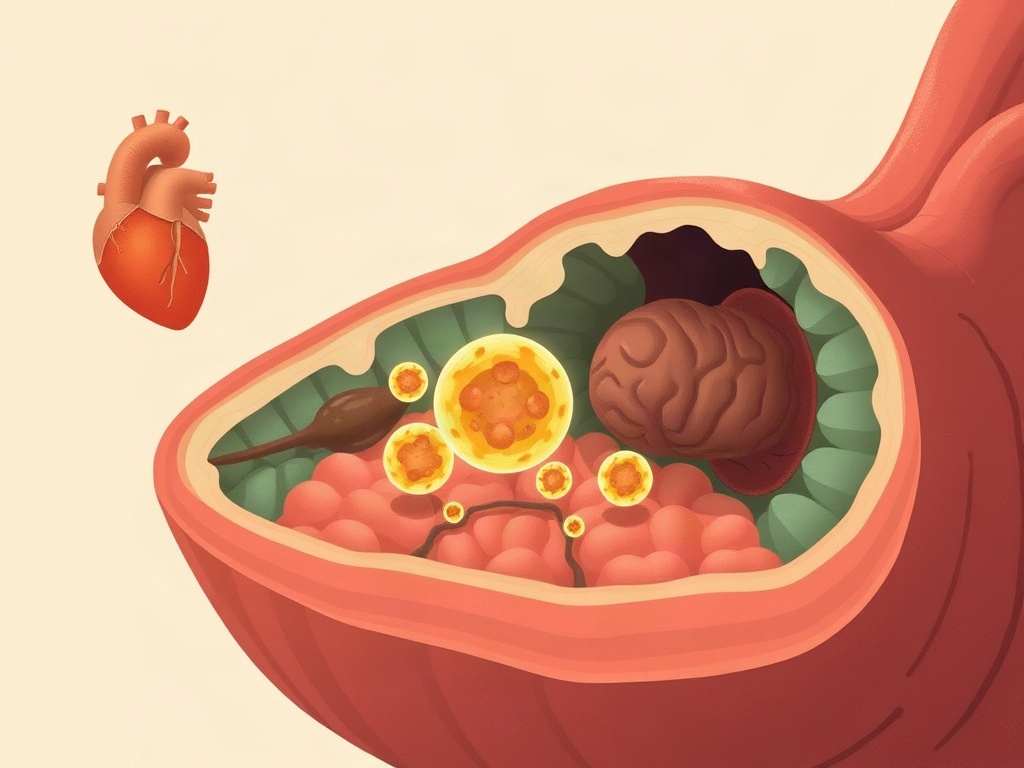
The assumption that aging's toll on organs is largely irreversible may need serious revision. A newly identified immune mechanism — not a genetic mutation or metabolic defect, but a specific failure in cellular housekeeping — appears to drive simultaneous decline across the heart, brain, muscle, and liver. If this pathway translates to humans, it could reframe how medicine approaches frailty and age-related disease as a unified, potentially treatable immune dysfunction rather than a collection of separate organ failures.
The mechanism centers on tissue-resident macrophages (TRMs), sentinel immune cells embedded throughout organs that are responsible for clearing spent or damaged cells. In aging tissues, TRMs lose their efficiency at removing senescent neutrophils — short-lived immune cells that, when left to accumulate, release inflammatory signals that damage surrounding tissue. The culprit is elevated signaling through EP2, a prostaglandin E2 receptor on TRMs. When researchers genetically reduced EP2 activity specifically in TRMs of aged mice, the cells regained youthful capacity for efferocytosis — the engulfment and clearance of dying cells. The downstream effects were striking: mitochondrial fitness was preserved, cognitive decline and frailty were attenuated, sarcopenia and adiposity were reduced, and cardiac function improved. Plasma proteomics identified the liver as a primary hub from which age-associated immune disruption propagates systemically. Critically, elevated TRM EP2 expression and senescent neutrophil accumulation were also confirmed in aged and diseased human tissues, and pharmacologic EP2 inhibition reproduced the restorative effects.
This work builds on the broader senescence field — most famously senolytic approaches targeting senescent cells themselves — but pivots meaningfully: instead of eliminating senescent cells directly, this strategy restores the body's own clearance machinery. That distinction matters for safety and durability. The study is mouse-dominant, and translating efferocytosis biology to human pharmacology carries well-documented hurdles, but the human tissue validation elevates this well above typical preclinical findings. This is potentially paradigm-shifting for longevity medicine.