Ovarian aging sets the biological clock for female fertility and hormonal health, yet its molecular drivers have remained poorly understood. A mechanistic explanation now points directly at mitochondrial dysfunction — not merely as a bystander, but as an active ignition source for the chronic low-grade inflammation that degrades egg quality with age. This reframes ovarian aging as, in part, an innate immune misfire rather than simple cellular wear.
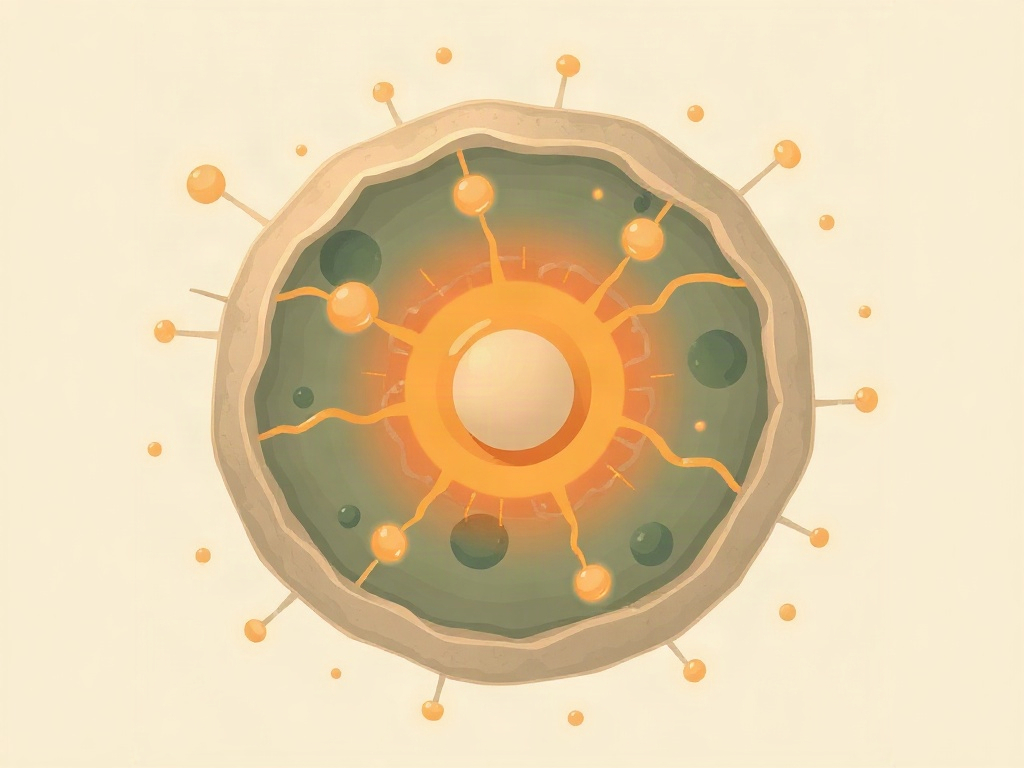
Researchers publishing in Nature Aging demonstrate that aging oocytes develop leaky mitochondrial membranes, allowing mitochondrial DNA (mtDNA) to escape into the cytoplasm. Once cytosolic, this displaced mtDNA is recognized as foreign material by the cGAS enzyme, which synthesizes cyclic GMP-AMP (cGAMP). cGAMP then activates the STING adaptor protein, triggering downstream inflammatory signaling cascades within the oocyte itself. Critically, cGAMP is not confined to the oocyte — it transfers to adjacent granulosa cells, spreading the pro-inflammatory signal into the broader follicular microenvironment essential for egg maturation and hormonal output. Pharmacological inhibition of the cGAS-STING axis in this experimental model was sufficient to measurably ameliorate hallmarks of ovarian aging.
The cGAS-STING pathway has emerged over the past decade as a central mediator of sterile inflammation across aging tissues — brain, liver, and vasculature among them — but its specific role in reproductive aging had not been established. This study adds the ovary to that map and, more importantly, identifies an intercellular signaling mechanism via cGAMP transfer that amplifies local damage beyond the affected cell. From a longevity-medicine perspective, the finding is notable because cGAS-STING inhibitors are already under clinical investigation for autoimmune and inflammatory conditions, meaning translational pathways exist. Key caveats apply: the current work is mechanistic and likely conducted in animal or cellular models, human ovarian translation is unconfirmed, and reproductive aging involves parallel processes including telomere attrition and oxidative stress that this pathway alone does not explain. Nevertheless, as a mechanistic contribution, this is more than incremental — it is a credible causal link worthy of clinical follow-up.