Ovarian aging is one of the most consequential biological clocks in human health, setting the pace for fertility decline, hormonal shifts, and accelerated systemic aging in women. Understanding exactly what triggers the inflammatory deterioration of ovarian tissue has remained elusive — until now. This work reframes ovarian aging not as a passive wearing-out of eggs, but as an active, molecularly driven inflammatory cascade originating within the egg itself.
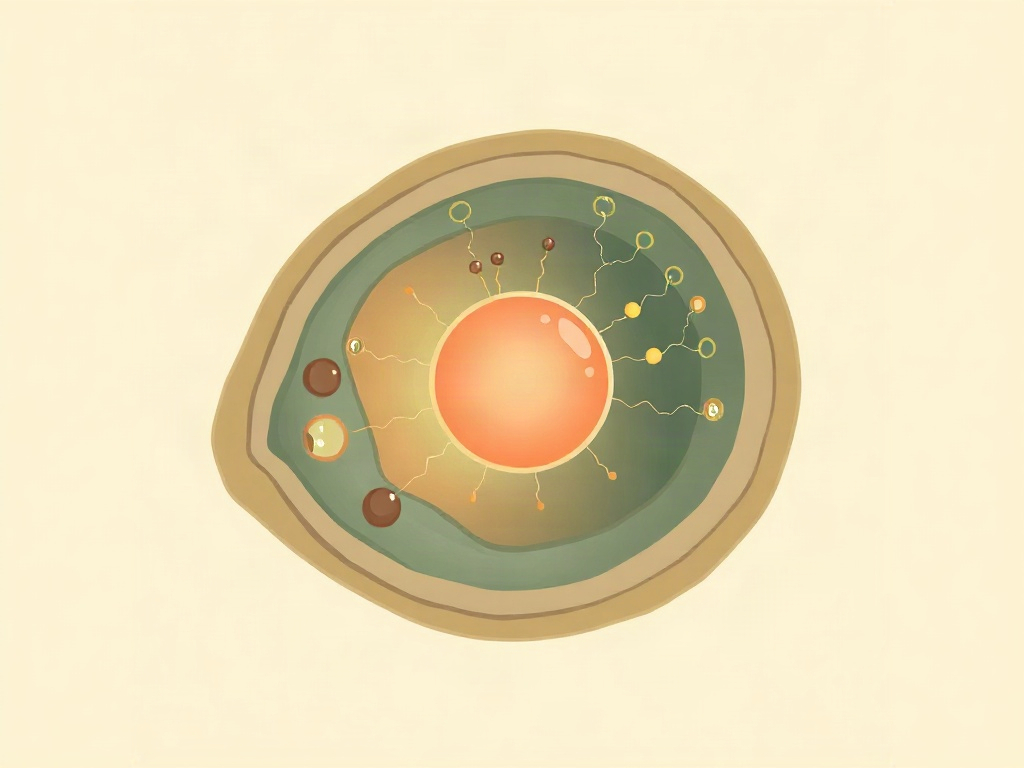
Lei and colleagues demonstrate that as oocytes age, mitochondrial DNA (mtDNA) escapes from mitochondria into the cytosol — a compartment where it is recognized as foreign danger signal. This cytosolic mtDNA activates cGAS, a DNA-sensing enzyme, which synthesizes the second messenger cGAMP. Critically, cGAMP does not stay confined to the oocyte: it travels through CX37 gap junctions — specialized intercellular channels — into the surrounding granulosa cells. There, cGAMP activates STING, triggering a sterile inflammatory program that impairs follicular function and accelerates ovarian decline. The pathway is canonically antiviral but is here co-opted by endogenous damage signals in a decidedly non-infectious context.
The broader significance of this finding extends well beyond reproductive medicine. The cGAS–STING axis has emerged over the past decade as a master regulator of inflammation in aging tissues generally — implicated in neurodegeneration, cardiovascular disease, and cellular senescence. What makes this study particularly compelling is the intercellular propagation mechanism: inflammation spreads from a damaged cell to its healthy neighbors via gap-junction-mediated cGAMP transfer, a paracrine amplification loop that could accelerate tissue-wide deterioration far faster than cell-autonomous inflammation alone. This raises the possibility that blocking CX37-mediated cGAMP transfer, or pharmacologically inhibiting STING in granulosa cells, could preserve ovarian reserve independently of the oocyte's intrinsic mitochondrial status. Key limitations include uncertainty about whether these findings translate directly to human ovaries and whether the inflammatory program identified is reversible once initiated. As a mechanistic study from a top-tier aging journal, this is a genuinely paradigm-shifting contribution to reproductive longevity research.