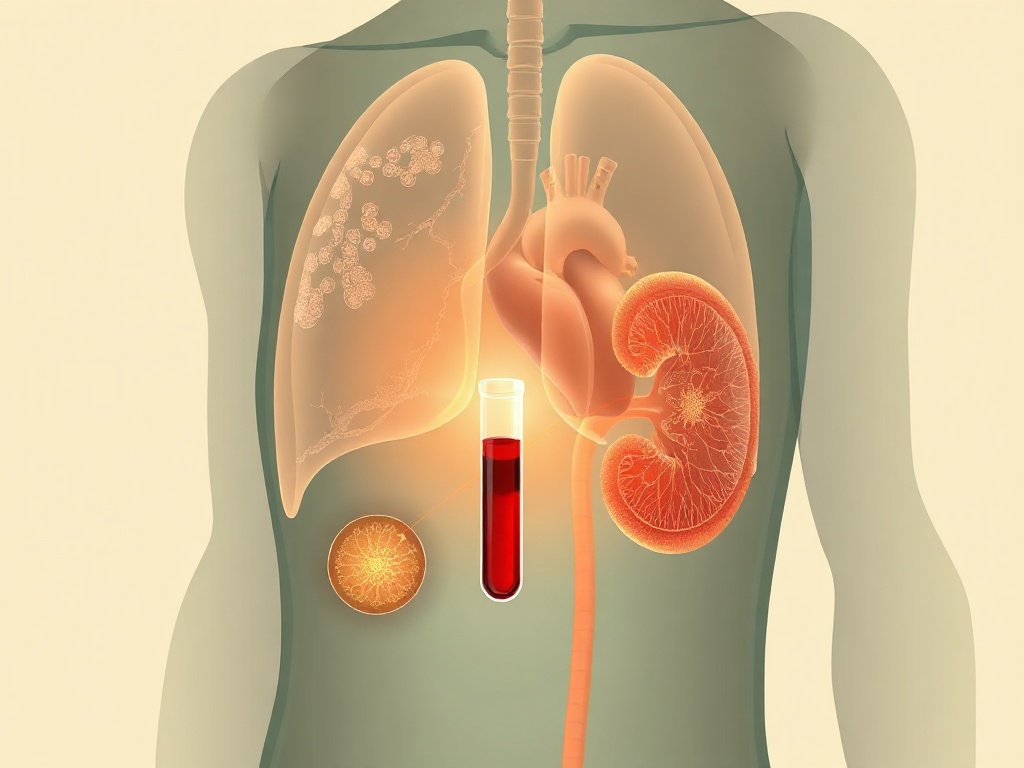
Most aging clocks built to date rely on blood biomarkers or DNA methylation patterns, treating the body as a single system. What changes when scientists can instead measure how each organ ages on its own structural terms — down to the microscopic architecture of cells and connective tissue — and then link those tissue-level signatures back to a simple blood draw? That is precisely the translational leap this Nature Medicine study attempts.
The research team analyzed whole-slide histopathological images spanning 40 distinct tissue types, using computational methods to extract morphological features that shift systematically with chronological age. These tissue-specific aging signatures — encoding cellular density, nuclear irregularity, stromal remodeling, and related structural cues — were then paired with transcriptomic data derived from blood samples. The result is a suite of tissue-specific aging clocks capable of estimating the structural integrity and physiological fitness of individual organs without requiring a biopsy from each site. The clocks also showed sensitivity to disease states, suggesting divergence from expected aging trajectories may serve as an early pathological signal.
This work sits at the intersection of computational pathology and geroscience, two fields that have advanced rapidly but rarely converged at this scale. Prior aging clocks — whether epigenetic, proteomic, or metabolomic — capture systemic or circulating signals and can miss localized organ deterioration. A liver that is histologically aging faster than the rest of the body, for instance, might not register prominently in a pan-tissue blood clock. The ability to infer organ-level structural aging from blood transcriptomics is methodologically ambitious, though the strength of that inference depends heavily on validation cohort diversity and whether the transcriptomic proxies generalize across populations and comorbidities. As a multi-tissue, image-plus-omics framework published in a top-tier journal, this represents a potentially paradigm-shifting step toward personalized, organ-resolved health monitoring.