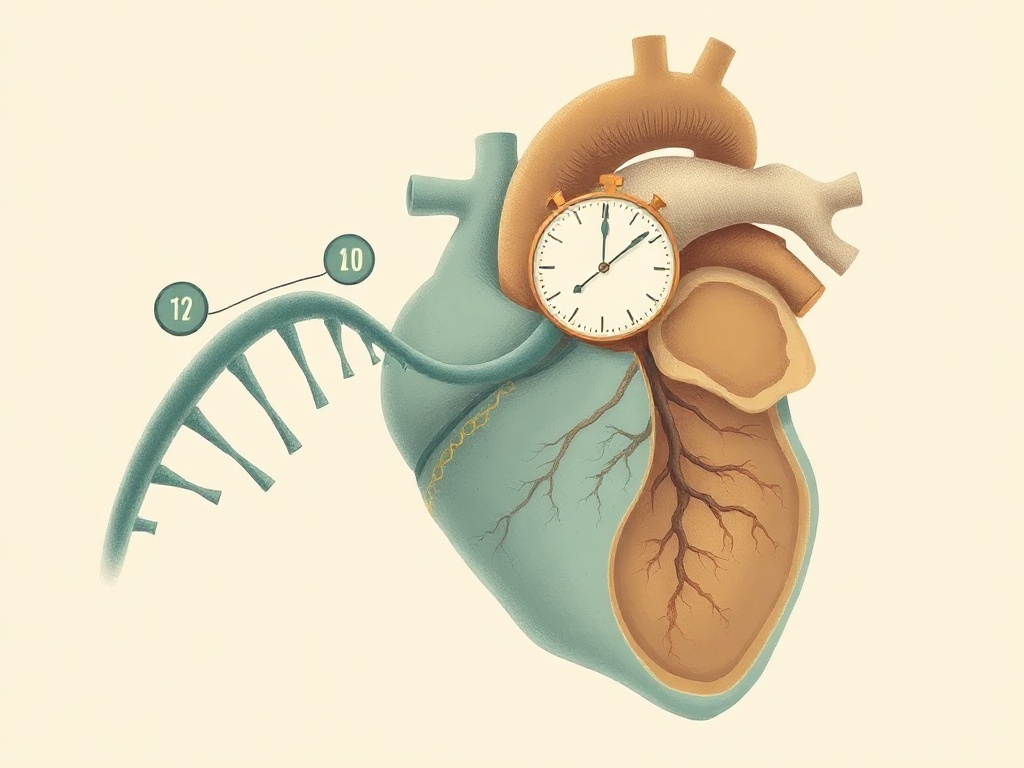
For men managing cardiovascular or metabolic conditions, a biological clock may already be ticking faster than their birth year suggests — and new multi-cohort epigenetic data now quantifies exactly how much faster, and along which molecular pathways. This has implications for how clinicians and researchers think about early risk stratification in male patients long before overt disease endpoints appear.
Using whole-blood DNA methylation profiling in a cohort of men with combined cardiometabolic burden — hypertension, ischemic heart disease, obesity, and dyslipidemia — alongside age-matched healthy controls, investigators found significant epigenetic age acceleration, but only when measured by second-generation clocks. GrimAge, GrimAge2, and the DunedinPACE pace-of-aging metric all registered accelerated biological aging in cases; none of the 19 first-generation Horvath-era clocks showed sensitivity to disease status. Epigenome-wide association analysis further uncovered predominantly hypomethylated differentially methylated positions (DMPs) in affected men, with annotated genes clustering into nine biological pathway groups: chronic inflammation, GPCR signaling dysregulation, metabolic disturbances, mitochondrial dysfunction, vascular remodeling, renal electrolyte regulation, and others. Crucially, epigenetic telomere length (DNAmTL) was also shortened in cases, and the key findings — GrimAge acceleration and leading DMPs — replicated across independent cohorts.
This study sits at an important juncture in epigenetic epidemiology. The failure of first-generation clocks to detect cardiometabolic burden, while second-generation clocks succeed, reinforces the emerging consensus that GrimAge-class and pace-of-aging tools capture biologically meaningful disease-associated aging rather than simply chronological tissue drift. The male-exclusive design is both a scientific strength — enabling clean sex-stratified analysis — and a limitation, as female cardiometabolic epigenetics may differ substantially. The cohort appears to be moderate in size, and while cross-cohort replication strengthens confidence, causal directionality remains unresolved: methylation shifts could precede or follow clinical disease. Still, the nine-pathway enrichment map offers a genuinely useful molecular framework for future biomarker and intervention research. Incremental but solidly confirmatory work in a field where replication remains rare.