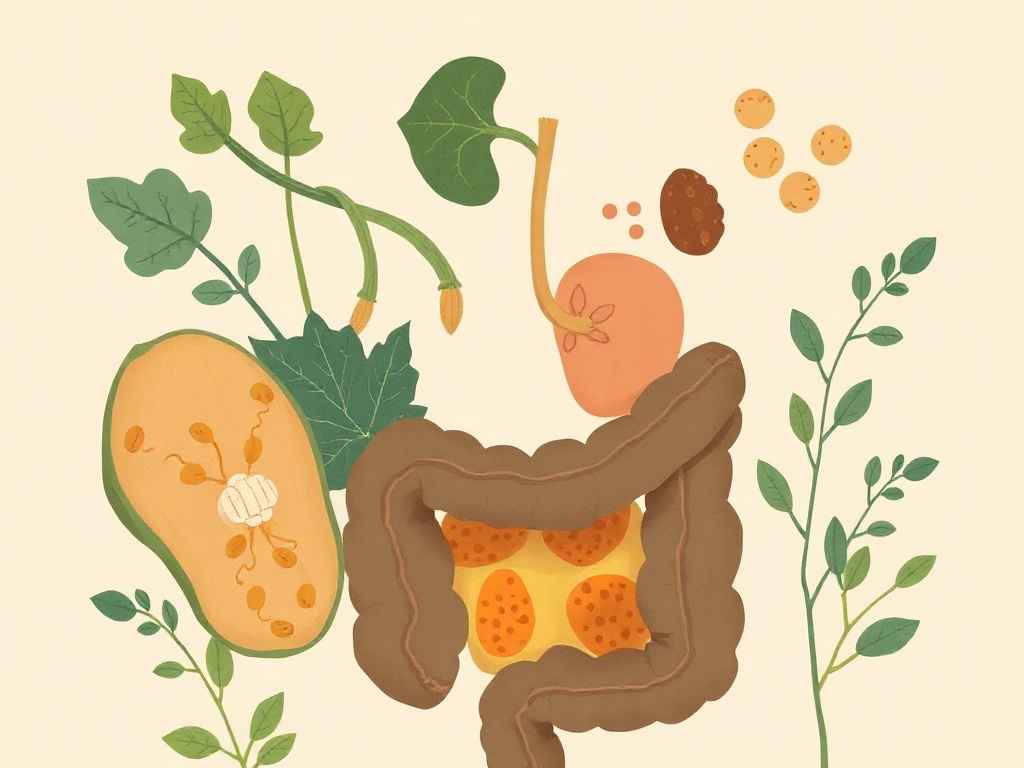
For decades, dietary fiber has claimed nearly all the credit when scientists try to explain why plant-heavy diets correlate with better gut health outcomes. That single-variable assumption may now need substantial revision. Emerging evidence points to a parallel mechanism — digestion-resistant proteins from plant foods — that survives the upper gastrointestinal tract and reaches the colon, where it meaningfully influences the microbial metabolite landscape.
Published in PNAS, this research examines both digestion-resistant carbohydrates (fiber) and digestion-resistant proteins present in plant-based foods, investigating how each fraction independently shapes gut microbial activity and the resulting metabolite profiles. The study demonstrates that intact plant protein fragments that escape enzymatic breakdown in the small intestine serve as fermentation substrates for colonic microbiota, generating metabolite signatures that mirror the favorable profiles documented in habitual plant-based diet consumers. The work isolates protein-driven effects from fiber-driven effects, providing mechanistic clarity on a question that prior observational studies could not adequately disentangle.
This finding sits at an important intersection of nutritional biochemistry and microbiome science. The concept of dietary protein reaching the colon is not entirely new — incomplete protein digestion has been documented — but the deliberate framing of plant-specific proteins as a functional, health-relevant fraction is a meaningful step forward. It also raises questions about protein quality metrics traditionally centered on amino acid bioavailability: resistance to digestion, long considered a nutritional liability, may confer prebiotic-like benefits instead. Key limitations warrant caution: the excerpt does not clarify whether findings derive from in vitro fermentation models, animal studies, or human trials, which dramatically affects translational confidence. If primarily bench-based, the metabolite profiles observed may not replicate in the complex in vivo gut environment. Nonetheless, this framing — fiber and protein as complementary, mechanistically distinct contributors to plant diet benefits — is incremental-to-confirmatory and positions resistant plant proteins as a legitimate new research target for microbiome-oriented nutrition science.