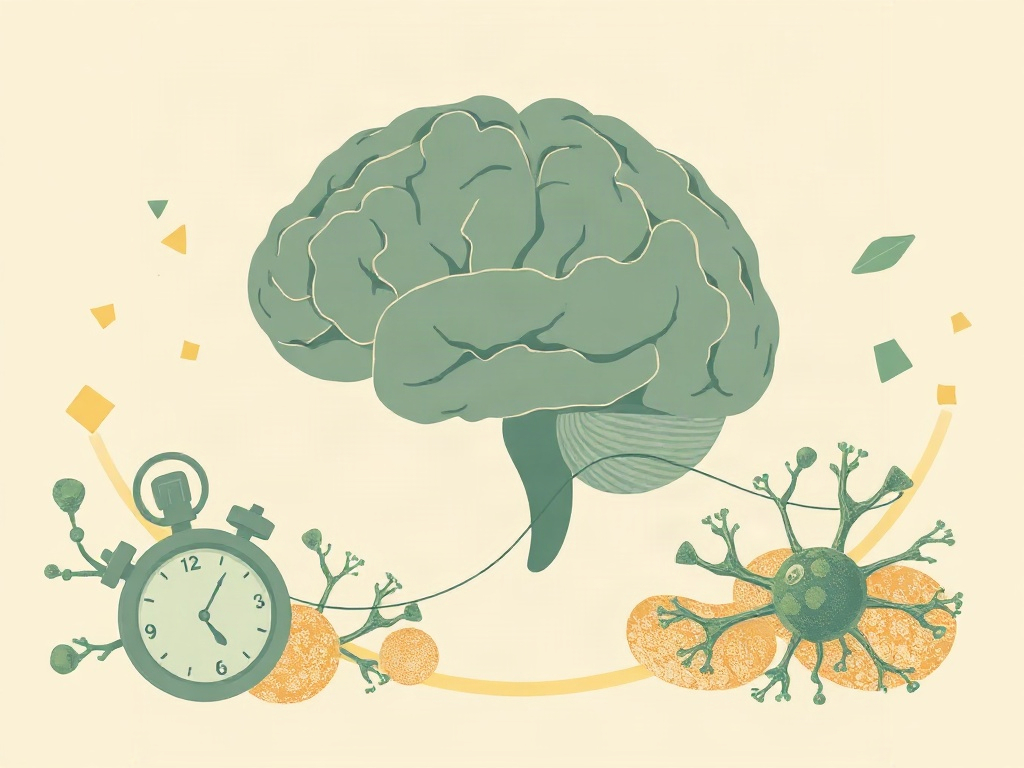
The gap between chronological age and biological age may be one of the most consequential — and modifiable — health disparities hiding in plain sight. Evidence mounting in epigenomics now suggests that socioeconomic disadvantage doesn't merely correlate with poor health outcomes; it may literally accelerate the molecular clock ticking inside cells, compressing healthspan in measurable, quantifiable ways long before disease appears.
Published in Nature Aging, this research examines the relationship between social inequality indicators and biological aging as measured through established epigenetic clocks — molecular tools that estimate cellular age from DNA methylation patterns. The study finds that individuals facing compounding social disadvantages, including markers such as income deprivation, educational attainment, and neighborhood-level stressors, exhibit accelerated biological aging scores compared to socially advantaged peers of identical chronological age. The magnitude of this acceleration represents a meaningful divergence that maps onto known disparities in age-related disease incidence and mortality.
This finding sits at the intersection of social epidemiology and molecular geroscience, two fields that have historically operated in parallel rather than in conversation. Epigenetic clocks — particularly second- and third-generation tools like GrimAge and DunedinPACE — have now matured to the point where they predict mortality and morbidity with striking accuracy, making them credible biological endpoints rather than merely academic curiosities. The implication here is significant: social exposures are not abstract risk factors but appear to leave a legible molecular signature. Key limitations deserve emphasis, however. Cross-sectional or observational designs cannot confirm that disadvantage causes accelerated aging rather than correlating with shared confounders, and epigenetic clock acceleration, while predictive, does not yet constitute a clinical diagnostic. Still, for researchers and public health scientists, this class of evidence is transitioning from incremental to potentially paradigm-shifting — reframing inequality as a geroscience problem, not merely a policy one.