For decades, the APOE gene has been studied almost exclusively through the lens of cholesterol transport and Alzheimer's risk — but a growing body of evidence suggests its most consequential role may lie in governing how neurons age at the molecular level. Understanding precisely how APOE2 confers protection, independent of lipid metabolism, could reframe strategies for both longevity and neurodegeneration prevention.
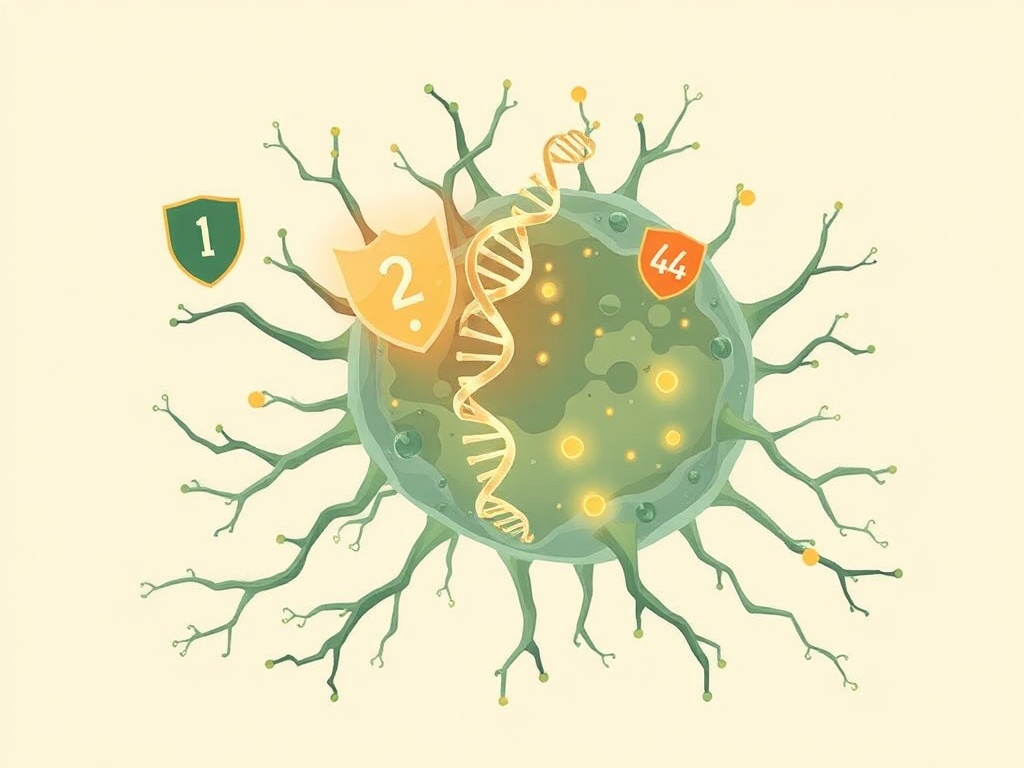
Using human iPSC-derived isogenic neuron models — a methodologically rigorous system that isolates allele-specific effects by holding genetic background constant — researchers generated both inhibitory GABAergic and excitatory glutamatergic neurons expressing APOE2, APOE3, or APOE4. Single-cell RNA sequencing revealed that APOE2 GABAergic neurons were significantly enriched for DNA repair and damage-response signaling pathways, while APOE4 neurons displayed gene expression signatures consistent with Alzheimer's pathology and markedly elevated expression of repetitive ribosomal RNA — a known driver of genomic instability and cellular senescence. APOE2 excitatory neurons showed superior resistance to senescence induction compared to both APOE3 and APOE4 counterparts, with corroborating evidence from APOE2-targeted replacement mouse models reinforcing the translational relevance of these findings.
This work is notable for several reasons beyond the headline mechanism. The use of isogenic iPSC models substantially strengthens causal inference compared to population-level GWAS alone, and the convergence across two neuron subtypes and an animal model adds unusual replication for a single paper. The ribosomal RNA finding is particularly intriguing: rDNA instability has emerged as a candidate aging hallmark in multiple tissues, and the APOE4-specific upregulation here suggests a plausible mechanistic bridge between apolipoprotein genotype and accelerated neuronal aging independent of amyloid biology. Limitations include the in vitro nature of the primary models and uncertainty about whether these transcriptomic signatures translate proportionally to living human brain tissue. Still, this is more than incremental — it repositions APOE2 as an active genomic guardian rather than simply a neutral comparator to APOE4, with meaningful implications for longevity biology.