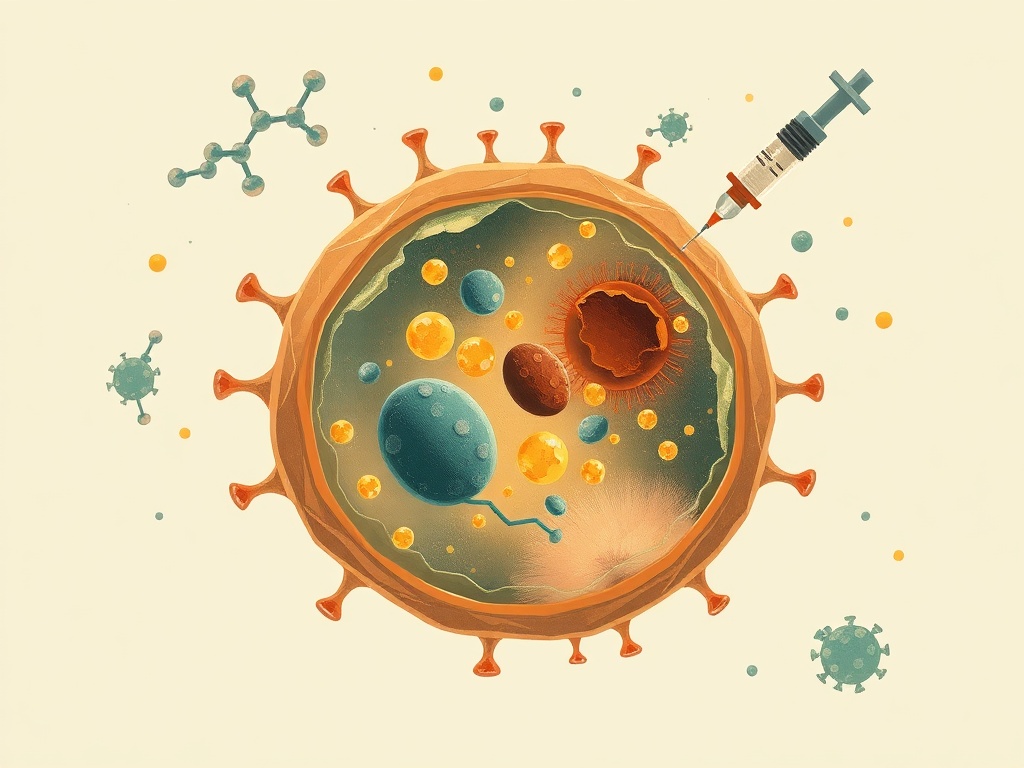
Vaccine failure in older adults is not random — it may be biologically predictable and, critically, potentially reversible. A subset of older adults carry a measurable immunosenescence signature in their lymphocytes, and new evidence suggests that a naturally occurring polyamine compound can partially override it, restoring functional antibody responses that would otherwise remain absent after COVID-19 booster vaccination.
This randomized, double-blind, placebo-controlled pilot trial enrolled 40 adults over age 65 receiving their third SARS-CoV-2 vaccine dose. Participants received either 6 mg of oral spermidine daily or placebo for 13 weeks. The trial identified a distinct subgroup of vaccine non-responders characterized by elevated p16 (a senescence marker), hyperactive mTOR signaling, and γ-H2AX-positive DNA damage foci in lymphocytes — collectively an immunosenescence fingerprint. In these non-responders specifically, spermidine supplementation significantly enhanced spike-specific IgG secretion, memory B cell recall activity, and neutralizing antibody titers. Single-cell RNA sequencing revealed upregulation of TFEB transcription factor targets and autophagy-related genes in B cells, consistent with restored autophagic flux as the mechanistic driver.
Spermidine is found naturally in wheat germ, soybeans, and aged cheese, and declines measurably with age — a trajectory that mirrors the gradual collapse of immune surveillance in older populations. Prior preclinical work established its autophagy-inducing properties, but translating that to human immune function has been elusive. This pilot trial is notable for its mechanistic rigor: using scRNA-seq to connect supplementation to specific transcriptional programs in immune cells moves well beyond typical nutraceutical research. Key limitations are substantial, however. The 40-person sample is underpowered for definitive conclusions, and efficacy appeared confined to the non-responder subset — raising questions about how to identify and stratify this group clinically. Longer trials measuring infectious disease outcomes, not just antibody titers, are the necessary next step. Nonetheless, the finding that immunosenescence is both measurable and pharmacologically modifiable is potentially paradigm-shifting for aging immunology.