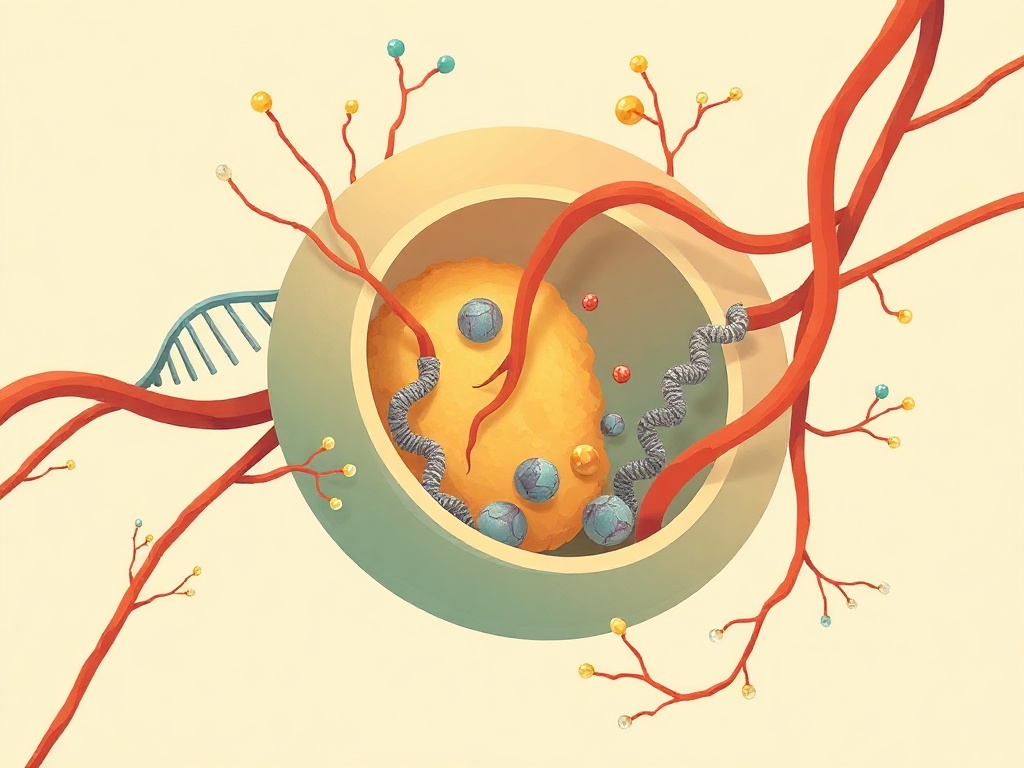
The dominant assumption in longevity research has long been that aging is either something that happens to cells from within, or something imposed on them by their environment. A rigorous new theoretical framework challenges that binary, arguing neither axis alone is sufficient — and that the field's most promising path forward may require attacking both simultaneously.
Published in Ageing Research Reviews, this perspective paper maps two leading anti-aging paradigms against each other. Systemic approaches — from heterochronic parabiosis (surgically joining young and old animals) to the more clinically viable therapeutic plasma exchange — operate on the hypothesis that aging accelerates through accumulating inhibitory circulating factors. The dilution or replacement of these factors in older individuals can partially restore youthful physiology in animal models. On the other side, partial cellular reprogramming via transient expression of Yamanaka factors (OCT4, SOX2, KLF4, c-MYC) resets epigenetic age markers within cells themselves, addressing what proponents describe as a loss of epigenetic information intrinsic to cellular aging. The paper's critical contribution is identifying a fundamental gap: certain cell populations appear refractory to systemic rejuvenation, resisting improvement even when the circulatory environment is optimized — suggesting cell-autonomous aging mechanisms that systemic interventions simply cannot reach.
This integrative framing is conceptually significant. Most longevity research programs invest heavily in one strategy or the other, rarely designing multimodal combinations. The authors' argument that systemic recalibration and targeted partial reprogramming are not competing explanations but complementary tools reflects a maturation of the field. Still, this remains a perspective piece rather than experimental data — the combined approach is proposed, not tested. Key limitations include the continued absence of validated aging biomarkers capable of measuring multimodal interventions, the substantial safety concerns around in vivo Yamanaka factor expression, and the gap between parabiosis findings in rodents and practical human therapeutics. This is incremental-to-confirmatory in framing, but its synthetic contribution could meaningfully shape research priorities for the next decade of longevity biology.