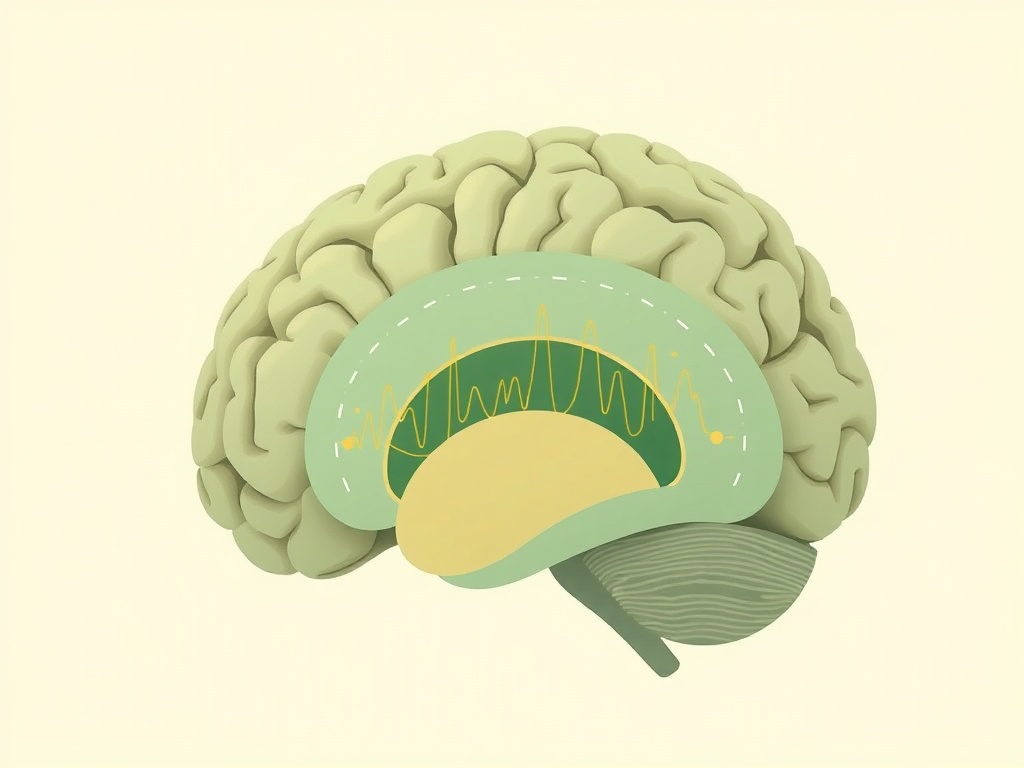
For anyone who has ever wondered why sleep feels essential after learning a new skill, this research offers one of the most direct human-level answers yet. The long-hypothesized coordination of three distinct brain rhythms during sleep — slow oscillations, spindles, and ripples — has now been mapped simultaneously in conscious humans, and the findings reveal both how memory is protected during healthy sleep and precisely how epilepsy can undermine that process.
Using intracranial recordings across the cortex, thalamus, and hippocampus in epilepsy patients, the research team demonstrated that motor memory consolidation depends on a tightly timed hierarchical cascade: cortical slow oscillations nest spindles, which in turn nest hippocampal ripples. This three-stage temporal architecture appears to serve as the biological scaffolding for transferring newly learned motor sequences into durable long-term storage. Critically, epileptic spikes were found to infiltrate this cascade at specific nodes, disrupting the coupling between oscillatory layers and correlating with impaired overnight motor memory gains compared to seizure-free sleep periods.
This is a meaningful advance in sleep-memory neuroscience for several reasons. The slow-oscillation–spindle–ripple hierarchy has been inferred from animal models and indirect human EEG data for over a decade, but simultaneous multi-structure human recordings are rare due to obvious access constraints. The epilepsy patient cohort, while providing this rare window, also introduces an important limitation: the findings come from brains with pathological circuitry, and it remains uncertain how cleanly results generalize to neurotypical adults. That caveat noted, the mechanistic specificity here — showing that epileptic spikes preferentially corrupt spindle-ripple coupling rather than erasing slow oscillations entirely — is genuinely novel. It suggests that therapeutic strategies targeting this coupling window, rather than broadly suppressing seizure activity, might selectively restore sleep-dependent memory. For the broader healthy-aging population, this work reinforces the biological non-negotiability of uninterrupted sleep architecture for memory consolidation.