The relationship between what we eat and how our immune system develops has long been assumed to be largely direct — nutrients enter cells, signals follow. This research overturns that assumption by revealing that the gut microbiota acts as an essential gatekeeper, controlling whether and how vitamin A derivatives reach the immune cells that shape lifelong intestinal defense.
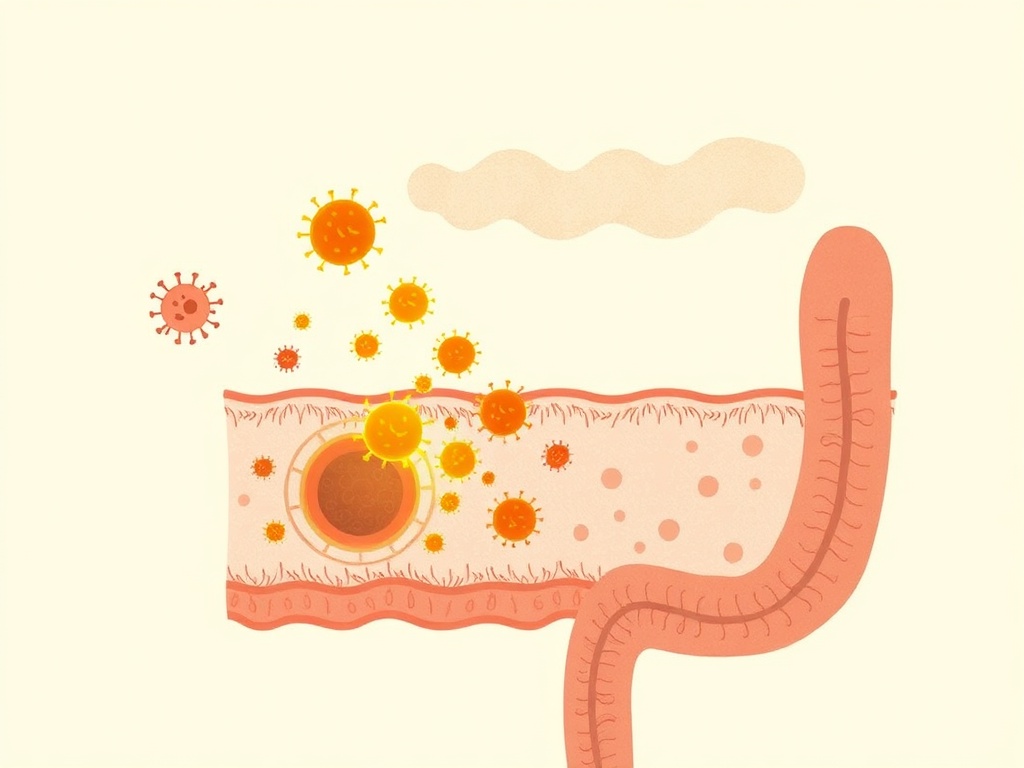
Using a mechanistic dissection of the gut-immune axis, researchers traced the movement of retinoids — vitamin A metabolites including retinol and retinoic acid — through a defined three-day cellular relay. Microbe-associated molecular patterns trigger intestinal epithelial cells to express serum amyloid A proteins, which function as retinol-binding carriers. These proteins are both necessary and sufficient to initiate retinoid handoff from epithelial cells to myeloid cells. The myeloid cells then migrate to the mesenteric lymph nodes (mLNs), where microbial antigen exposure drives a second retinoid transfer directly to developing T cells, culminating in transcriptional reprogramming of T cell identity. The pathway is particularly active during postnatal development — the critical window when gut adaptive immunity is first being established.
This finding carries substantial implications for understanding early-life immune programming. Vitamin A deficiency is already associated with impaired mucosal immunity, but the prevailing model centered on passive nutrient availability. This work reframes the question: without a properly colonized microbiota, even adequate dietary vitamin A may fail to reach the T cells that need it, because the routing machinery goes unactivated. The serum amyloid A proteins identified here represent a previously underappreciated interface between microbial sensing and nutrient trafficking. Key limitations include that the study's mechanistic depth likely relies heavily on murine models — human validation across diverse microbiome compositions will be essential. Still, this is a potentially paradigm-shifting finding: it positions the microbiome not merely as an immune educator but as a physiological traffic controller for a fundamental immune-developmental nutrient.