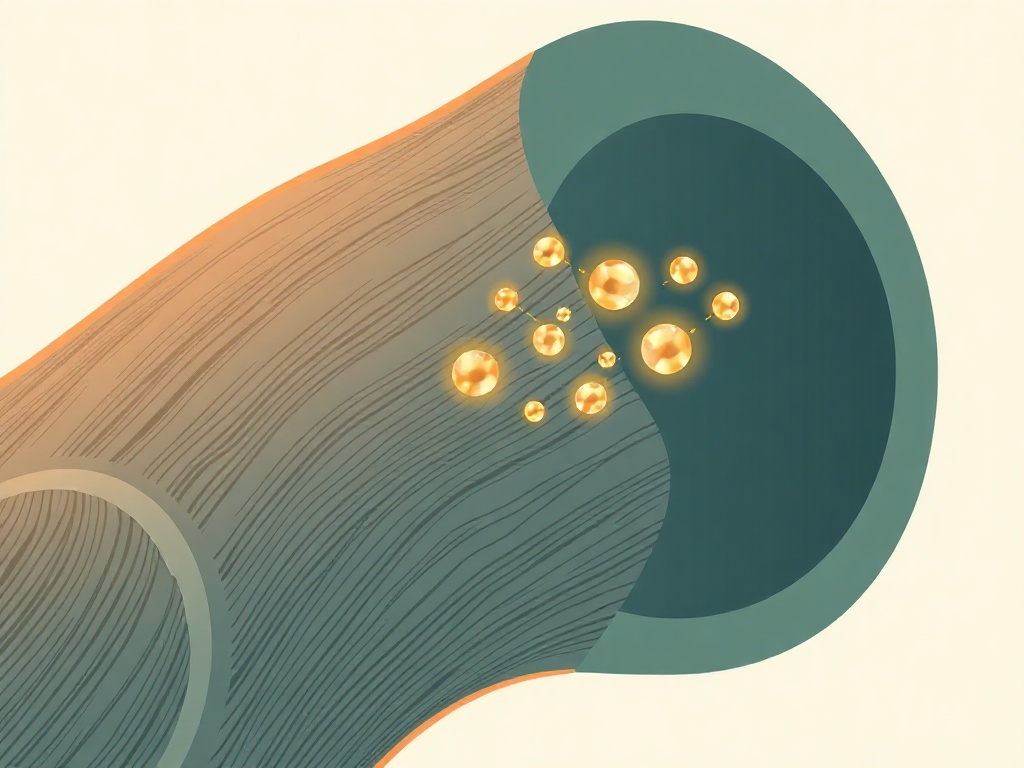
The long-held assumption that sarcopenia and osteoporosis simply co-occur with age may need revision. New mechanistic evidence points to atrophying muscle as an active instigator of bone loss — not merely a passive bystander — through a molecular messaging system that targets the very machinery osteoblasts need to build new bone. This reframes a critical clinical puzzle: why do bone-density interventions often underperform in older adults who have also lost significant muscle mass?
Working with a muscle-specific extracellular vesicle (EV) tracking transgenic mouse model, investigators found that aged skeletal muscle releases substantially more EVs than young muscle, and that these vesicles are preferentially internalized by osteoblasts. The key cargo is miR-125a-5p, a microRNA enriched both in EVs from sarcopenic patients and in those from aged mice. Muscle-specific overexpression of miR-125a-5p worsened both muscle atrophy and bone loss, while silencing it reversed those deficits. Mechanistically, miR-125a-5p suppresses osteogenic differentiation by directly targeting Sirt7 in preosteoblasts, disrupting SIRT7-dependent histone deacetylation at the Sp7 promoter and thereby blunting transcription of this master osteoblast regulator. Pharmacological blockade of EV secretion via muscle-targeted delivery of GW4869 restored osteoblast activity and reduced bone loss in aged animals.
This work adds meaningful detail to the emerging field of inter-organ communication via extracellular vesicles, situating muscle as an endocrine organ capable of pathological cross-talk with bone. The Sirt7–Sp7 epigenetic axis is a particularly actionable node: Sirt7 is a known longevity-associated deacetylase, and Sp7 (Osterix) is indispensable for osteoblast commitment, giving pharmaceutical developers two druggable targets downstream of the miRNA signal. Limitations are notable — the intervention data are entirely preclinical, and translating muscle-targeted EV-blocking strategies to humans involves substantial delivery engineering challenges. The sarcopenic patient EV data are correlative, not causal. Nevertheless, the finding that a single circulating miRNA mechanistically links two hallmarks of musculoskeletal aging is incrementally significant and warrants longitudinal human cohort validation.