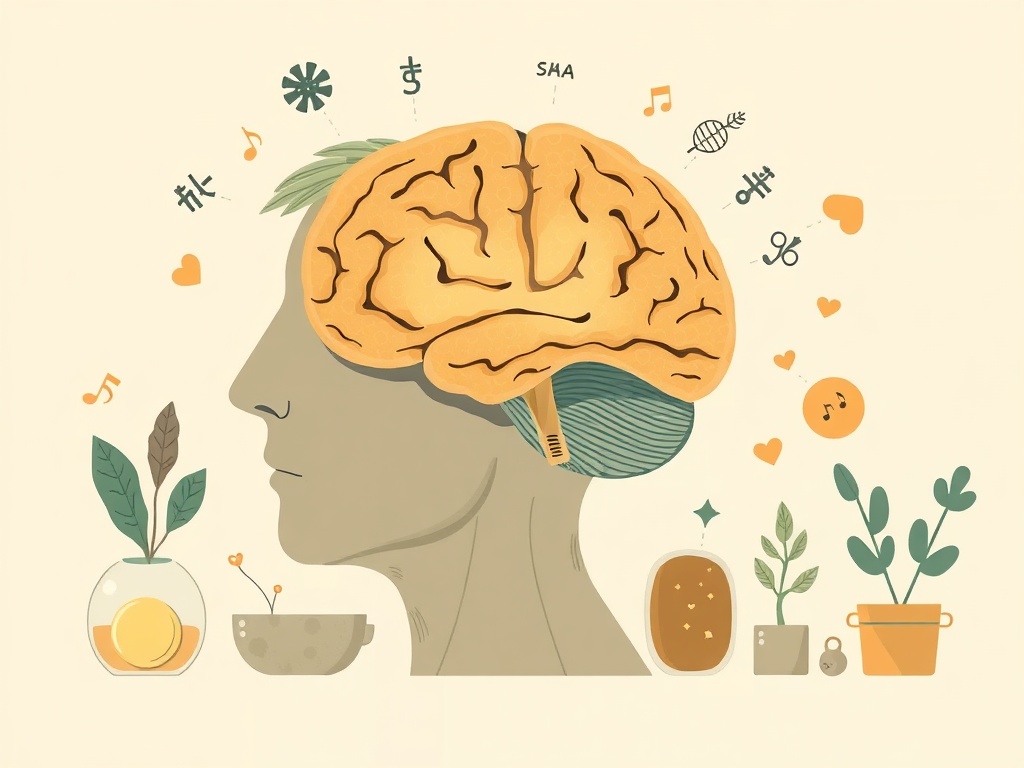
Loneliness among older adults has emerged as one of the most consequential public health threats of our time, comparable in mortality risk to smoking 15 cigarettes daily. What if a lifelong habit of speaking multiple languages could structurally buffer the brain against this risk — not just cognitively, but socially and emotionally? That possibility now has neuroanatomical evidence behind it.
In a structural MRI study of 197 cognitively healthy older adults, multilingual experience correlated with greater gray matter volume in the left anterior temporal lobe (ATL) — a region integral to social semantic processing, meaning the neural machinery we use to understand concepts about people, relationships, and social context. Critically, ATL volume statistically mediated the relationship between multilingual experience and lower scores on the UCLA Loneliness Scale, suggesting a specific neural pathway — not merely a lifestyle correlation — connecting language history to felt social connectedness in later life.
This finding meaningfully extends the cognitive reserve hypothesis, which has traditionally framed multilingualism's brain benefits around executive function and dementia delay. The ATL mediation result shifts the conversation toward social cognition as an independent domain of multilingual protection. From a broader research perspective, the ATL's role in social semantics is well-established, but its involvement in loneliness buffering is relatively novel — positioning language experience alongside other known ATL-enriching activities like reading and social engagement. Key limitations deserve attention: the cross-sectional design prevents causal inference, and the sample is restricted to cognitively healthy adults, leaving open how this pathway behaves in early neurodegeneration. Still, with 197 participants and a mediation model specifying mechanism rather than mere association, this qualifies as more than incremental — it reframes multilingualism as a potential social-emotional resilience tool worth integrating into healthy aging guidelines.