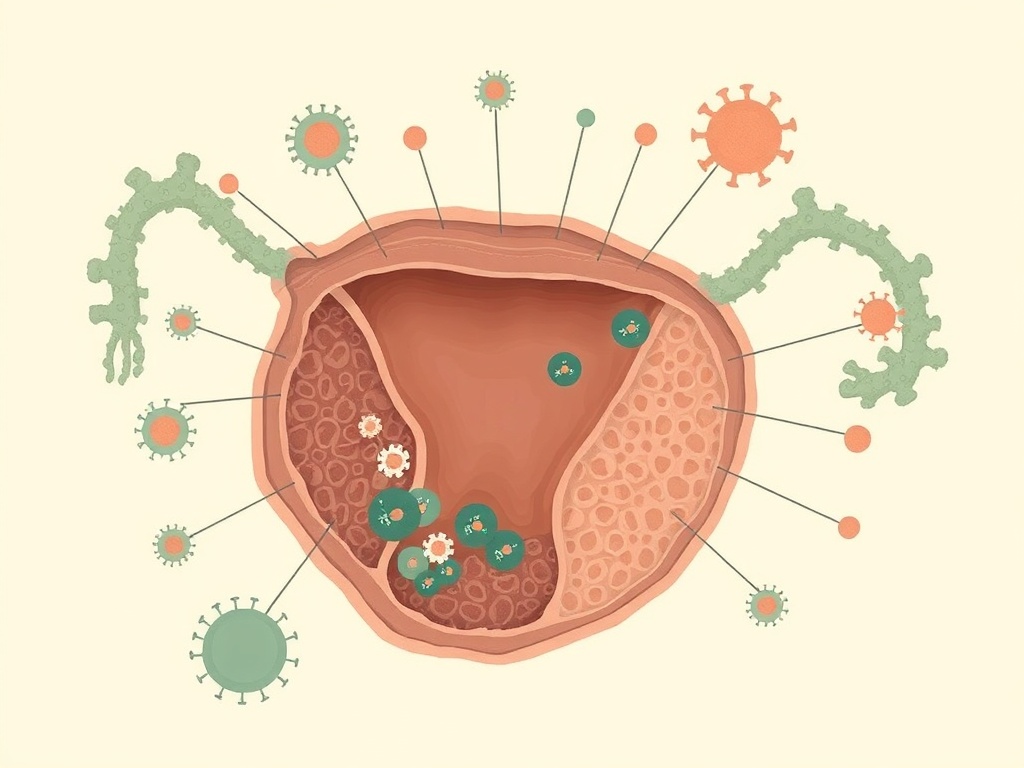
For decades, the ovary after menopause was considered a spent organ—biologically silent once its follicles were gone. New molecular evidence overturns that assumption entirely, with implications for understanding why women's aging trajectories diverge so sharply from men's after midlife, and why post-reproductive hormonal environments may drive systemic inflammation in ways we've only begun to appreciate.
Using paired histological and transcriptomic profiling across three age groups of mice—young reproductive (2 months), reproductively aged (18 months), and post-reproductive (24 months)—researchers documented a dramatic molecular identity shift in ovarian tissue. Beyond the expected follicle depletion and fibrotic stromal remodeling, post-reproductive ovaries displayed a dominant immune-cell signature, with measurable infiltration of T lymphocytes, macrophages, and multinucleated giant cells. Critically, transcriptomic differences between the aged and post-reproductive cohorts were distinct—not merely a continuation of the same aging trajectory—indicating that the ovary undergoes active molecular reprogramming even after fertility ends. Predicted secreted factors from this tissue suggest the post-reproductive ovary may function as a paracrine and endocrine source of pro-inflammatory mediators.
This finding slots into a growing body of research linking post-menopausal biology to accelerated systemic inflammaging—the chronic low-grade inflammation associated with age-related disease. The ovary-as-immune-organ hypothesis is particularly provocative because it raises the question of whether the organ itself, rather than merely the loss of estrogen, contributes to downstream pathology in cardiovascular, metabolic, and neurological tissues. The mouse model is a meaningful limitation here; murine reproductive aging is compressed and may not perfectly recapitulate human menopause dynamics. Nonetheless, the transcriptomic granularity provides a genuinely novel mechanistic framework. For longevity medicine, this is more than incremental—it repositions a previously ignored tissue as a potential therapeutic target in female aging.