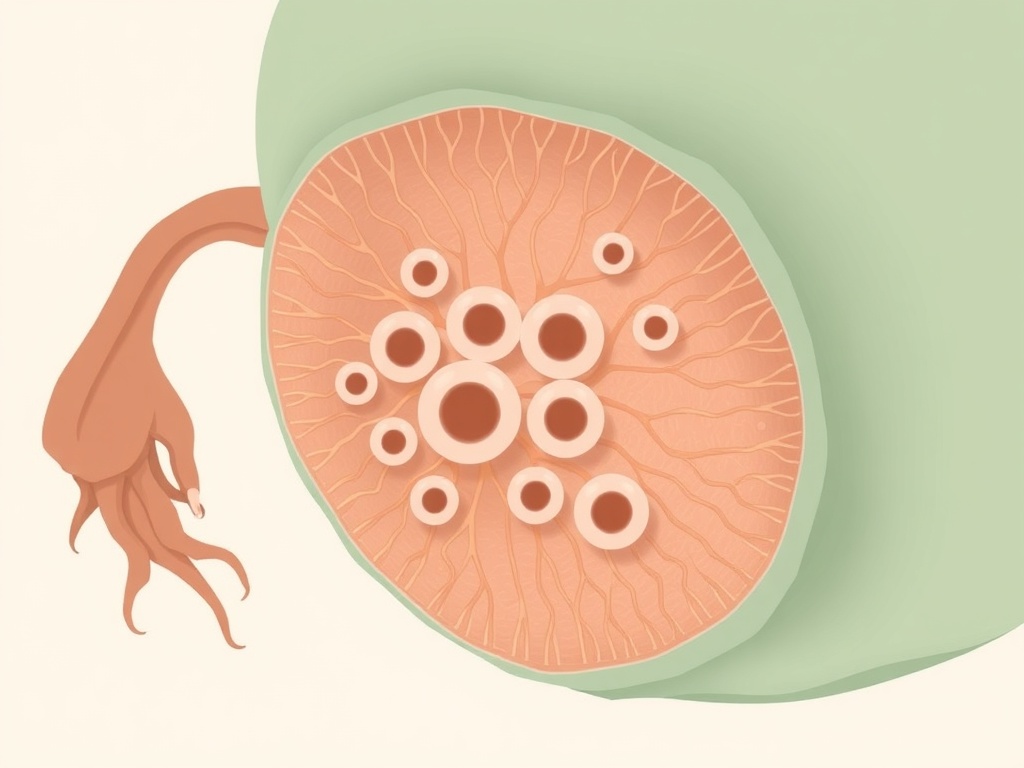
For millions of women, ovarian aging arrives earlier and more aggressively than any other organ system's decline, cutting short fertility and accelerating menopause-linked metabolic and cardiovascular consequences. Understanding what mechanically and molecularly stiffens ovarian tissue—not just what hormones decline—could fundamentally reframe how reproductive longevity is approached in clinical medicine.
Published in Nature Aging, this research identifies interleukin-11 (IL-11) as a central driver of age-related ovarian fibrosis. The cytokine accumulates progressively in ovarian tissue across three mammalian species—mice, rats, and humans—a cross-species conservation that substantially strengthens the biological relevance. Elevated IL-11 activates resident fibroblasts, prompting excessive extracellular matrix secretion that mechanically stiffens the ovarian stroma. This physical rigidity, in turn, impairs the microenvironmental conditions follicles require for healthy maturation. Critically, when IL-11 signaling was targeted experimentally, ovarian stiffness was reduced and functional aging markers were mitigated, suggesting the pathway is not merely correlative but causally tractable.
This finding lands at an important intersection of mechanobiology and reproductive aging. Prior research has documented ovarian stromal fibrosis histologically for decades, but the upstream molecular trigger has remained elusive. IL-11 has separately emerged as a pro-fibrotic cytokine in cardiac, pulmonary, and hepatic aging contexts, so its identification here extends a coherent fibrotic aging signature across multiple organ systems. What makes this particularly compelling for longevity researchers is the implicit druggability: IL-11 neutralizing antibodies already exist in preclinical and early clinical pipelines for fibrotic disease, creating a potential translational bridge. Key limitations remain—the intervention data appear largely murine, human causal validation is absent, and long-term safety of IL-11 suppression in reproductive-age women is unknown. Still, this is more than incremental; it offers a mechanistic handle on ovarian aging that goes beyond hormonal replacement paradigms and could inform both fertility preservation and broader female healthspan strategies.