Ovarian aging quietly undermines both reproductive health and broader hormonal balance in women long before menopause becomes clinically apparent. A mechanism capable of reversing this trajectory — rather than merely slowing it — would represent a meaningful shift in how scientists approach female reproductive longevity and the cascade of systemic effects that follow ovarian decline.
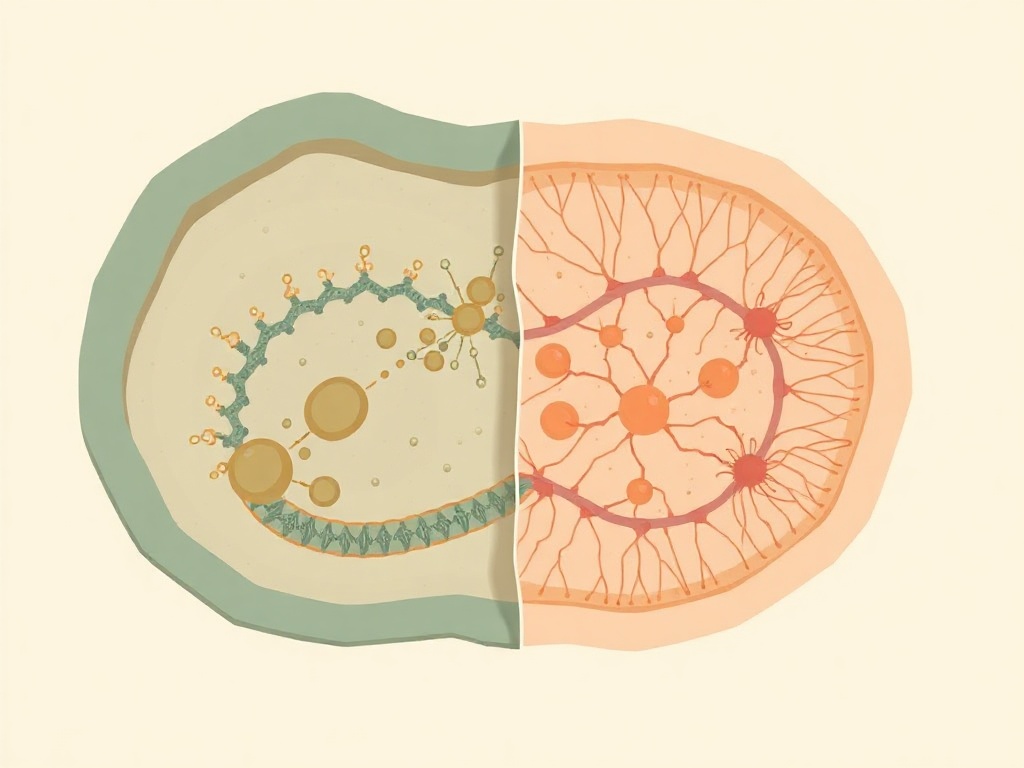
The core finding centers on interleukin-11 (IL-11), a pro-fibrotic cytokine whose expression rises significantly in ovarian tissue as animals age. Wu and colleagues demonstrate that IL-11 is a primary driver of stromal fibrosis in the ovary — the progressive stiffening of the connective tissue matrix that surrounds and supports follicles. As this stromal environment hardens, follicle development is physically and biochemically impaired, accelerating ovarian failure. Critically, when aged mice received IL-11 inhibition, the team observed restoration of ovarian function, correction of sex hormone dysregulation, and renewed fertility — suggesting the fibrotic damage is not irreversible at the organ level.
This work sits at the intersection of two converging fields: the biology of fibrosis as a universal aging mechanism, and the emerging recognition that ovarian aging is not simply a reproductive issue but a determinant of cardiovascular, bone, and cognitive health. IL-11 has already attracted pharmaceutical attention for cardiac and pulmonary fibrosis, meaning therapeutic-grade anti-IL-11 antibodies already exist in preclinical or early clinical pipelines. That institutional infrastructure could, in principle, accelerate translational work here. However, critical limitations apply: these are mouse data, and ovarian biology differs meaningfully between rodents and humans. Questions of dosing window, off-target immune effects, and whether intervention in perimenopausal women could produce comparable hormonal rescue remain entirely open. This should be considered a compelling mechanistic proof-of-concept — incremental in isolation, but potentially paradigm-shifting if it replicates in primate models.