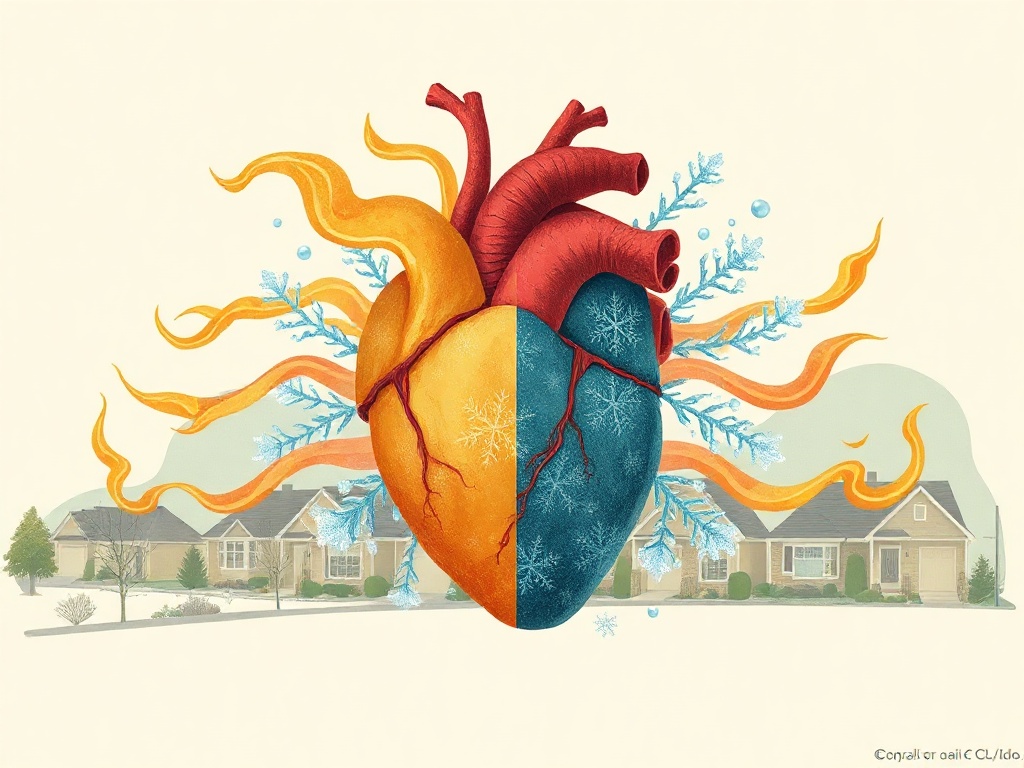
For anyone managing cardiovascular risk, the outdoor thermometer may be as clinically relevant as a blood pressure cuff. An authoritative new scientific statement from the American Heart Association establishes that both heat and cold extremes independently elevate risk for a surprisingly broad spectrum of cardiac events — and maps the biological machinery driving that danger in unprecedented detail.
The statement synthesizes evidence showing that short-term exposure to nonoptimal temperatures — whether extreme heat or cold — measurably raises incidence of myocardial infarction, ischemic and hemorrhagic stroke, heart failure decompensation, arrhythmias, and sudden cardiac death. Six overlapping biological mechanisms are identified as mediators: autonomic and neurohormonal activation, endothelial dysfunction, systemic inflammation, hemoconcentration, and impaired thermoregulation. Risk amplification is not uniform — geographic location, housing quality, occupational outdoor exposure, and socioeconomic position each modulate individual vulnerability, compounding systemic inequities already embedded in cardiovascular disease burden.
What makes this statement particularly significant is its scope beyond individual physiology. It frames temperature as a health system stress test: extreme weather events surge emergency department demand, disrupt care delivery logistics, and strain hospital resilience precisely when vulnerable populations need access most. The document also confronts a uncomfortable paradox — cardiovascular medicine itself contributes substantially to healthcare-sector greenhouse gas emissions, meaning the specialty treating climate-driven cardiac harm also accelerates the underlying driver.
For health-conscious adults, the practical implication is immediate: thermal stress should enter routine cardiovascular risk conversations, especially for those with pre-existing heart disease, hypertension, or diabetes. This is not an incremental finding but a consensus reframing of environmental exposure as a modifiable cardiovascular risk factor. A key limitation is that most underlying studies are observational and epidemiological, making dose-response thresholds for individual clinical decision-making still imprecise. As climate projections worsen, translating this statement into personalized prevention guidance becomes genuinely urgent.