For anyone tracking the frontier of longevity medicine, the central bottleneck has never been the list of aging hallmarks — it has been translating that list into actionable therapeutics without waiting decades for novel drug development. A computational framework that mines existing approved drugs against the molecular architecture of aging could dramatically compress that timeline, offering near-term intervention candidates already proven safe in humans.
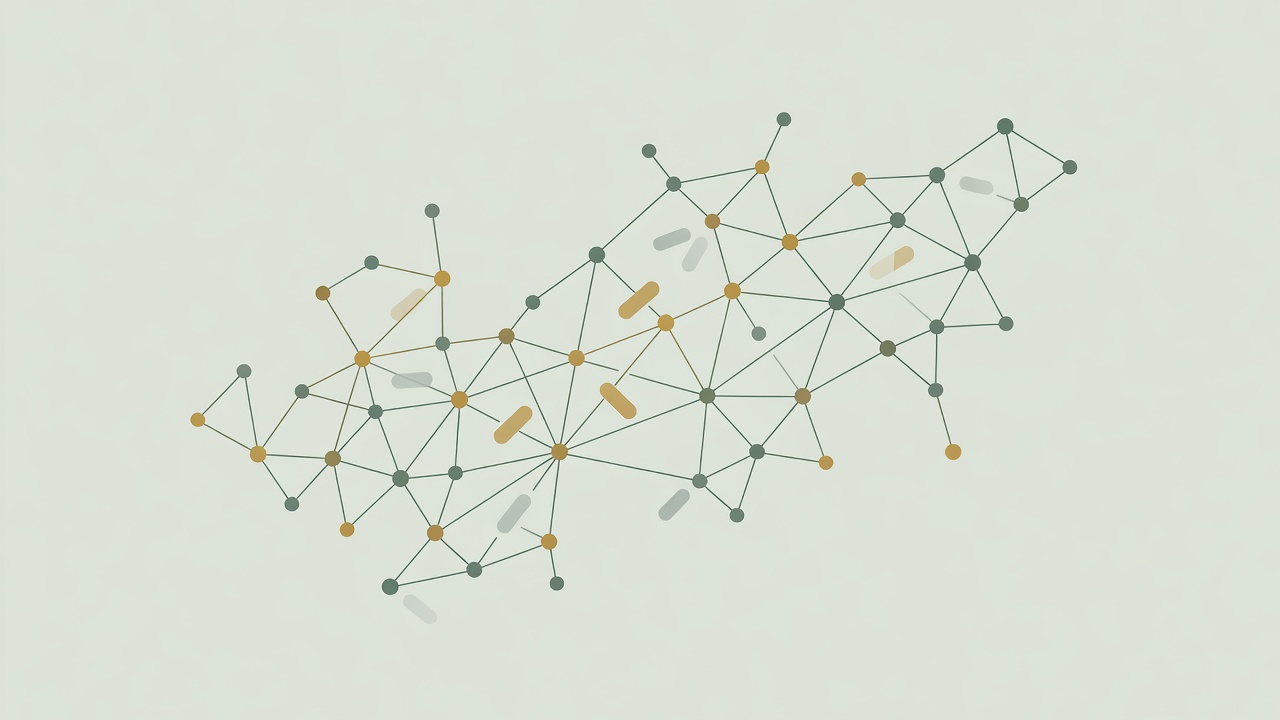
Published in Nature Aging, this work introduces a network medicine approach that maps the canonical hallmarks of aging — including genomic instability, epigenetic alterations, cellular senescence, and proteostasis loss — onto the human interactome, the comprehensive web of protein-protein interactions that governs cellular function. Rather than treating each hallmark as an isolated pathway, the framework reveals that these hallmarks cluster into interconnected molecular modules with shared network neighborhoods. By identifying which approved drugs perturb these modules in ways that counteract aging-associated transcriptional signatures, the authors generate a prioritized roster of repurposing candidates. The methodology integrates transcriptomic data from aging tissues with network proximity scoring to rank drug-target relationships by biological plausibility.
This is a meaningful methodological advance rather than a simple data-mining exercise. Network medicine has already demonstrated predictive power in oncology and rare disease, but its systematic application to the full spectrum of aging hallmarks simultaneously — rather than single-pathway targets like mTOR — represents a qualitative step up in scope. The practical implication is a shortlist of drugs already cleared for human use that could enter aging-focused clinical trials with substantially reduced regulatory friction. Key limitations apply: network models are only as accurate as the interactome databases underlying them, which remain incomplete, and transcriptional reversal of aging signatures does not guarantee functional health or lifespan benefit. Validation in aging animal models and ultimately in longitudinal human trials remains essential. Still, as a hypothesis-generation engine, this framework is among the most comprehensive published to date.