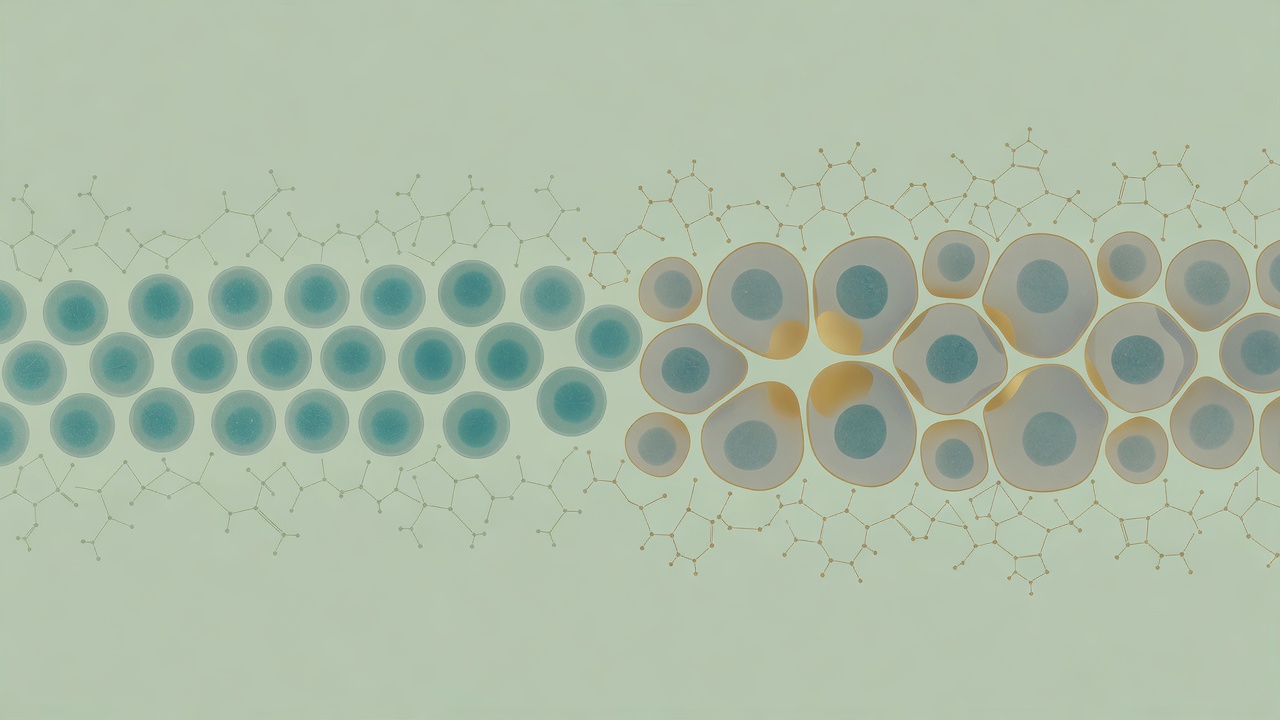
For most adults, the gradual weight gain and metabolic dysfunction of middle age feels inevitable. But the underlying biology is more specific — and more tractable — than commonly assumed. A detailed mechanistic review published in Diabetes, Obesity & Metabolism reframes age-related metabolic decline not as a simple fat accumulation problem, but as a failure of adipose tissue architecture and regenerative capacity.
The core paradox is this: as people age, the precursor cells (preadipocytes) that should generate new, functional fat-storing cells become progressively less capable of differentiating. Meanwhile, existing adipocytes balloon in size trying to compensate. The result is a depot increasingly populated by enlarged, dysfunctional cells rather than healthy small ones — a configuration strongly linked to systemic insulin resistance. Four interlocking molecular defects drive this deterioration. An inhibitory protein isoform called C/EBPβ-LIP, activated via CUG triplet repeat-binding protein 1, suppresses the transcription factors C/EBPα and PPARγ that normally orchestrate fat cell formation. Sirtuin biology is implicated through an antagonistic SIRT7-SIRT1 axis tied to declining NAD⁺ availability. Nuclear lamina remodeling physically restricts chromatin access at adipogenic gene loci. Finally, senescent cells accumulate and release a proinflammatory secretome — including IL-6, TNF-α, and matrix metalloproteinases — that further undermines the tissue environment.
This analysis is notable for synthesizing epigenetic, metabolic, and senescence-biology frameworks into a unified mechanistic model rather than treating them as separate phenomena. It strengthens the case that NAD⁺ precursor supplementation (NMN, NR) and senolytic interventions may have mechanistic rationale beyond lifespan extension — specifically for preserving metabolic function in aging adipose depots. Key limitations apply: this is a review rather than new experimental data, most cited mechanisms derive from rodent models, and human adipose depot heterogeneity (subcutaneous versus visceral) adds complexity not fully resolved here. Still, this represents a clinically meaningful reframing — the problem isn't fat per se, but fat tissue that can no longer renew itself.