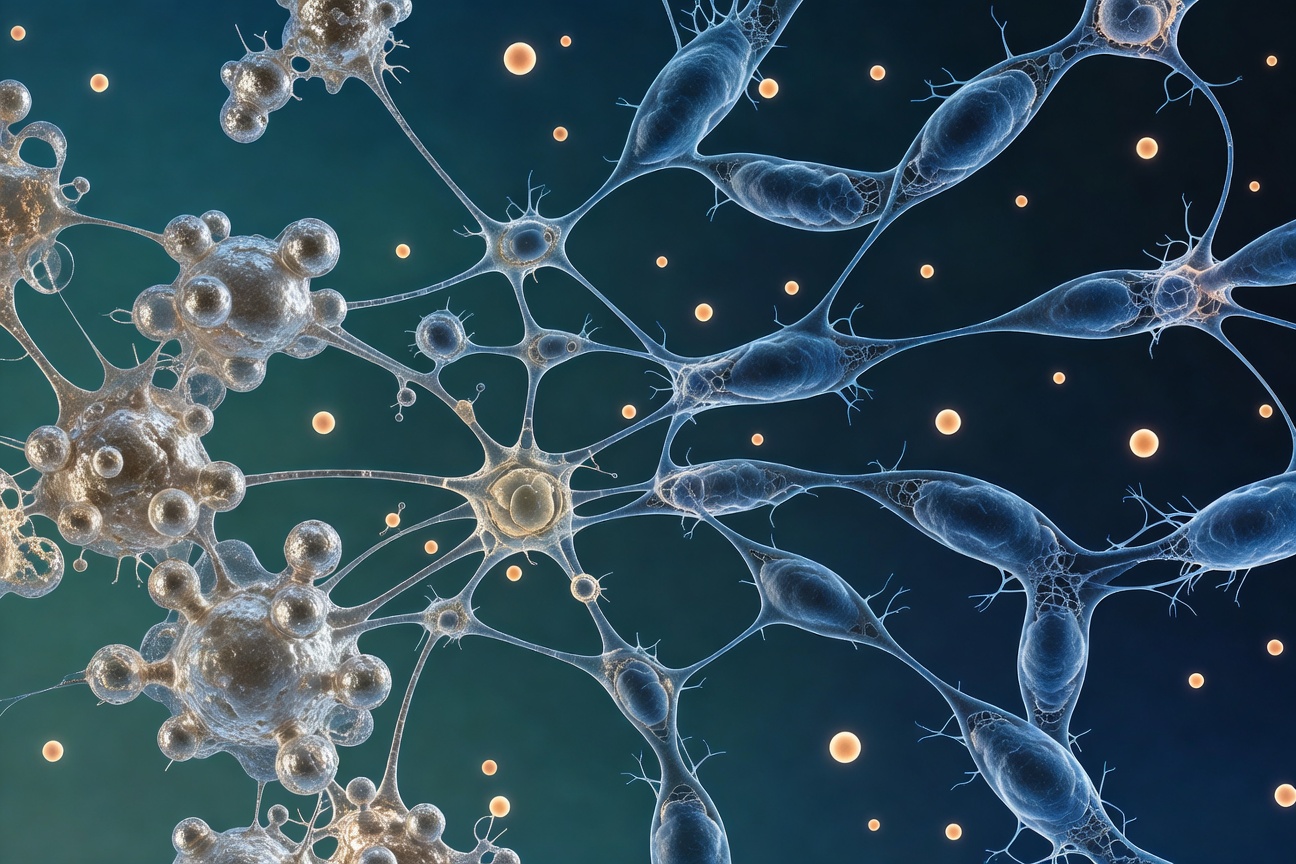
A comprehensive mechanistic framework proposes that ALS symptom heterogeneity stems from sequential failures in cellular maintenance systems rather than simple motor neuron death. The model identifies three disease states: compensated plasticity, fragile plasticity, and network collapse, driven by imbalanced microglial pruning, mitochondrial NAD+ depletion, and autophagy failure under aging stress. Specific pathways including PI3K/AKT/mTOR and PGC-1α are implicated in distinguishing ALS from frontotemporal dementia. This represents a significant conceptual advance beyond traditional motor neuron-centric ALS models. The framework suggests that diverse symptoms—from limb weakness to cognitive changes—reflect vulnerability patterns across different neural circuits rather than uniform pathology. If validated, this could revolutionize ALS treatment by targeting cellular energetics and clearance mechanisms rather than solely neuroprotection. The NAD+ compensation angle aligns with emerging longevity research showing NAD+ decline as a hallmark of aging. However, this remains a theoretical framework requiring extensive experimental validation. The integration of aging biology with neurodegeneration offers promising therapeutic targets but needs rigorous testing in human studies.
NAD+ Depletion and Autophagy Collapse Drive ALS Symptom Variability
📄 Based on research published in Cureus
Read the original paper →For informational, non-clinical use. Synthesized analysis of published research — may contain errors. Not medical advice. Consult original sources and your physician.