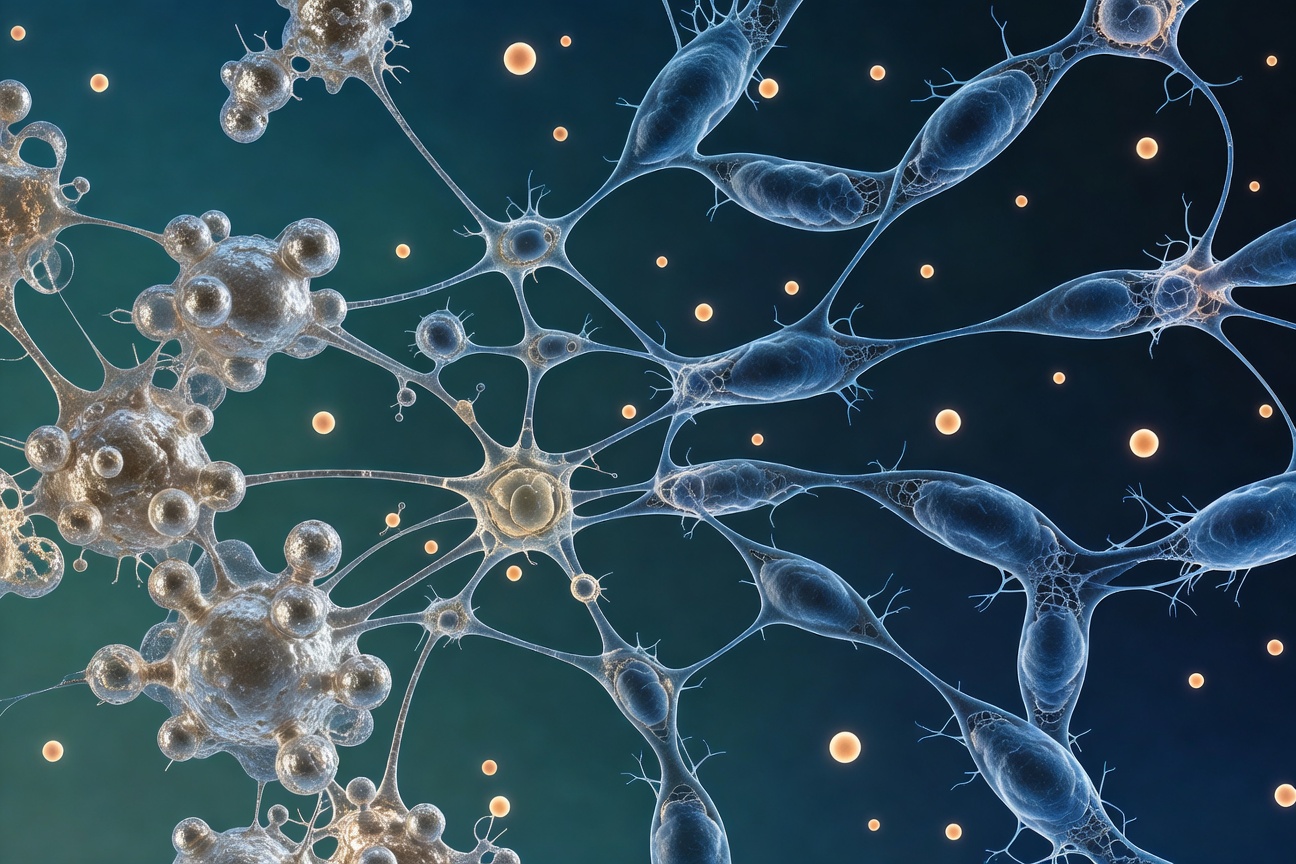
Cell senescence emerges as a fundamental driver of chronic pain persistence through multiple interconnected mechanisms. Senescent cells accumulate across pain-processing tissues and release inflammatory factors via the senescence-associated secretory phenotype (SASP), while simultaneously experiencing mitochondrial dysfunction and epigenetic changes that amplify neural sensitization. This creates a self-reinforcing cycle where cellular aging processes directly maintain chronic pain states. The finding represents a paradigm shift in pain medicine, connecting the biology of aging with neurological dysfunction in a way that explains why chronic pain becomes increasingly treatment-resistant over time. For the millions suffering from persistent pain conditions, this cellular aging connection offers concrete therapeutic targets. Senolytic drugs that clear senescent cells and SASP modulators that reduce inflammatory signaling could potentially break the cycle of chronic pain - treatments already being tested for aging-related diseases. However, translating this cellular mechanism into clinical practice requires careful validation, as most current evidence comes from preclinical models. The integration of senescence biology with pain neuroscience nonetheless provides a compelling framework for understanding why conventional pain treatments often fail and suggests that anti-aging interventions might offer unexpected benefits for chronic pain management.
Cell Senescence Creates Self-Reinforcing Network Sustaining Chronic Pain States
📄 Based on research published in Neuroscience and biobehavioral reviews
Read the original paper →For informational, non-clinical use. Synthesized analysis of published research — may contain errors. Not medical advice. Consult original sources and your physician.