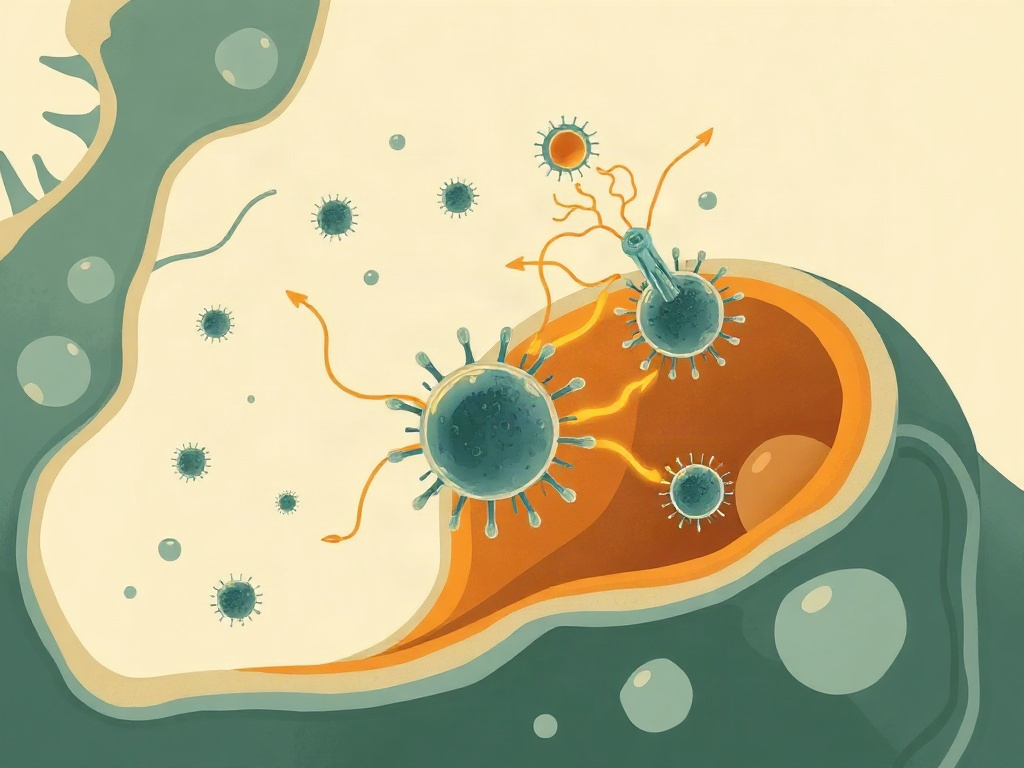
Understanding why damaged cells accumulate with age has puzzled longevity researchers, as healthy immune systems should clear these cellular zombies that secrete inflammatory compounds. A critical piece of this puzzle may lie not within cells themselves, but in the structural scaffolding that surrounds them. The extracellular matrix—the protein network that provides tissues with structural support—undergoes profound changes during aging that may create a vicious cycle perpetuating cellular senescence. This Nature Aging analysis reveals how aged matrix proteins alter the mechanical signals cells receive through integrin receptors, the cellular anchors that detect tissue stiffness and structural cues. When the matrix becomes stiffer or chemically modified through aging, it can push healthy cells toward senescence while simultaneously making it harder for senescent cells to die naturally. The research proposes a self-reinforcing circuit where age-damaged matrix promotes senescence, and newly senescent cells further degrade their surrounding matrix through inflammatory secretions. This creates expanding pockets of dysfunctional tissue that resist normal cellular turnover. The implications extend beyond basic aging biology into therapeutic territory. Current senolytic drugs focus on killing senescent cells directly, but this matrix-centric view suggests interventions targeting the extracellular environment could prove equally important. Strategies might include matrix-softening compounds, integrin pathway modulators, or treatments that restore youthful matrix composition. This represents a paradigm shift from viewing senescence as purely cell-autonomous to recognizing it as an emergent property of tissue-level changes. The finding also explains why senescent cells cluster in specific tissue regions rather than distributing randomly, and why certain organs show greater senescent cell accumulation than others based on their unique matrix properties.
Aging Tissue Scaffolding Changes Proposed to Form Self-Reinforcing Loop in Senescent Cell Accumulation
Primary reference: Nature Aging · View source ↗
Informational, non-clinical synthesis informed by published research. Not a clinical guideline or medical advice. May contain errors or editorial interpretation. Consult the original source and your physician.