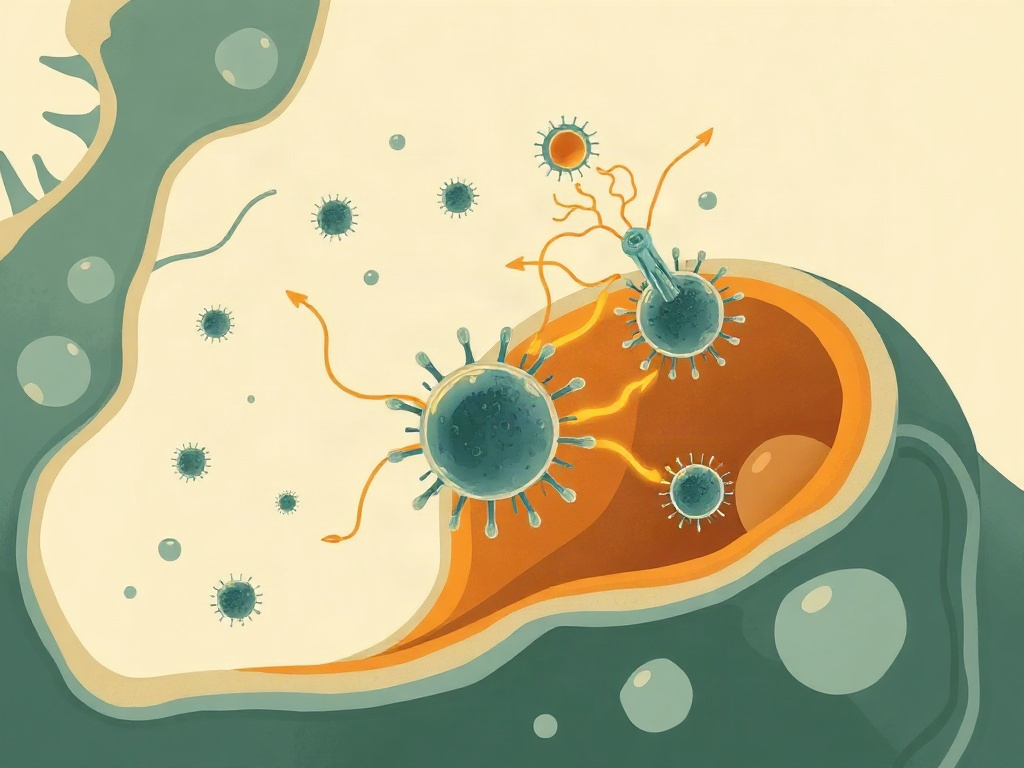
Aging cells actively remodel their endoplasmic reticulum through ER-phagy, a selective autophagy process that reduces ER volume while shifting from rough ER sheets to tubular networks. This restructuring degrades protein-processing machinery while preserving lipid metabolism enzymes, fundamentally altering cellular function. The process appears across multiple species and cell types, establishing it as an evolutionarily conserved aging mechanism. This challenges the traditional view of aging as passive cellular deterioration, revealing instead an active metabolic reprogramming. The implications extend beyond normal aging—longevity interventions trigger premature ER remodeling, and ER-phagy proves essential for mTOR inhibition to extend lifespan. This suggests that controlled organelle turnover isn't just a consequence of aging but a potential longevity strategy. The research opens new therapeutic avenues, as modulating ER-phagy could influence how cells age and respond to longevity interventions. However, the optimal timing and extent of ER remodeling remains unclear, and translating these cellular mechanisms to human healthspan requires careful consideration of tissue-specific differences and potential trade-offs between metabolic efficiency and cellular resilience.
ER-phagy Actively Remodels Cellular Architecture During Aging Process
Primary reference: Autophagy · View source ↗
Informational, non-clinical synthesis informed by published research. Not a clinical guideline or medical advice. May contain errors or editorial interpretation. Consult the original source and your physician.