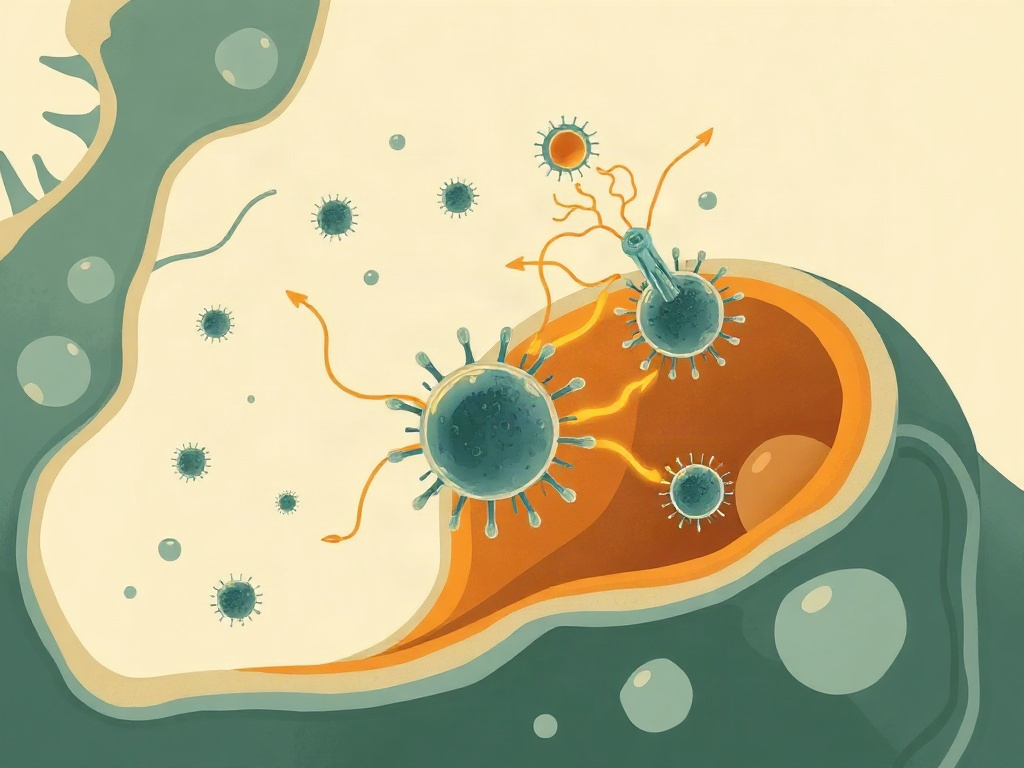
The discovery that immune cells themselves can become senescent fundamentally changes how we understand aging-related chronic inflammation. Rather than simply being victims of tissue damage, macrophages—the body's primary inflammatory responders—can enter a zombie-like senescent state where they continuously pump out inflammatory signals that damage surrounding healthy tissue.
Researchers identified a specific subtype of senescent macrophages marked by high expression of p21 and TREM2 proteins. These cells develop after DNA damage or cholesterol exposure and secrete a distinct inflammatory cocktail driven partly by interferon signaling triggered by leaked mitochondrial DNA. The senescent macrophages accumulate significantly in aging mouse livers and human cirrhotic liver tissue, creating a self-perpetuating cycle of inflammation and tissue damage.
This finding resolves a longstanding puzzle in aging biology: while cellular senescence was known to drive chronic inflammation through the senescence-associated secretory phenotype, the specific cell types responsible remained poorly characterized. Macrophages were suspected contributors but their senescent capacity was unclear. The identification of p21⁺TREM2⁺ senescent macrophages as major inflammaging drivers represents a paradigm shift from viewing senescence as primarily affecting structural cells like fibroblasts.
The therapeutic implications are immediately actionable. Senolytic drugs targeting these senescent macrophages reduced both liver inflammation and fat accumulation in aged mice and metabolic liver disease models. This suggests that macrophage senescence may be a central mechanism linking aging to metabolic dysfunction, offering a precise therapeutic target rather than broadly suppressing all inflammation. The liver-specific findings may extend to other organs where macrophages concentrate during aging.