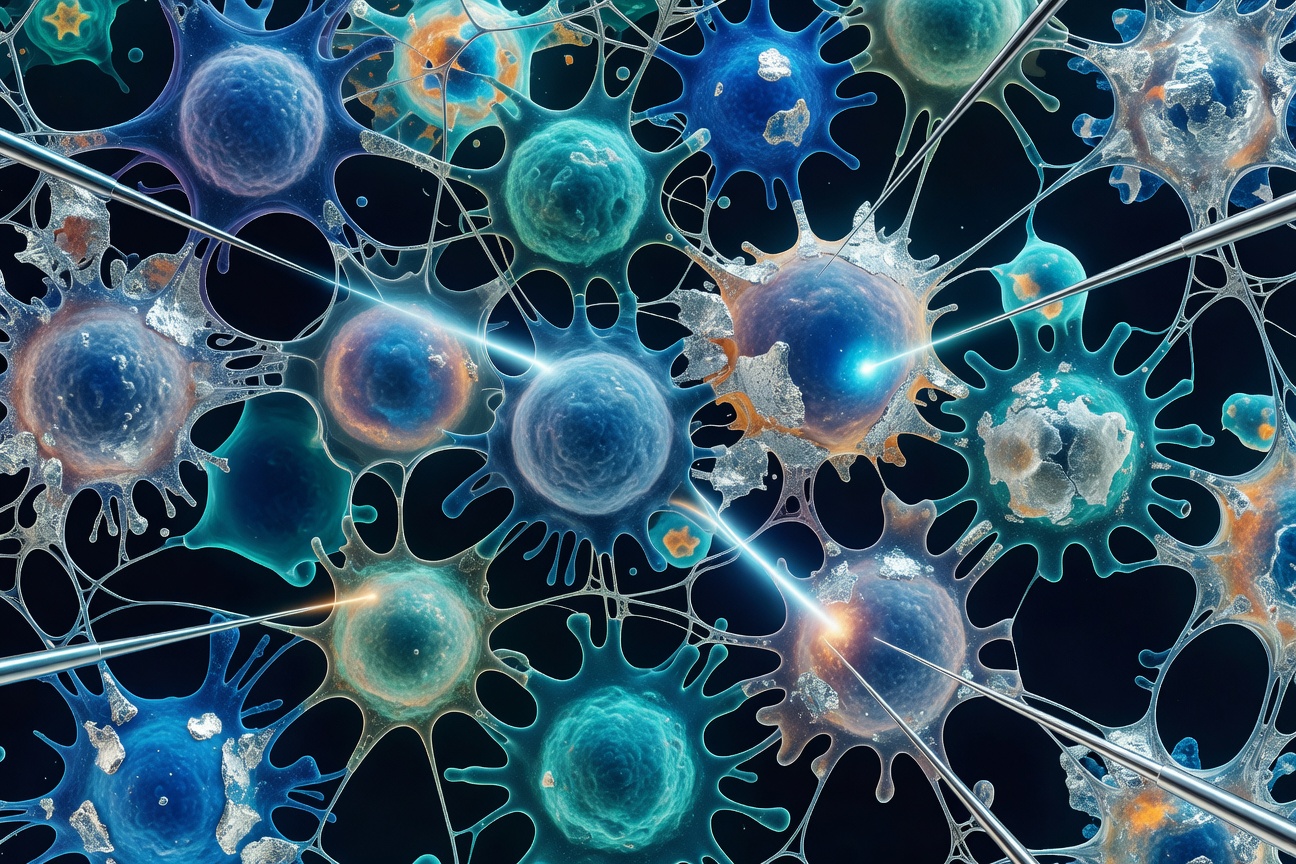
Single-cell aging clocks have quantified 'mosaic aging' — the phenomenon where cells within the same tissue age at dramatically different rates. Unlike traditional bulk tissue clocks that average molecular signals across thousands of cells, these high-resolution tools reveal cell-type-specific age acceleration patterns during disease states and their reversal following targeted interventions. The technology has uncovered embryonic 'age reset' mechanisms and identified how tissue microenvironments influence cellular aging trajectories. This represents a fundamental shift from viewing aging as uniform tissue decline to understanding it as a heterogeneous, regulated biological program operating at cellular resolution. The practical implications are transformative for precision medicine approaches to healthspan extension. Rather than applying broad anti-aging interventions, clinicians could potentially target specific cell populations showing accelerated aging within organs. However, the field remains in early stages — most findings come from laboratory models, and translating cellular-level insights into effective human interventions requires extensive validation. These tools provide unprecedented granularity for understanding aging biology, but their clinical utility depends on developing therapies that can act on the cellular heterogeneity they reveal.
Single-Cell Aging Clocks Reveal Cellular Age Heterogeneity Within Tissues
Primary reference: Ageing research reviews · View source ↗
Informational, non-clinical synthesis informed by published research. Not a clinical guideline or medical advice. May contain errors or editorial interpretation. Consult the original source and your physician.