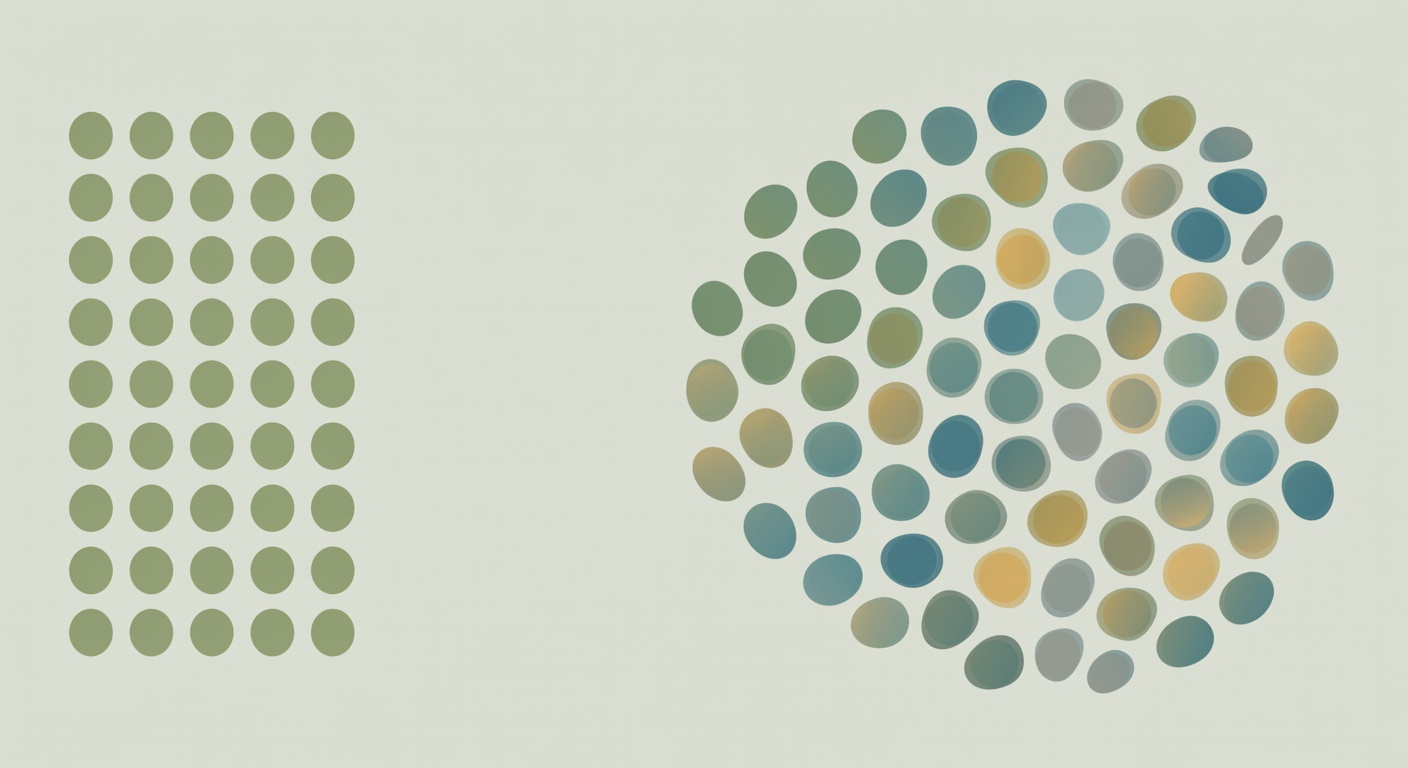
Vision loss accelerates when healthy eye tissue develops abnormal cell populations that mirror aging patterns, potentially explaining why smokers face dramatically higher blindness risk. The retinal pigment epithelium—a critical layer supporting photoreceptors—normally maintains uniform cellular characteristics. However, new molecular evidence reveals that cigarette smoke triggers the formation of distinct "dedifferentiated" cell clusters that lose their specialized functions and adopt aging-like signatures.
Using advanced single-cell sequencing, researchers exposed young and aged mouse eyes to cigarette smoke condensate and mapped the resulting cellular changes. Young animals developed abnormal RPE clusters identical to those found naturally in aged mice, demonstrating that toxin exposure can artificially induce aging patterns. These dedifferentiated cells showed globally reduced chromatin accessibility—essentially shutting down normal gene expression programs—while activating molecular pathways associated with cellular senescence and dysfunction.
Crucially, young dedifferentiated cells mounted compensatory responses, upregulating genes for mitochondrial repair and protein quality control. Aged cells completely lacked this protective capacity, leading to significantly higher cell death rates when exposed to smoke toxins. Human tissue samples confirmed these findings: macular tissue from smokers and early AMD patients contained similar abnormal cell populations absent in non-smokers.
This research fundamentally reframes our understanding of age-related macular degeneration pathogenesis. Rather than uniform tissue degradation, AMD appears to involve the emergence of cellular heterogeneity where healthy and dysfunctional cell populations coexist. The finding that environmental toxins can rapidly induce aging-like cellular states suggests that degenerative eye diseases may be more preventable than previously understood, particularly through smoking cessation during younger decades when compensatory mechanisms remain intact.