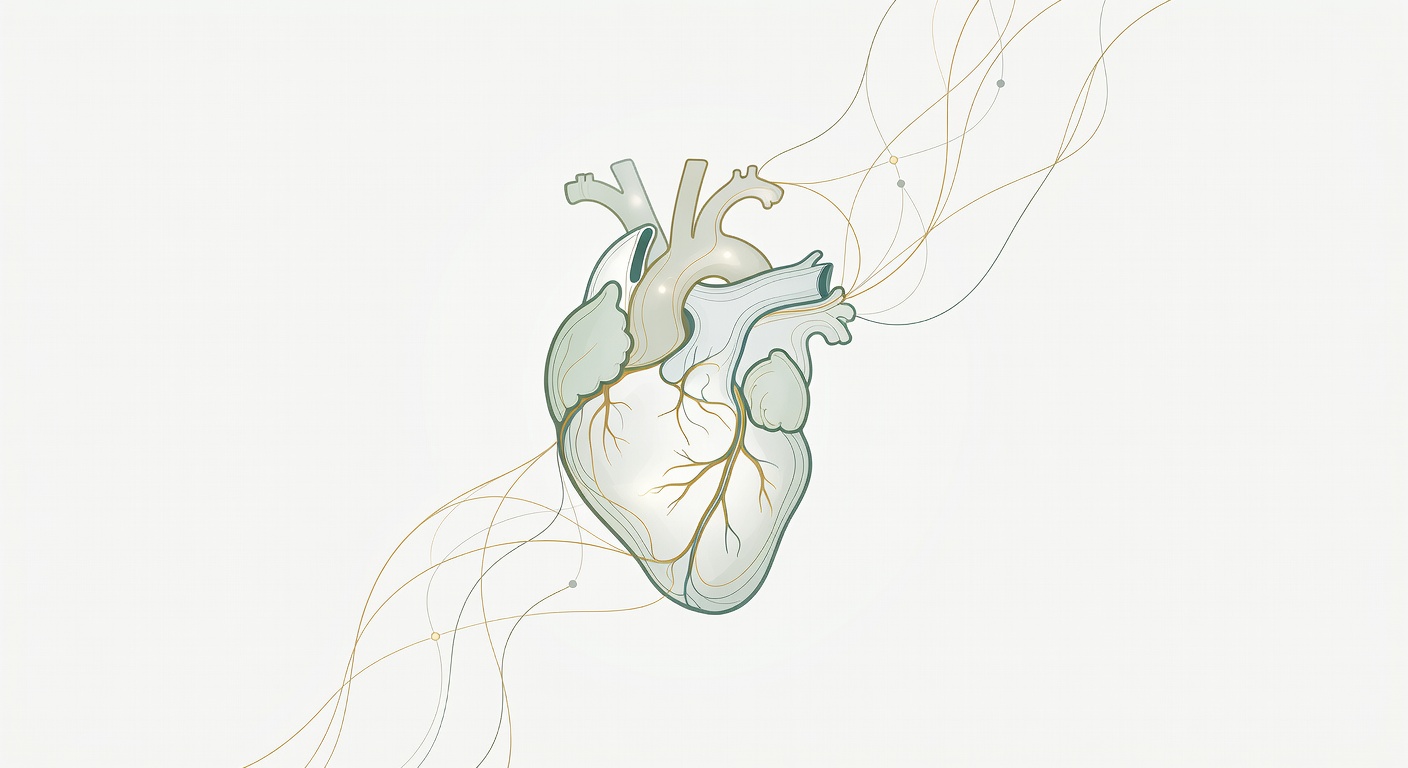
Analysis of over 39,000 UK Biobank participants reveals atrial fibrillation increases major depression risk by 44%, while depression raises atrial fibrillation risk by 26%. The study identified distinct brain connectivity patterns in ventromedial prefrontal and insular cortices that differ between conditions, with inflammatory markers mediating 6.85% of the association and cardiovascular risk factors contributing 32%. This bidirectional relationship challenges the conventional view that depression simply follows cardiac disease. The findings suggest shared autonomic nervous system pathways connecting heart rhythm regulation and mood control, potentially explaining why cardiac patients often develop psychiatric symptoms and vice versa. Brain imaging revealed that individuals with both conditions showed unique neural profiles distinct from either condition alone, indicating complex interactions rather than simple additive effects. The research supports integrated cardio-psychiatric care approaches, as traditional siloed treatment may miss critical interconnections. However, this preprint awaits peer review and relies on observational data that cannot definitively establish causation. The large sample size strengthens confidence, but replication studies will be essential to validate these neurocardiac pathway findings for clinical application.
PREPRINT — Not yet peer-reviewed
Atrial Fibrillation Increases Depression Risk 44%, Depression Raises AF Risk 26%

📄 Based on research published in medRxiv preprint
Read the original research →⚠️ This is a preprint — it has not yet been peer-reviewed. Results should be interpreted with caution and may change following peer review.
For informational, non-clinical use. Synthesized analysis of published research — may contain errors. Not medical advice. Consult original sources and your physician.