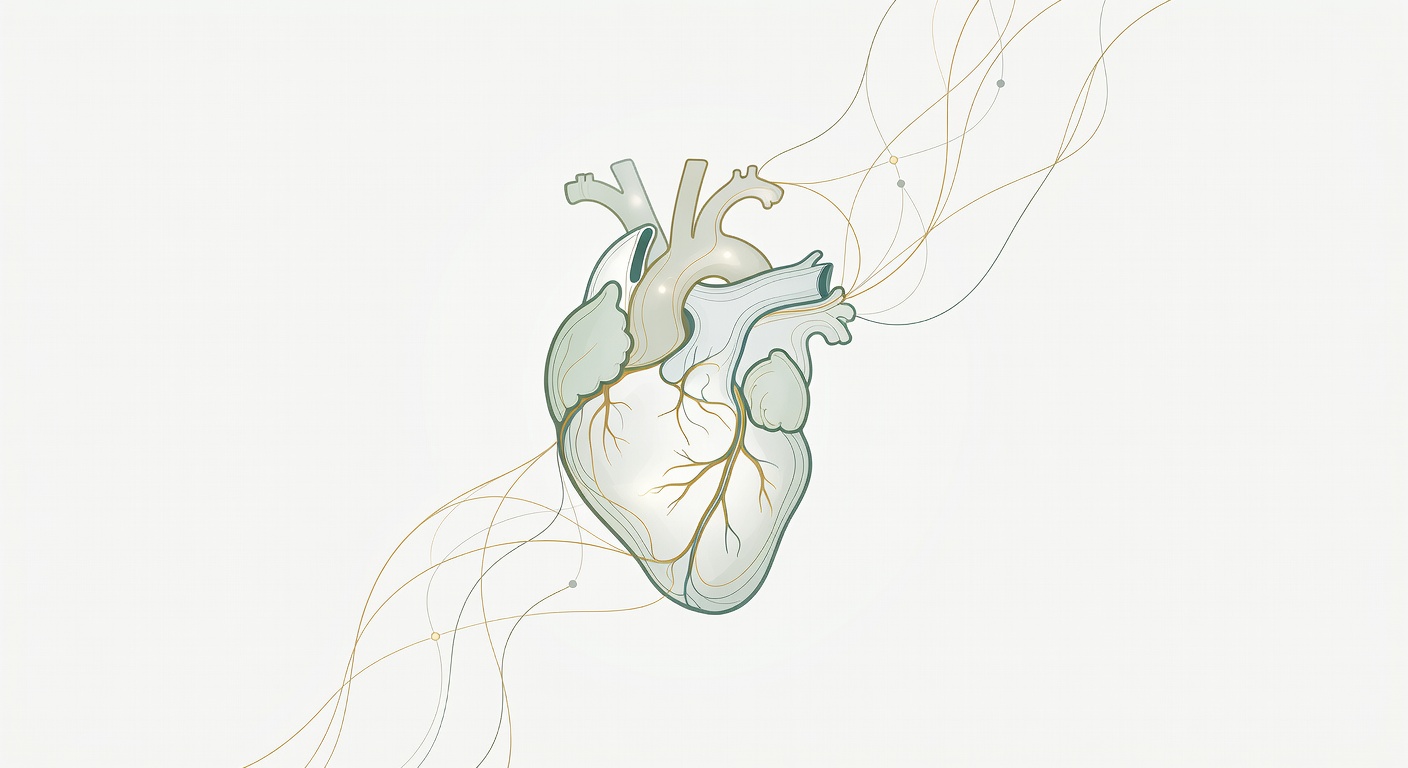
Advanced 3D cardiac imaging of 102 dilated cardiomyopathy patients revealed that loss of the heart's normal spiral septal wall pattern strongly predicts life-threatening arrhythmias, including sudden cardiac death and sustained ventricular tachycardia. The arrhythmic subgroup showed more conical left ventricles with wider bases, while patients with idiopathic disease retained protective spiral septal morphology. This geometric distinction proved more significant than traditional risk markers like late gadolinium enhancement scarring. The findings suggest the interventricular septum's structural integrity plays a crucial role in maintaining normal electrical conduction pathways. For cardiologists, this morphological signature could revolutionize risk stratification in a notoriously heterogeneous disease where predicting sudden death remains challenging. The spiral pattern likely reflects preserved myocardial fiber architecture essential for coordinated contraction and stable electrical propagation. However, as this medRxiv preprint awaits peer review, these promising results require validation in larger cohorts before clinical implementation. The research represents an incremental but potentially practice-changing advance in personalized cardiac risk assessment, moving beyond simple size and function metrics toward sophisticated geometric biomarkers.
PREPRINT — Not yet peer-reviewed
Heart Septal Spiral Pattern Predicts Arrhythmia Risk in Cardiomyopathy
📄 Based on research published in medRxiv preprint
Read the original research →⚠️ This is a preprint — it has not yet been peer-reviewed. Results should be interpreted with caution and may change following peer review.
For informational, non-clinical use. Synthesized analysis of published research — may contain errors. Not medical advice. Consult original sources and your physician.