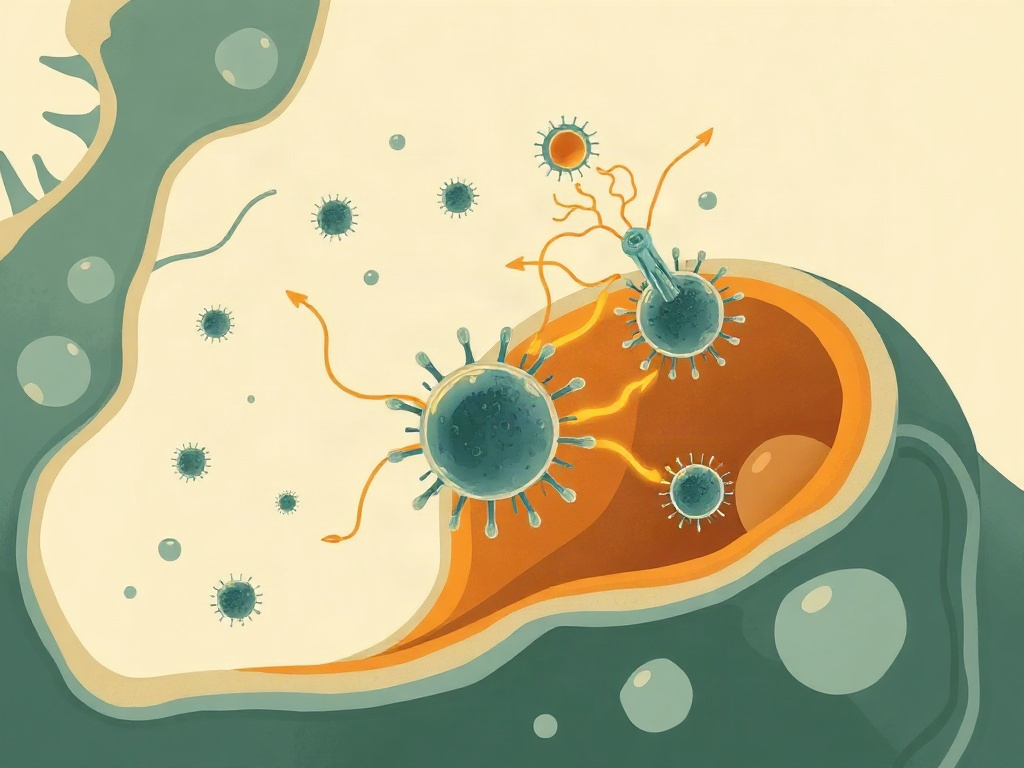
Genetic manipulation in Drosophila reveals that intestinal barrier failure operates as an independent driver of mortality, distinct from inflammation itself. Using the Smurf assay to measure intestinal permeability, researchers demonstrated that immune activation causes barrier breakdown over time, leading to death even when microbes are completely absent. This finding challenges the prevailing view that gut barrier problems are merely downstream consequences of chronic inflammation. The separation of these two processes represents a conceptual breakthrough in aging research. While inflammaging has dominated discussions of age-related pathology, this work positions intestinal permeability as an equally critical but mechanistically distinct pathway. For human health, this suggests that interventions targeting gut barrier integrity—through compounds like butyrate, glutamine, or specific probiotics—may provide benefits beyond anti-inflammatory approaches alone. The time-dependent nature of barrier failure also implies there may be therapeutic windows where intervention could prevent the cascade toward mortality. Though conducted in fruit flies, these findings align with human studies showing increased intestinal permeability in aging and age-related diseases, suggesting the mechanisms may be evolutionarily conserved.
Intestinal Barrier Failure Drives Mortality Independent of Microbiota in Aging

Primary reference: PloS one · View source ↗
Informational, non-clinical synthesis informed by published research. Not a clinical guideline or medical advice. May contain errors or editorial interpretation. Consult the original source and your physician.