The dominant narrative in cardiovascular prevention has long centered on diet, exercise, genetics, and smoking. A sweeping consensus statement from the European Society of Cardiology now makes the case that the environment itself — air, noise, heat, chemicals, and light — constitutes a parallel and underappreciated cardiovascular threat, one that operates silently across entire lifetimes and populations.
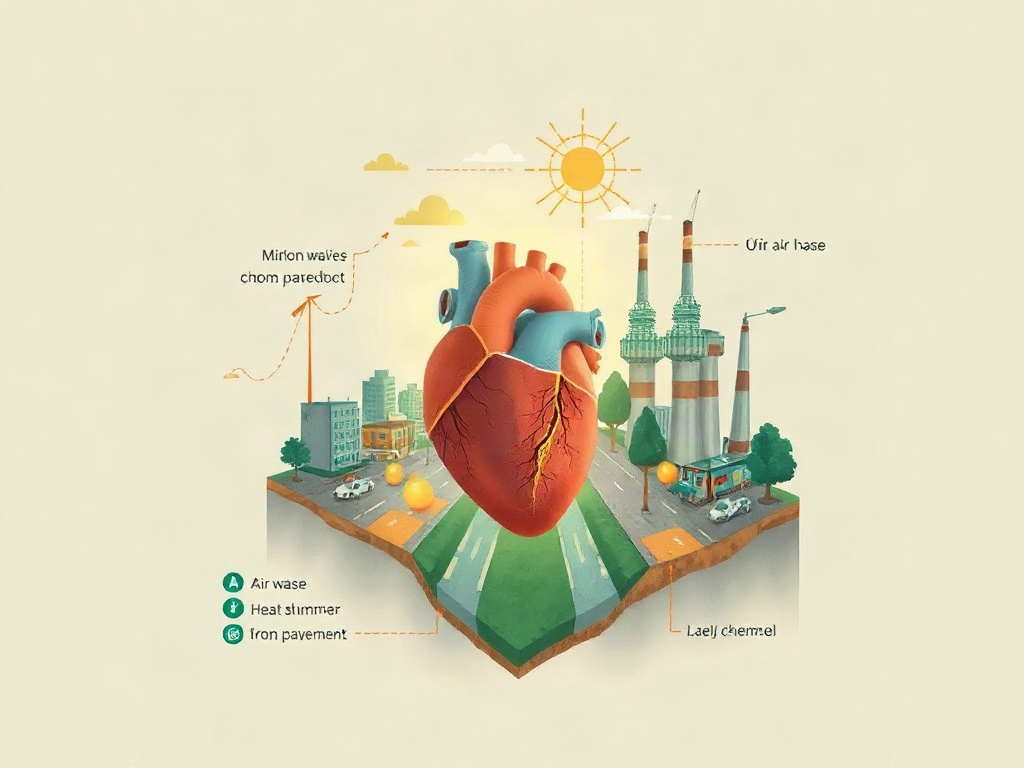
This comprehensive review synthesizes epidemiological and experimental evidence linking five distinct environmental domains to cardiovascular harm. Air pollution, noise exposure, extreme heat, chemical contamination (including endocrine disruptors and heavy metals), and artificial light at night each independently elevate risk for coronary artery disease, stroke, heart failure, arrhythmias, and hypertension. Critically, harmful effects are documented even at exposure levels currently considered acceptable under regulatory standards, a finding that directly challenges the adequacy of existing safety thresholds. The authors unite these diverse stressors under a common set of pathophysiological mechanisms — oxidative stress, systemic inflammation, endothelial dysfunction, and circadian rhythm disruption — and propose the "exposome" framework to capture their cumulative, lifetime burden on cardiovascular physiology. Vulnerable groups identified include children, older adults, patients with pre-existing cardiovascular conditions, and socioeconomically disadvantaged populations.
What distinguishes this document from prior ESC guidance is its scope and mechanistic ambition. Earlier ESC statements addressed air pollution in relative isolation; this review integrates climate change, urban heat islands, and light pollution into a unified cardiovascular risk model. The exposome concept — borrowed from environmental genomics — is analytically useful because it frames risk not as discrete exposures but as a dynamic, accumulating exposure history, potentially interacting with genetic susceptibility. The finding that sub-threshold exposures carry measurable cardiovascular risk is arguably the most consequential takeaway, suggesting that regulatory frameworks designed around acute toxicology may be structurally ill-suited to chronic, low-level cardiovascular harm. As a consensus review rather than a primary trial, this document synthesizes rather than generates new data, and the causal architecture between individual stressors and specific cardiovascular endpoints remains an active research frontier.