Understanding why bulimia nervosa is so treatment-resistant may hinge less on any single brain region and more on how entire neural networks are organized — or disorganized. A graph-theoretic analysis of resting-state brain connectivity offers one of the more architecturally comprehensive views of bulimia nervosa (BN) to date, challenging the field's historically region-centric models.
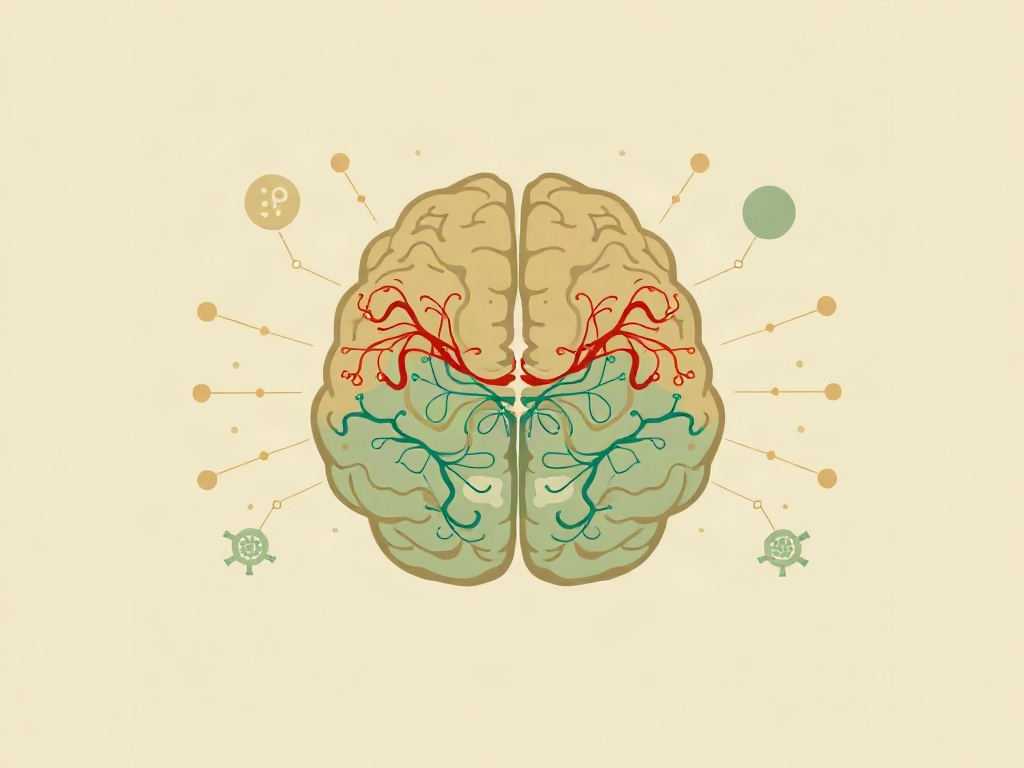
Using resting-state fMRI data from 85 individuals with BN and 71 matched healthy controls, researchers applied a graph-theoretic framework to map functional connectivity at both whole-brain and system scales. At the global level, BN patients showed simultaneously reduced within-system and between-system functional connectivity alongside paradoxically increased system segregation — meaning networks were more insular yet internally weaker. At the system level, the default mode network (DMN), control network, and ventral attention network each showed elevated between-system connectivity. Critically, DMN segregation was specifically decreased. The degree to which the DMN over-integrated with other systems positively correlated with Beck Depression Inventory scores, linking network disorganization directly to affective symptom burden.
This dual pattern — global hypoconnectivity with focal DMN hyperintegration — is notable because the DMN is canonically associated with self-referential thought, interoception, and rumination, all processes implicated in binge-purge cycles and body image disturbance. The finding aligns with an emerging transdiagnostic picture in which eating disorders share DMN dysregulation with depression and OCD, though the directionality here remains observational. The cohort of 156 participants is modest, the design cross-sectional, and causality cannot be established. Whether DMN over-integration is a predisposing trait, a consequence of illness duration, or a marker of comorbid depression remains unresolved. Still, framing BN as a network-architecture disorder rather than a focal-region pathology is an incrementally important conceptual advance that may inform future neurostimulation targets.