For decades, nutritional epidemiology has linked whole grains to heart health through observational data, leaving mechanistic questions unanswered and clinicians uncertain about how much whole grain actually moves the needle. A rigorous synthesis of randomized trial data now provides the most precise dose-response picture yet — and quantifies benefits across eight distinct cardiometabolic markers simultaneously.
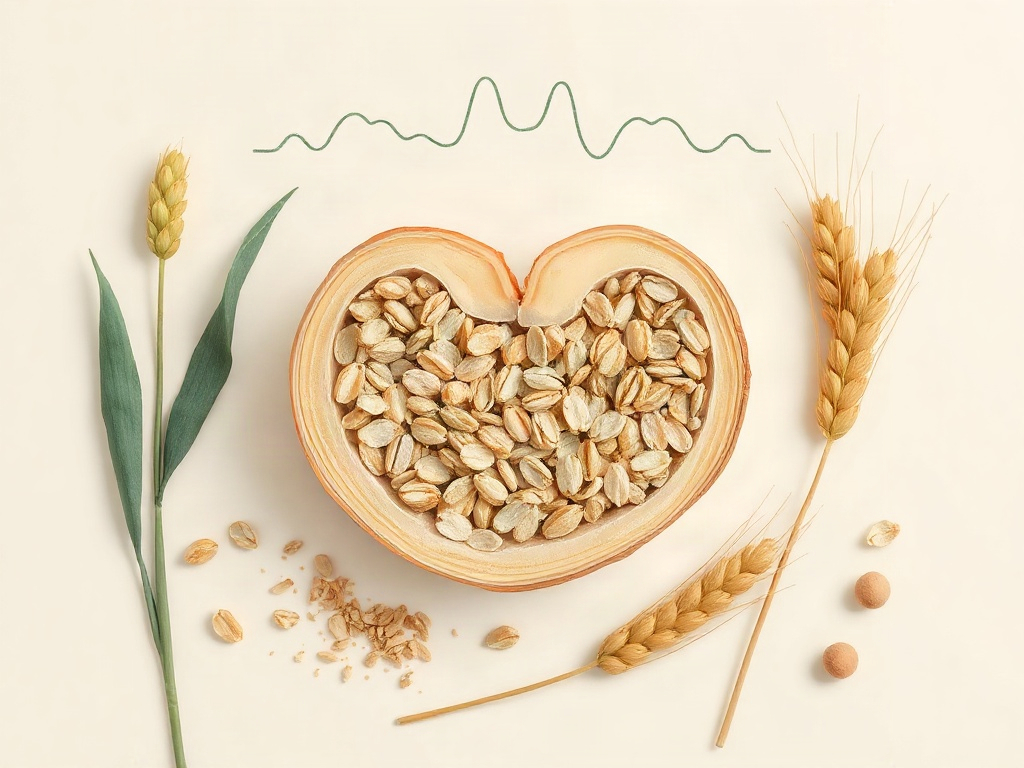
Drawing on 87 randomized controlled trials encompassing 101 publications, this European Heart Journal meta-analysis used random-effects modeling to estimate the impact of each 48 g/day increment of whole grains (dry weight, roughly three standard servings). At that dose, total cholesterol fell by 0.10 mmol/L and LDL by 0.07 mmol/L — findings rated high and moderate certainty, respectively. Systolic blood pressure dropped by 0.82 mmHg, fasting plasma glucose by 0.03 mmol/L, and triglycerides by 0.04 mmol/L. Body weight declined by 0.20 kg and waist circumference by 0.22 cm. Notably, the inflammatory cytokine interleukin-6 also fell significantly — a high-certainty finding that begins to illuminate the anti-inflammatory pathway long hypothesized but rarely demonstrated in controlled settings. Non-linear dose-response curves suggest optimal effects cluster between 60–100 g/day for most outcomes, though a few markers continued improving at 180–220 g/day.
This meta-analysis carries unusual weight because it is built entirely on randomized trials rather than cohort studies, sidestepping the healthy-user confounding that has long plagued whole-grain research. The effect sizes on individual markers are modest in isolation — a 0.82 mmHg blood pressure reduction would be clinically unremarkable alone — but the simultaneous, consistent direction of improvement across eight independent risk factors is the more meaningful signal. Population-level cardiometabolic burden responds to small shifts across many pathways. Key limitations include heterogeneity in grain types (oats, barley, wheat) and trial durations, which may mask grain-specific mechanisms. Overall, this is a confirmatory but methodologically strengthening contribution that moves whole-grain guidance from association to causal plausibility.