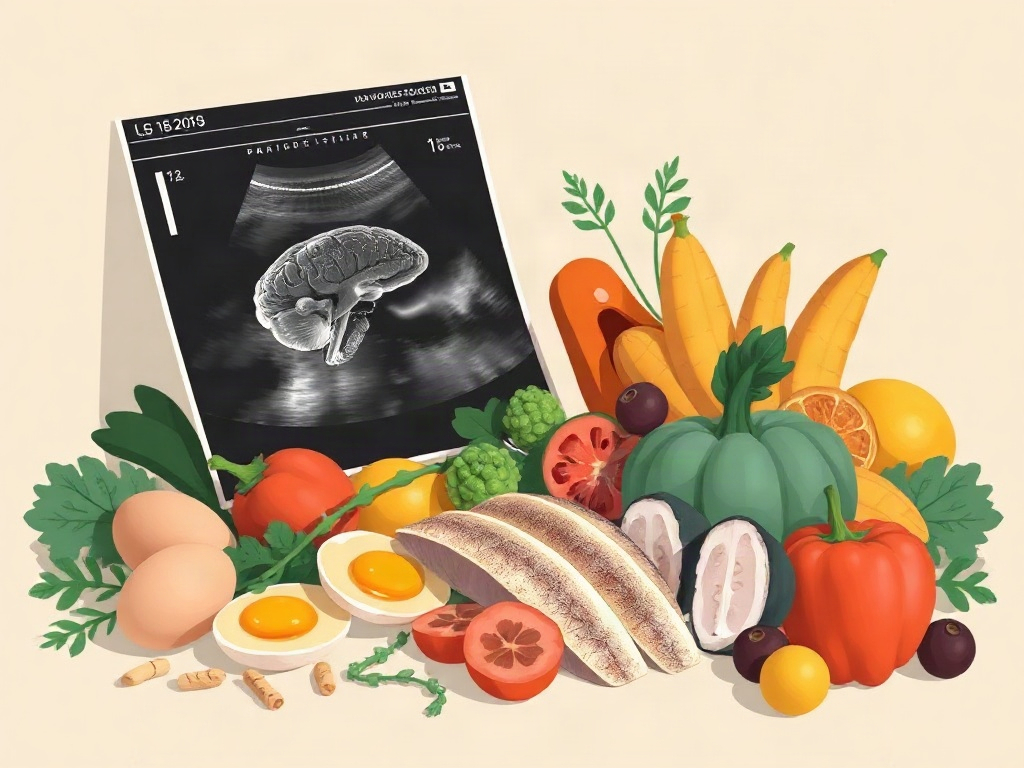
Fetal brain development may be more directly shaped by maternal diet quality than previously appreciated — and a rigorous randomized trial now offers some of the clearest human evidence yet. For health-conscious adults planning pregnancy, or researchers seeking causal leverage on early neurodevelopment, these findings reframe dietary diversity not as a general wellness recommendation but as a potentially measurable driver of structural brain growth.
The Mikhuna trial, conducted in Ecuador with 215 first-trimester women, randomized participants to either a control condition or a weekly food delivery modeled on ancestral human dietary patterns — specifically eggs, fish, and diverse locally sourced produce — alongside behavioral coaching to increase diet variety and reduce ultra-processed food consumption. Measured by serial fetal ultrasound across gestation (12, 21, and 35 weeks) and at two weeks postpartum, the intervention produced statistically significant differences in two neurologically meaningful structures: corpus callosum length increased by approximately 0.19 cm and gangliothalamic ovoid height by 0.15 cm in the Mikhuna group relative to controls. Notably, femur length was modestly shorter in the intervention group, a divergence worth tracking. Dietary diversity thresholds were met by 74.5% of intervention mothers versus 55.8% of controls.
What makes this finding stand out in the broader maternal nutrition literature is its use of ultrasound-based structural brain endpoints — not birthweight or generalized cognitive proxies — as primary outcomes in a true RCT. The corpus callosum is central to interhemispheric communication, and the gangliothalamic ovoid reflects thalamic and subcortical maturation critical for sensory integration and early cognitive function. The ancestral dietary framework draws on evolutionary nutrition theory, emphasizing animal-source foods rich in choline, omega-3 fatty acids, and micronutrients known to support myelination and neuronal proliferation. Key limitations include the single-country sample, the bundled nature of the intervention (making it impossible to isolate which dietary component drove effects), and the absence of postnatal neurodevelopmental outcome data. Whether these structural differences translate to measurable cognitive or behavioral advantages in childhood remains an open and essential question. Incremental but methodologically credible.