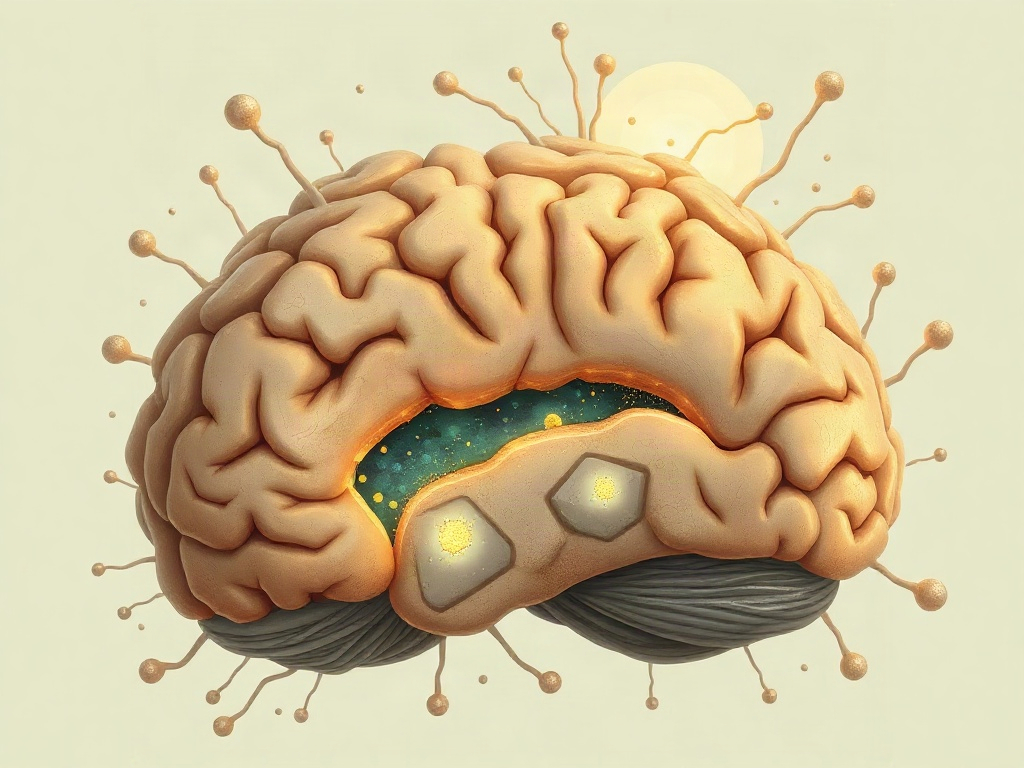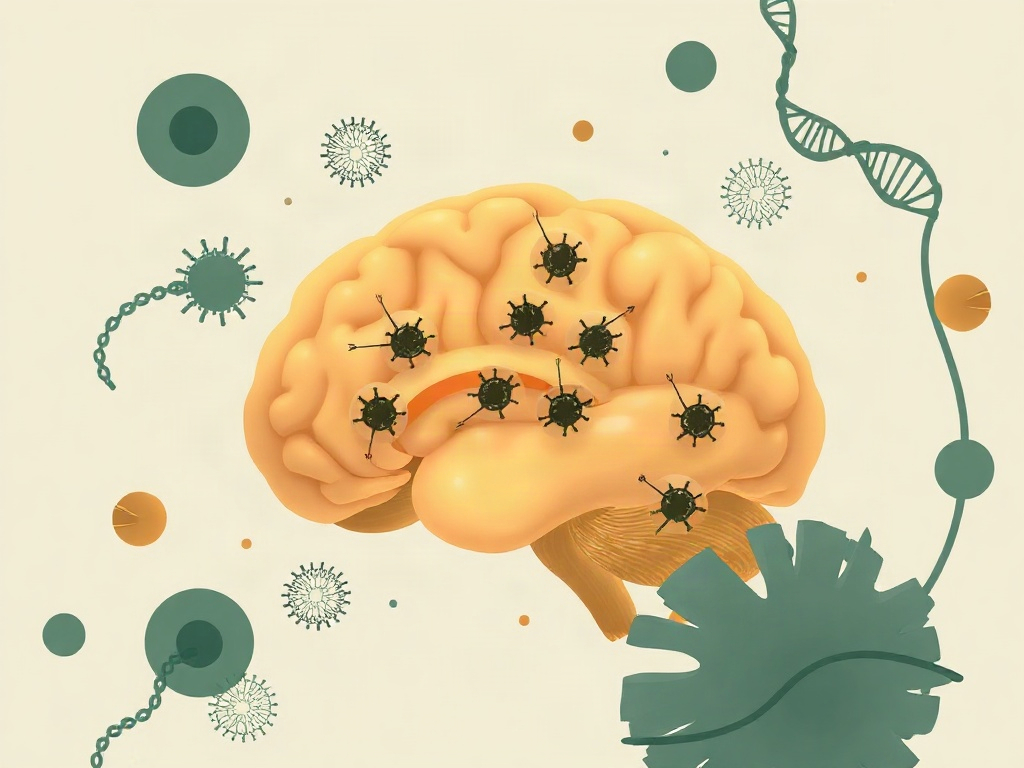
The immune cells that patrol the aging brain may be turning against it — not because of external pathogens, but because ancient viral sequences embedded in our own genome are being unshackled. This finding reframes neuroinflammation as partly a consequence of epigenetic destabilization rather than purely an inflammatory cascade, with potential implications for Alzheimer's disease, cognitive decline, and brain aging broadly.
Published in Nature Neuroscience, this study identifies DAXX — a histone chaperone protein that normally silences retrotransposable elements (RTEs) by maintaining tight chromatin compaction — as a critical guardian of microglial identity. In both mouse models and human tissue data, DAXX expression declines with aging. When researchers experimentally eliminated Daxx in young-adult mouse microglia, the cells underwent striking transformation: chromatin opened at RTE loci, homeostatic microglial markers were lost, cells re-entered the cell cycle, and animals exhibited behavioral changes. Over time, these dysregulated microglia accumulated DNA damage and were depleted, then replaced by DAXX-deficient, Apoehigh microglia carrying hallmarks of cellular senescence. The senescence program itself was found to depend on promyelocytic leukemia protein (PML), a DAXX binding partner and interferon-responsive factor — establishing a mechanistic link between RTE derepression, innate immune signaling, and permanent cell cycle arrest.
This work sits at the intersection of two rapidly evolving fields: the role of endogenous retroviruses in aging biology and the contribution of microglial senescence to neurodegeneration. Prior research has implicated transposable element activation in systemic aging phenotypes, including in muscle and liver, but the mechanistic chain from chromatin loss to glial dysfunction in the brain has remained unclear. The DAXX-PML-RTE axis now provides a tractable molecular pathway. Key caveats include the primary reliance on mouse models and the need for longitudinal human data confirming that DAXX loss causally precedes neuroinflammatory phenotypes. Nonetheless, as a mechanistic study from a top-tier journal establishing a novel epigenetic-to-immune cascade, this represents a meaningful advance — potentially paradigm-shifting for how brain aging and neuroinflammation are understood at the molecular level.