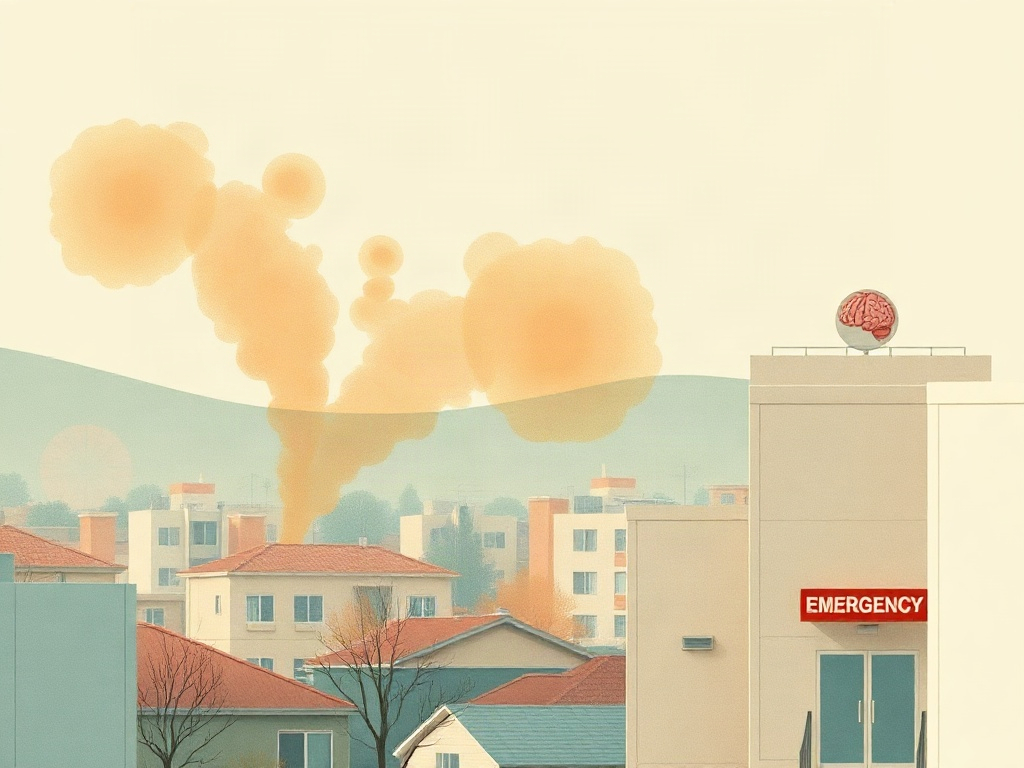
As wildfire seasons intensify across North America and beyond, understanding their downstream health effects beyond lungs and cardiovascular systems is becoming urgent. A newly identified neurological consequence — emergency-level migraine and headache episodes — adds a compelling dimension to the public health calculus around air quality and brain health.
Published in JAMA Network Open, this study examined the relationship between days of measurable wildfire smoke exposure and emergency department visits coded for migraine and primary headache disorders. Researchers found a statistically meaningful association between elevated wildfire smoke particulate days and increased ED presentation rates for these neurological events. The effect appeared distinct from general air pollution signals, suggesting wildfire-specific combustion byproducts — including fine particulate matter (PM2.5), volatile organic compounds, and carbon monoxide — may carry a particular neurological burden beyond what urban smog alone produces.
This finding sits at an important intersection of environmental neurology and climate health. Prior research has established that PM2.5 from traffic and industrial sources can trigger vascular inflammation and trigeminal nerve sensitization — both implicated in migraine pathophysiology. Wildfire smoke, however, contains a more complex and reactive chemical mixture, and its acute neurological effects have received far less systematic attention than its respiratory consequences. The study's reliance on ED visit data means it captures only the most severe headache episodes, almost certainly underestimating the population-level burden. Observational design limits causal inference, and confounders such as heat, psychological stress, and sleep disruption during wildfire events are difficult to fully disentangle. Still, the JAMA Network Open platform and the specificity of the headache-smoke association give this work credibility as more than a preliminary signal. For the roughly 15% of adults who experience migraines, wildfire smoke may represent an underappreciated environmental trigger warranting proactive awareness.