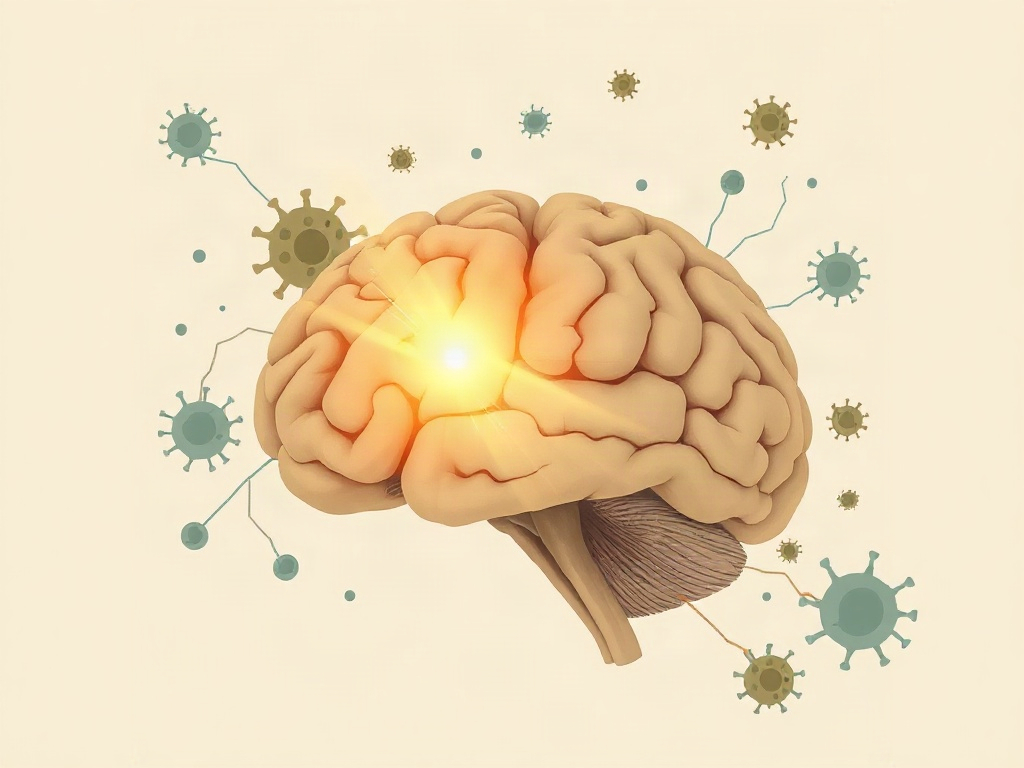
For decades, Alzheimer's disease research focused almost exclusively on amyloid plaques and tau tangles, but a growing body of evidence implicates neuroinflammation — specifically the infiltration of peripheral immune cells into brain tissue — as a critical accelerant of cognitive decline. A non-invasive light-based intervention may now offer a mechanistically grounded way to interrupt that inflammatory cascade.
Photobiomodulation (PBM), the application of specific wavelengths of low-level light to biological tissue, was tested in two established transgenic mouse models of AD (APP/PS1 and 3×Tg). PBM substantially reduced infiltration of cytotoxic CD8+ T cells into the cortex, a cell type increasingly recognized as a driver of neurodegeneration rather than a bystander. The mechanism traced through a multi-step immune circuit: PBM suppressed microglial NLRP3 inflammasome activation, which in turn curtailed the release of TNF-α, IL-1α, and complement component C1q. This dampened the conversion of astrocytes into their neurotoxic A1 phenotype and reduced endothelial adhesion molecule expression, effectively closing the gateway through which peripheral T cells cross the blood-brain barrier. Cognitive performance and markers of neuronal integrity improved in concert with these cellular changes.
This work is notable because it positions PBM not merely as a symptomatic intervention but as a regulator of central-peripheral immune crosstalk — a systems-level mechanism with genuine therapeutic logic. PBM has attracted clinical interest for several years, with small human trials showing tolerability and preliminary cognitive signals, but a coherent mechanistic account has been elusive. The NLRP3-astrocyte-T cell axis identified here aligns with some of the most active current targets in AD drug development, lending translational credibility. Critical caveats apply: findings are limited to rodent models, dose parameters and delivery methods vary widely across PBM research, and the relative contribution of CD8+ T cell infiltration in human AD brains remains debated. Nonetheless, the multi-omic resolution of this study — combining immunofluorescence, transcriptomics, and genetic validation — elevates it above typical preclinical work and makes it a meaningful reference point for ongoing human trials.